Bedroom Refresh in 2026: Calm, Restful Spaces
A practical 2026 guide to refreshing your bedroom for better sleep and calm — lighting, layout, textiles, and small upgrades that quietly transform the space.

TL;DR: A bedroom refresh in 2026 is less about new furniture and more about editing what's already there. Pull the bed away from clutter, swap harsh overhead light for layered warm lamps, upgrade the textiles you actually touch every night, and remove anything that signals "work" or "to-do." The result is a room that helps you fall asleep faster, wake gentler, and feel calmer the moment you walk in.
We've watched bedroom design quietly shift over the last few years. The Pinterest-perfect, heavily styled bedroom is giving way to something softer and more honest — a room designed around how it makes you feel at 10 p.m. and 7 a.m., not how it photographs. Below is our editorial team's practical playbook for refreshing a bedroom in 2026, whether you rent a studio or own a full primary suite.
Why a Bedroom Refresh Hits Different in 2026
The bedroom is the one room in the house where productivity culture has no business. And yet, for years, we let it creep in — desks at the foot of the bed, charging stations on the nightstand, exercise bikes in the corner, laundry piles "just for tonight."
The 2026 refresh is a small rebellion against that. We're seeing a clear cultural pull toward quieter rooms: warmer light, fewer surfaces covered in stuff, natural materials, and a strong line between "sleep space" and "everything else." You don't need a renovation budget to participate. Most of the work is editing, rearranging, and choosing better versions of things you already own.
The goal, in one sentence
Your bedroom should make your shoulders drop within ten seconds of walking in.
Start With a 20-Minute Edit
Before you buy anything, take twenty minutes and do a focused edit. This single step does more for a bedroom than any new throw pillow.
- Remove visible work: laptops, paperwork, work bags, planners. If they must live in the bedroom, put them in a drawer or closed basket.
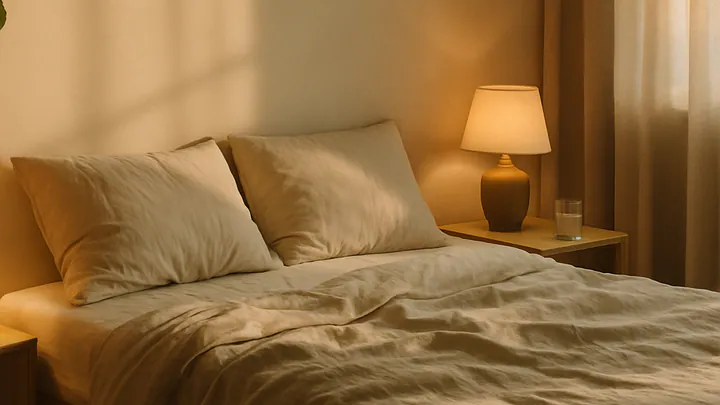
- Clear the nightstand down to three or four items: a lamp, a glass of water, a book, maybe one small object you love.
- Pull out anything broken, stained, or that you've been meaning to fix "someday." Unfinished business is visual noise.
- Take down decor you no longer notice. If a piece of art has gone invisible to you, it's not earning its wall space.
- Strip the bed and wash everything — sheets, pillowcases, duvet cover, mattress protector. A clean bed resets the whole room.
When you're done, walk out, walk back in, and notice the difference. Most people are shocked at how much calmer the room already feels.
Rethink Your Lighting (This Is the Big One)
If we could only change one thing in most bedrooms, it would be the lighting. A single bright overhead bulb is the enemy of a restful bedroom. It flattens the room, it's harsh on tired eyes, and it tells your nervous system it's still daytime.
Build a layered, warm-toned system
- Two bedside lamps with warm bulbs (look for around 2700K or lower). Matching is fine; intentional mismatching can feel more collected.
- One ambient source across the room — a floor lamp, a wall sconce, or a small lamp on a dresser. This eliminates the dark-cave-with-spotlights effect.
- Dimmers wherever possible. Smart bulbs that shift warmer in the evening are a small upgrade with outsized impact.
- Kill blue light at night. If you have a TV or a bright clock face in the bedroom, consider covering, dimming, or relocating it.
For renters, plug-in wall sconces and smart bulbs in existing lamps get you almost all the benefit without touching a wire.
Reset the Layout Around the Bed
The bed is the gravitational center of the room. Most layout problems trace back to ignoring that.
A few principles we keep coming back to
- Give the bed a clear focal wall. Ideally not the one with the door, and ideally not directly under a window if you can avoid it.
- Leave breathing room on both sides if the room allows — even a narrow strip is better than shoving the bed into a corner.
- Lower the visual horizon. Tall, looming furniture near the bed feels heavy. Keep nightstands at or slightly below mattress height.
- Protect the sightline from the door. What you see when you walk in sets the emotional tone. Make sure it's calm — a made bed, soft art, a lamp — not a laundry chair.
Upgrade the Textiles You Actually Touch
Bedding is one of the few home purchases you literally touch for a third of your life. It's worth getting right, and it doesn't have to be expensive.
Where to focus your budget
- Sheets: Natural fibers — cotton percale for crisp sleepers, sateen for silky, linen for warm sleepers — tend to age better than synthetics. Two sets in rotation is plenty.
- Pillows: Replace them more often than you think. A flat, lumpy pillow undoes a great mattress.
- Duvet weight: Match it to your climate and how warm you sleep. A too-hot duvet is a silent sleep killer.
- A washable throw at the foot of the bed adds texture and warmth without committing to a heavier blanket year-round.
- Rugs underfoot. Even a small runner on each side of the bed changes the first sensation of your day.
Quiet the Visual Noise
Calm bedrooms tend to share a few traits: a restrained color palette, fewer competing patterns, and surfaces that are mostly clear.
- Pick a quiet palette. Soft neutrals, muted earth tones, or low-saturation colors read as restful. Save bold contrast for living spaces.
- Limit pattern. One patterned element (a rug, a duvet, or art) per sightline is usually enough.
- Hide cables. Tuck cords behind nightstands, use a small tray for charging, or move charging out of the bedroom entirely.
- Close the closet. If you have an open closet, a simple curtain or screen makes a surprising difference at bedtime.
Add Sensory Warmth
A bedroom that only looks good but feels sterile won't pull you in. The cozy layer is what makes a refreshed room actually feel different.
- One living thing. A low-maintenance plant — pothos, snake plant, ZZ — softens almost any room.
- Scent, used lightly. A subtle candle or linen spray in the evening can become a sleep cue over time. Skip anything overpowering.
- Sound. A small fan, a white-noise machine, or a quiet playlist can mask street and household noise.
- Texture mix. Pair smooth (linen, ceramic) with rough (wood, woven basket) so the eye has somewhere to rest.
Small Upgrades With Outsized Impact
If you want a short shopping list rather than a full project, these are the upgrades we recommend most often:
- Warm-toned smart bulbs for existing lamps
- A new set of natural-fiber sheets
- Two fresh pillows
- A small bedside tray to corral clutter
- Blackout curtains or a quality sleep mask
- A simple piece of art for the wall opposite the bed
- A basket for the "laundry chair" so it disappears at night
You don't need all seven. Pick two, live with them for a week, and reassess.
Refresh Habits, Not Just the Room
A refreshed bedroom only stays refreshed if the daily rhythm supports it. A few small habits keep the room feeling like itself:
- Make the bed every morning, even badly. It anchors the whole room.
- Do a two-minute reset before bed — clear the nightstand, fold what's on the chair, dim the lights.
- Wash sheets on a predictable schedule so it doesn't become a decision.
- Keep one drawer or basket as the "catch-all" so stray items have a home.
Key Takeaways
- A bedroom refresh is mostly editing — remove work, clutter, and harsh light before you buy anything.
- Layered, warm lighting is the single highest-impact change in most bedrooms.
- Spend on textiles you touch nightly: sheets, pillows, and the right-weight duvet.
- Choose a quiet palette and limit competing patterns to keep the room visually calm.
- Small sensory layers — plants, scent, sound, texture — turn a tidy room into a restful one.
- Daily two-minute resets protect the refresh long after the project is done.
Editorial note: This article is general home and lifestyle guidance from our editorial team, not professional interior design, medical, or sleep advice. If you have ongoing sleep difficulties or specific health concerns related to your sleep environment, we recommend speaking with a qualified healthcare professional.
Frequently asked questions
How do I refresh my bedroom on a small budget?
Start with a thorough edit and a deep clean — both are free and often make the biggest difference. Then prioritize warm-toned bulbs, a fresh set of sheets, and two new pillows. Those three upgrades transform how the room looks and feels for relatively little money.
What colors make a bedroom feel calmer?
Soft, low-saturation tones tend to read as restful: warm whites, muted greens, soft taupes, dusty blues, and earthy neutrals. The exact color matters less than keeping the overall palette quiet and limiting how many competing colors are visible at once.
Is it bad to have a desk or TV in the bedroom?
It's not strictly bad, but both can blur the line between rest and activity. If you can't remove them, try to visually hide them at night — close the laptop, drape a cloth over the desk, or turn the TV to face the wall. The goal is reducing cues that signal work or stimulation when you're trying to wind down.
How often should I replace bedroom pillows and sheets?
Pillows generally need replacing every one to two years, depending on quality and how they hold their shape. Sheets last longer — often several years — but should be retired once they feel thin, pill heavily, or stop feeling pleasant to sleep on.
What's the best lighting setup for a restful bedroom?
Aim for layered, warm-toned light from multiple low sources rather than a single bright overhead. Two bedside lamps plus one ambient source across the room is a reliable formula. Dimmers or smart bulbs that warm in the evening make the system even more effective.
How can I make a rental bedroom feel refreshed without renovating?
Focus on changes that don't require construction: lighting, textiles, layout, and editing. Plug-in sconces, new bedding, a rug, removable wall art, and a more intentional furniture arrangement can completely change how a rental bedroom feels with nothing left behind when you move.
Should the bed go under the window?
It's not a rule, but most people find the bed feels more grounded against a solid wall, with the window to the side. If your layout forces the bed under a window, soften it with curtains and consider a taller headboard so the wall behind you still feels supportive.