Entryway Design in 2026: Small Changes, Big Impact
A well-designed entryway sets the tone for your whole home. Here is our practical 2026 guide to organizing, decorating, and upgrading the space by your front door.

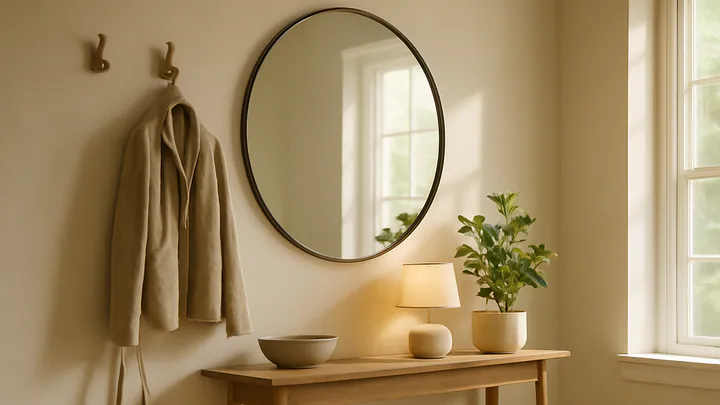
TL;DR: A great entryway in 2026 is less about square footage and more about intentional zones. Build a functional drop spot for daily essentials, layer in warm lighting and a mirror, add one piece of grounded furniture sized to your space, and finish with a rug and a single sculptural object. Even a hallway 30 inches wide can feel designed, organized, and welcoming with these five moves.
The entryway is the room that does the most emotional work in any home. It is the first thing you see when you walk in tired, and the last thing you see on your way out the door. Yet it is often the most neglected space in the house — a dumping ground for shoes, mail, and whatever you were holding when you crossed the threshold.
Our team has spent the last year watching how home designers, organizers, and ordinary households are rethinking this space in 2026. The shift is clear: people want entryways that calm them down, not stress them out. Below is the practical playbook we keep coming back to.
Why the entryway matters more in 2026
Two trends are reshaping how we use the front door. First, hybrid work has blurred the line between “leaving for the day” and “stepping out for an errand,” meaning the entryway gets used many more times per day than it used to. Second, smaller homes and apartments are common in cities where housing costs remain high, so every square foot has to perform.
An entryway that works hard reduces decision fatigue. When your keys, mask, dog leash, reusable bags, and sunglasses all live in one obvious spot, mornings get shorter. When the space looks calm, your nervous system gets a small, free reset every time you come home.
The five-zone framework we use
Before buying anything, map your entryway into five functional zones. Not every home needs all five, but naming them helps you spot what is missing.
- Drop zone: where keys, wallet, mail, and phone land.
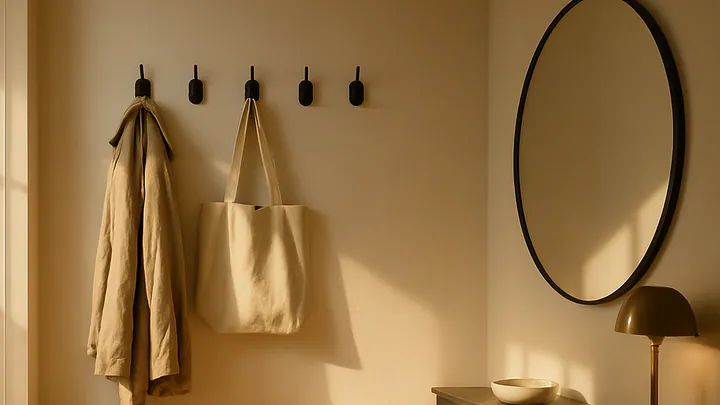
- Hang zone: hooks or a rack for jackets, bags, and umbrellas.
- Foot zone: shoes, boots, and the rug that anchors them.
- Mirror zone: a final-check surface, ideally with good light.
- Mood zone: art, a plant, a lamp — the part that makes it feel like home.
If you only have wall space for two of these, prioritize the drop zone and the hang zone. Those two carry 80 percent of the daily function.
Furniture that fits real entryways
Tiny entryways (under 15 square feet)
Most apartments fall here. Skip floor furniture entirely. Instead, mount a narrow wall shelf at chest height for the drop zone, install a rail of four to six hooks below it, and tuck a low shoe tray underneath. A single woven basket on the floor handles overflow without looking cluttered.
Medium entryways (a defined foyer)
A console table 30 to 36 inches wide is the sweet spot. Look for one with an open lower shelf for shoes or baskets, or a single drawer for batteries, pens, and outgoing mail. Pair it with a mirror or piece of art roughly two-thirds the width of the console above.
Larger entryways or mudrooms
Here, a bench earns its keep. Built-in benches with cubbies overhead are the workhorse of family homes, but a freestanding bench with baskets underneath delivers most of the function for a fraction of the cost. Add a tall mirror to bounce light, and consider a runner rug instead of a single accent rug.
Lighting: the upgrade most people skip
Lighting is where good entryways become great. Many entryways rely on a single harsh ceiling fixture, often the builder-grade dome that came with the house. Replacing it is one of the highest-impact, lowest-cost upgrades in the home.
A few rules we follow:
- Use warm bulbs, typically 2700K to 3000K. Cool-white light makes entryways feel like hospital corridors.
- Layer at least two sources. An overhead fixture plus a small table lamp, sconce, or plug-in picture light instantly elevates the space.
- Put one light on a smart plug or timer so it greets you when you walk in after dark.
- If you have a mirror, make sure light hits your face, not just the top of your head.
Storage that actually gets used
The biggest organizing mistake we see is buying storage that is too pretty to use. If a basket has a tight-fitting lid, nothing will ever go in it. If hooks are mounted too high for kids, coats will end up on the floor.
Some practical guidelines:
- Hooks beat hangers for daily-use coats. Mount them at the height of the shortest regular user.
- Open baskets work better than lidded bins for things you grab every day, like hats and gloves.
- A small tray on the drop zone surface contains keys and earbuds without ceremony.
- Hidden hooks on the side of a console table or inside a closet door catch reusable bags.
- A boot tray with a raised lip protects floors during wet seasons and signals where shoes belong.
Edit ruthlessly. The entryway should hold the coats and shoes you wear this week, not your entire seasonal wardrobe. Anything off-season belongs in a closet elsewhere.
Color, texture, and the “one warm thing” rule
Entryways often feel cold because they have hard surfaces — tile, painted drywall, a wood door — and little softness. Our rule of thumb is to add one warm, tactile element: a wool runner, a linen roman shade, a woven pendant lampshade, or a chunky ceramic bowl. Just one is usually enough to pull the whole space together.
For color, most homes do best with a calm, slightly warm neutral on the walls and one accent moment. That accent could be a moody paint color on the inside of the front door, a piece of art with real personality, or a runner with visible pattern. Picking one focal point keeps a small space from feeling busy.
A weekend plan to upgrade your entryway
If you want a concrete starting point, here is the sequence we recommend.
- Friday evening: Empty the entryway completely. Vacuum, dust the baseboards, and wipe the door.
- Saturday morning: Sort everything you removed into keep, relocate, donate, and toss piles. Most households shed at least one bag of items.
- Saturday afternoon: Measure your wall space and shop — in person or online — for one anchor piece (console, bench, or shelf), hooks, and a rug.
- Sunday morning: Install hooks, place furniture, lay the rug. Resist the urge to add decor yet.
- Sunday afternoon: Live with the bare bones for a few hours, then add the mirror, lamp, and one piece of art or a plant.
Give the new setup a full week before you change anything. You will quickly learn which hook gets used, which surface collects clutter, and what is missing.
Small upgrades under fifty dollars
Not ready for a full overhaul? These low-cost moves still make a real difference:
- Swap the overhead bulb for a warm 2700K LED.
- Add a simple row of four hooks at the right height.
- Replace a tired doormat with a thicker, natural-fiber one.
- Put a small ceramic dish on whatever flat surface you have for keys.
- Add a single trailing plant, like a pothos, on a high shelf.
- Hang a mirror, even a small one, opposite a light source.
Common mistakes to avoid
- Buying furniture before measuring. A console that blocks the door swing or narrows the path below 30 inches will frustrate you daily.
- Treating the entryway like extra closet space. If something does not belong to the rhythm of leaving and arriving, it belongs elsewhere.
- Over-decorating. A few well-chosen objects feel curated. A dozen feels chaotic in a small footprint.
- Ignoring the floor. A worn-out doormat or scuffed floor undercuts everything above it.
- Forgetting the view back out. The entryway is also what you see on the way to leave. Make sure it looks calm from that direction too.
Key takeaways
- Design your entryway around five zones: drop, hang, foot, mirror, and mood.
- Match furniture scale to your real square footage; wall-mounted solutions work in tiny spaces.
- Layered, warm lighting is the highest-impact upgrade most people overlook.
- Choose storage that is easy to use, not just pretty to look at.
- Add one warm, tactile element and one focal point — then stop.
- Edit seasonally so the space only holds what you actually use this week.
Frequently asked questions
What is the most important element of an entryway?
A dedicated drop zone for keys, bags, and shoes is the single most useful element. Without it, clutter spreads into the rest of the home within minutes of walking in the door.
How do I design an entryway when I do not actually have one?
Carve a visual entryway out of the first three to five feet inside the door using a rug, a narrow console or wall hooks, and a small light source. Defining the zone matters more than having walls around it.
What size rug should I use in an entryway?
For a small foyer, a runner or rug roughly 2 by 3 feet works well. For larger entryways, aim for a rug that anchors your console or bench with at least a few inches of space on either side.
How high should I hang an entryway mirror?
Hang the mirror so its center sits at roughly eye level for the average household member, usually 57 to 65 inches from the floor. Above a console, leave 6 to 10 inches of breathing room.
What lighting works best for a small entryway?
A warm overhead fixture between 2700K and 3000K paired with a small lamp or sconce gives the space layered light. Avoid harsh cool-white bulbs, which make narrow spaces feel sterile.
How can I make my entryway feel bigger?
Use a large mirror, keep the floor as clear as possible, choose wall-mounted hooks instead of bulky furniture, and stick to a light, cohesive color palette. Vertical storage is your friend.