Quiet Luxury in 2026: How to Build a Timeless Wardrobe
Quiet luxury in 2026 is less a trend than a standard: natural fibers, honest tailoring, and a palette where everything matches everything. Here's how to read a composition label, which alterations are worth paying for, and what a dozen good pieces actually cost.

TL;DR: Quiet luxury in 2026 is a standard, not a trend: natural fibers, honest tailoring, a tight neutral palette, and no visible logos. You do not need a designer budget — you need a composition label habit, a good tailor, and patience. About a dozen well-chosen pieces will carry a full season.
What exactly is quiet luxury, and how is it different from minimalism?
Quiet luxury is a dressing philosophy in which a garment is judged by its fiber content, construction, and cut rather than by any visible branding. The clothes are meant to be recognized by people who look closely, not by people scanning for a monogram.
Minimalism and quiet luxury are often confused because they look similar on a rack. The difference is what each one optimizes. Minimalism optimizes for fewer things: it counts items and celebrates subtraction. Quiet luxury optimizes for better things: it counts plies, weights, and seam finishes, and it will happily accept eighteen excellent pieces over twelve mediocre ones.
That distinction matters when you shop. A minimalist asks "do I already own something that does this job?" A quiet-luxury shopper asks "is this the best version of this job I can reasonably afford, and will it still look right in five years?" Both questions are useful. Ask them in that order.
Why does this approach still matter in 2026?
Because the problem it solves got worse, not better. Trend cycles now turn over in weeks rather than seasons, and a wardrobe assembled from those cycles ages badly and expensively. Quiet luxury is simply the organized response: buy on a slower clock, in materials that survive it.
What has changed since the phrase peaked is the tone. The early version was easy to caricature as expensive beige. The 2026 version is warmer, looser, and far less precious — and it has largely detached from the specific brands that first carried it. If you have been building a closet you actually love wearing, you are already most of the way there; quiet luxury is mostly a set of quality rules layered on top of that structure.
How do you judge fabric quality from a composition label?
Read the label before you read the price tag. Natural fibers — wool, cashmere, silk, linen, cotton, full-grain leather — should dominate the composition, and a small percentage of synthetic is fine when it does a job.
A practical reading guide:
- Elastane at 1–3% in trousers or denim aids recovery. Above about 5%, the garment will bag out at the knees and seat within a year.
- Nylon at 5–10% in a wool coat or sock adds abrasion resistance. That is a feature, not a compromise.
- "Viscose," "rayon," or "modal" leading the list often signals a fabric that drapes beautifully in-store and loses shape after three washes.
- Cashmere ply and density matter more than the word itself. Hold a sweater to the light: if you can read your hand through it, expect pilling. Rub the surface briskly with your palm for ten seconds — if fuzz balls appear on the shop floor, they will appear on your shoulders.
- Suiting "Super" numbers (Super 110s, 130s, 150s) describe yarn fineness, not virtue. Higher numbers feel smoother but wrinkle and wear faster. For trousers you wear weekly, Super 100s–120s in a mid-weight cloth is the durable sweet spot.
One underrated signal: lining. A coat lined in cupro or viscose breathes and slides over knitwear. A coat lined in cheap polyester will make you sweat and will split at the armhole long before the shell wears out.
Which alterations are worth paying for, and which aren't?
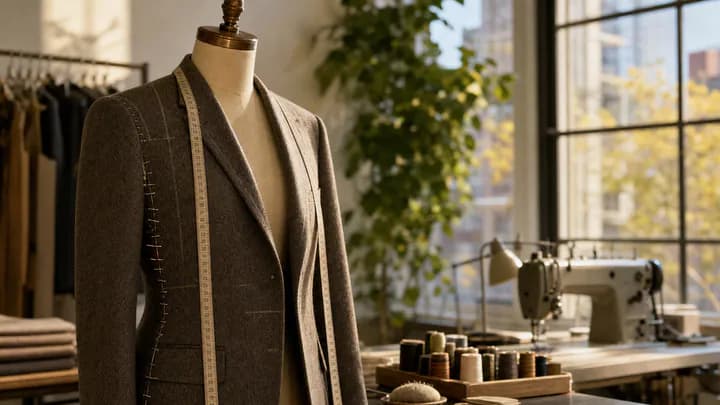
Sleeve length, trouser hem, trouser taper, waist suppression, and dress or skirt length are cheap to alter and produce the single biggest visual upgrade available to most wardrobes. Shoulder width and trouser rise are expensive or effectively impossible to change, so those two must be correct on the rack.
Here is the decision rule our team uses: if the shoulder seam sits within about half an inch of your natural shoulder point and the rise sits where you actually want your waistband, buy it and alter the rest. If either is wrong, put it back regardless of the discount.
A worked example. A $90 wool-blend blazer plus $55 in sleeve and waist alterations comes to $145 and fits you specifically. A $450 blazer worn straight off the rack, sleeves swallowing your knuckles, reads worse in every photograph. Fit is the cheapest luxury signal available, and almost nobody buys it.
What should I buy first if I'm starting from scratch?
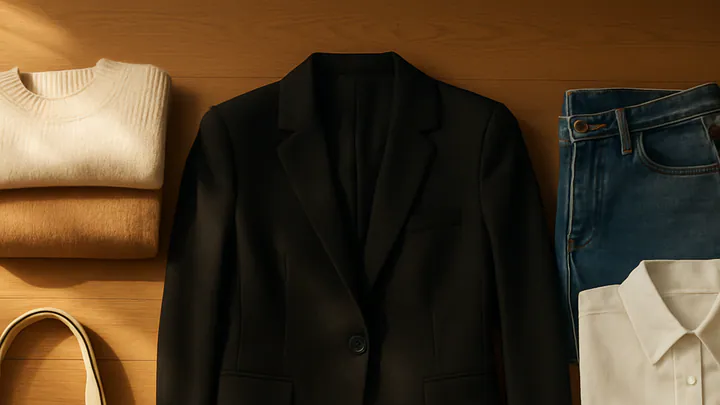
Start with the outer layer and the shoes, because those are seen most and judged hardest. Then fill in knitwear, trousers, shirting, and one bag. Roughly a dozen pieces is enough to run a season.
| Piece | What to check | Best source |
|---|---|---|
| Wool overcoat (camel, charcoal, navy) | Wool 70%+, breathable lining, shoulder seam placement | Secondhand — best value in the entire wardrobe |
| Fine-gauge merino or cashmere crewneck | Two-ply, dense knit, no visible stretch | New from a knitwear specialist |
| Chunkier turtleneck in a neutral | Lambswool is more durable than thin cashmere here | New or secondhand |
| Tailored trousers, mid-weight wool | Rise and shoulder-free fit; hem left long for tailoring | New, then altered |
| White or cream cotton button-down | Poplin or oxford, 100% cotton, replaceable buttons | New — fit is personal |
| Second shirt: soft blue or fine stripe | Same cut you already know fits | New |
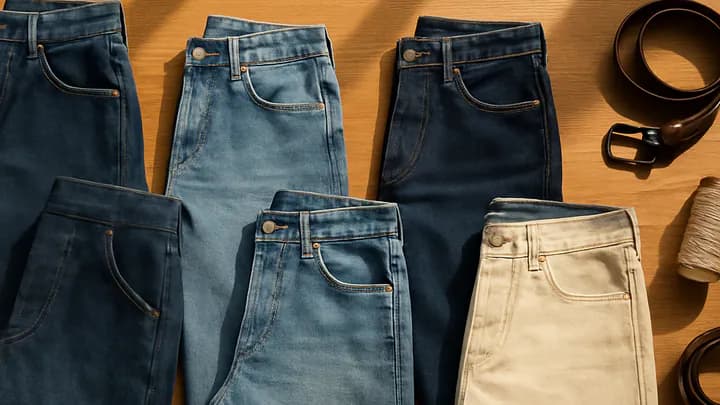
| Dark straight-leg denim, clean rinse | No distressing, no whiskering, under 3% elastane | New |
| Leather loafers or low boots | Leather sole or resoleable construction, full-grain upper | New, or secondhand from a resoling brand |
| Structured leather bag, neutral | Stitching density, edge paint, unbranded hardware | Secondhand |
| Slim watch and one delicate chain | Solid metal, not plated over base alloy | Either |
| Blazer or unstructured jacket | Half-lined for versatility; shoulder must be right | New, then altered |
| Cotton or silk tee / shell | Heavier weight cotton holds its neckline | New |
If you want the arithmetic of how these pieces recombine, our breakdown of 30 pieces and the outfit combinations they generate is the natural companion to this list. And because denim is the one category where cut changes fastest, it is worth checking which jeans are actually worth buying this year before you commit.
How much does it actually cost, and how do you pace the spending?
Built secondhand-first and over twelve to eighteen months, a credible twelve-piece kit lands in the low four figures in the US — and a meaningful share of that is the coat, the shoes, and the bag. Bought all at once from full-price retail, the same kit costs several times more and you will make worse decisions under time pressure.
Use cost per wear as the deciding number. A $400 coat worn 90 times over five winters costs about $4.40 a wear. A $120 coat that loses its shape in one season and gets worn 20 times costs $6 a wear — more expensive, and it looked worse the whole time. The calculation flips against you for anything worn rarely, which is exactly why occasion pieces are the wrong place to spend.
Pace it like any other planned expense rather than a series of impulses. Setting aside a fixed monthly amount toward one named purchase — the coat, then the boots — works the same way sinking funds keep other big costs from turning into panic. This is general editorial guidance on shopping habits, not financial advice.
How do you shop secondhand without getting burned?
Inspect in a fixed order: armholes, lining seams, elbows, and hardware. Those four spots fail first, and all four are visible in good listing photos or under a shop light.
- Ask for a flat-lay measurement — shoulder, chest, sleeve, and length in inches — and compare it to a garment you already own that fits. Never trust a size label across decades or countries.
- Moth damage hides in folds: check under collars, inside cuffs, and along the seat of wool trousers.
- Dry-cleaning shine on wool elbows and seats is permanent. Walk away.
- Leather bags with peeling edge paint can be refinished cheaply; bags with cracked corner leather cannot.
- Budget for a clean. Add $20–$40 mentally to every secondhand coat price. It reframes bargains honestly.
What's changing in the aesthetic this year?
Four shifts are visible in 2026: texture is carrying the contrast, warm neutrals are displacing cool ones, visible craft is the new discreet signal, and silhouettes have loosened considerably.
With color deliberately quiet, interest has to come from surface. A silk shell under nubby tweed, suede against sharp worsted wool, a ribbed knit beside smooth leather — that is where the outfit gets its depth now. Meanwhile chocolate brown, cream, camel, and rust have edged ahead of stark black-and-white for a lot of shoppers, which also happens to flatter more complexions.
The craft signal is the most interesting change. Hand-stitched lapels, horn or corozo buttons, unusual weaves, and visible pick stitching have become the details people notice — a quieter replacement for logos. And the fit is gentler than the razor-sharp minimalism of a few years ago: wider trousers, relaxed shoulders, softer proportion overall.
What mistakes make quiet luxury look cheap?
The most costly mistake is chasing the aesthetic through fast fashion — a polyester "cashmere-look" sweater contradicts the entire premise and pills into obvious failure within a month. If quality is the point, the quality has to be literal.
Others worth watching:
- Too much beige for your complexion. Neutrals should support your skin tone, not erase it. Warm undertones generally sing in cream, camel, and chocolate; cooler ones often do better in taupe, gray, and navy. Hold the fabric under your jaw in daylight and look at your face, not the garment.
- Buying the palette but not the fit. Neutral plus baggy-in-the-wrong-places reads as tired, not refined.
- Erasing your personality. A quiet wardrobe should not be an anonymous one. Let a signature accessory, your hair, or one recurring color do the talking.
- Over-dry-cleaning wool. Steam, air, and brush between wears; clean seasonally. Excess solvent is what produces that flat, shiny look on older suiting.
- Ignoring storage. Cedar, broad-shouldered hangers, and folding knitwear instead of hanging it add years for almost nothing.
When does this approach not apply to you?
It does not apply cleanly if your climate, job, or life stage fights the materials. That is an honest limitation, not a failure of discipline.
If you live somewhere hot and humid, the wool-coat-and-cashmere version is irrelevant; the same principles route you to linen, heavyweight cotton, silk, and open-weave tropical wool. If you work a physically demanding or messy job, cost per wear favors robust workwear fabrics over fine knits — save the delicate layers for off-hours. If you are in the toddler years, light cream is a scheduling decision as much as a style one, and darker neutrals will serve you better. And if you genuinely love bright color and pattern, forcing yourself into oatmeal will only produce a closet you avoid. Take the fabric and fit standards; leave the palette.
Key takeaways
- Quiet luxury is a quality standard — fiber, construction, fit, palette — rather than a look you buy from a specific brand.
- Read the composition label before the price tag; natural fibers should dominate, with small functional percentages of synthetics allowed.
- Shoulder width and trouser rise must be right off the rack; almost everything else is a cheap alteration away from perfect.
- Coats, bags, and shoes are the highest-value secondhand buys; shirting and trousers are usually worth buying new and altering.
- Use cost per wear to decide, and fund big pieces on a schedule instead of an impulse.
- This year the aesthetic is warmer, looser, and more textural — with visible craft replacing logos as the discreet signal.
Editorial note: this reflects our team's perspective on style and shopping habits. Body types, budgets, and climates vary widely — treat this as a framework to adapt, not a prescription to follow.
Frequently asked questions
What is quiet luxury in fashion?
Quiet luxury is a dressing philosophy that prioritizes fabric quality, precise tailoring, and a restrained neutral palette over visible logos or branding. The goal is clothing recognized for its construction and cut rather than its label, and garments that stay wearable for years instead of a season.
Is quiet luxury still relevant in 2026?
Yes, though the phrase itself has cooled. The underlying values — durable natural fibers, considered fit, longevity, and a cohesive palette — have outlived the buzzword and now shape how many shoppers build wardrobes, particularly those tired of micro-trend churn.
Do I need a designer budget to dress this way?
No. The effect comes from fit, fiber content, and cohesion, not price. A well-tailored mid-range blazer in real wool reads more expensive than an untailored designer one, and secondhand coats and bags close most of the remaining gap.
How can I tell if cashmere is good quality?
Check ply and knit density rather than the word "cashmere" alone. Two-ply or heavier knits made from longer fibers hold shape and resist pilling; very thin, single-ply sweaters that feel airy and stretch when pulled tend to pill within weeks. Rubbing the surface briskly in-store is a quick, revealing test.
Which alterations are worth paying for?
Sleeve length, trouser hem and taper, waist suppression, and shortening a skirt or dress are inexpensive and transform how a garment reads. Shoulder width and the rise of trousers are expensive or impossible to change, so those two have to be right off the rack.
How is quiet luxury different from minimalism?
Minimalism is about owning less; quiet luxury is about owning better. They overlap in practice, but minimalism measures success by the number of items, while quiet luxury measures it by fiber, construction, and how long a piece lasts.
Does quiet luxury work in hot or humid climates?
It works, but the fabric list changes. Wool coats and cashmere are irrelevant in a tropical climate, so the same principles route you toward linen, high-quality cotton, silk, and lightweight open-weave wool instead, with the same discipline on fit and palette.