Capsule Wardrobe in 2026: Build Outfits That Work
A modern capsule wardrobe isn't about owning less for its own sake — it's about owning the right pieces. Here's how we'd build one in 2026.

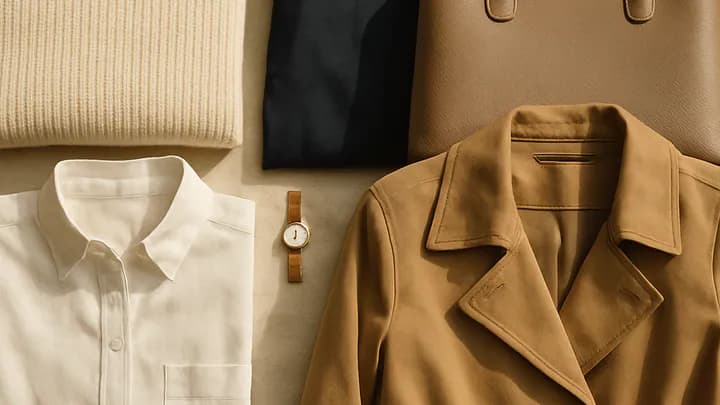
TL;DR: A 2026 capsule wardrobe is a small, intentional collection of around 30 to 40 well-chosen pieces that mix and match into dozens of outfits. The goal isn't extreme minimalism — it's reducing decision fatigue, lowering cost-per-wear, and building a personal style that holds up across seasons. Start with a neutral base, add two accent colors, lock in five outfit formulas, and let quality (not quantity) drive every purchase.
We've been watching the capsule wardrobe idea evolve for years, and 2026 feels like its most practical era yet. Quiet luxury influences are still in the air, secondhand platforms have matured, and shoppers are increasingly tired of micro-trends that disappear in six weeks. A thoughtfully built capsule answers all three pressures at once.
What a capsule wardrobe actually is in 2026
The original capsule concept, popularized by London boutique owner Susie Faux in the 1970s and later refined by designer Donna Karan's "Seven Easy Pieces" collection, was simple: a few core items you genuinely love, supplemented by seasonal additions. The 2026 version keeps that spirit but adapts it to hybrid work, climate-aware dressing, and a resale market that lets you experiment without permanent commitment.
According to a 2024 report from the consultancy McKinsey on the state of fashion, consumers are increasingly prioritizing versatility and longevity over volume — a shift that maps almost perfectly onto capsule principles. Meanwhile, ThredUp's annual resale report has noted year-over-year growth in secondhand spending, which makes building a high-quality capsule more accessible than it used to be.
What it is
- A curated set of pieces (usually 30–40) that work across multiple outfits.
- Anchored by neutrals and a small, intentional accent palette.
- Refreshed seasonally with a light hand, not rebuilt from scratch.
What it isn't
- A strict numbers game (37 pieces, no more, no less).
- An all-beige uniform unless that genuinely suits you.
- A one-time project — it's a living system you maintain.
Step 1: Audit the life you actually live
Before buying anything, we suggest a brutally honest week-in-the-life audit. Open your calendar from the last month and tally roughly what percentage of your time was spent at work, doing errands, exercising, socializing, and resting at home.
If you work from home three days a week, you don't need five tailored blazers — you need two great ones and more elevated knitwear. If your social life centers on casual dinners rather than galas, that single "just in case" sequined dress is probably costing you closet real estate. Build the capsule around the life on your calendar, not the life on your mood board.
Step 2: Choose your color architecture
Color is what makes a capsule actually function. Without a coherent palette, you end up with items that technically fit but don't mix. We recommend a three-layer approach:
- Two base neutrals. These cover bottoms and outerwear — think navy and ivory, charcoal and camel, or black and stone.
- One bridge neutral. A softer tone that ties the bases together, often used for knits and shirting (oatmeal, soft white, taupe).
- One or two accent colors. Choose shades that genuinely flatter your skin tone. Burgundy, forest green, soft rose, and rich rust have all stayed strong into 2026.
Color analysis has had a major moment on social platforms over the past two years, and while we wouldn't treat any single "season" label as gospel, the underlying idea is sound: colors near your face affect how rested and put-together you look. Test pieces in daylight near a mirror before committing.
Step 3: The core piece list
Here's a flexible blueprint we'd build from. Adjust ratios to your climate and lifestyle.
Tops (8–10)
- 2 white or ivory shirts (one crisp, one relaxed)
- 2 fine-gauge knits in base neutrals
- 1 chunkier sweater for cold months
- 2–3 quality T-shirts
- 1 accent-color top (silk blouse, ribbed knit, or similar)
Bottoms (5–7)
- 1 pair of tailored trousers in a base neutral
- 1 pair of straight or wide-leg jeans in a flattering dark wash
- 1 pair of relaxed everyday jeans
- 1 skirt or additional trouser in your bridge neutral
- 1 pair of trousers suited to your specific climate (linen, wool, or technical fabric)
Dresses and one-pieces (2–4)
- 1 simple day dress that works with sneakers or boots
- 1 more polished dress for evenings or events
- Optional jumpsuit if it suits your style
Outerwear (3–4)
- 1 trench or lightweight overcoat
- 1 warm winter coat appropriate to your region
- 1 casual jacket (denim, leather, or quilted)
- 1 blazer that doubles as a jacket
Shoes (5–7)
- 1 pair of clean white or neutral sneakers
- 1 pair of loafers or ballet flats
- 1 pair of ankle boots
- 1 pair of dressier shoes (heels, dress boots, or polished loafers)
- 1 pair of sandals or weather-appropriate seasonal shoe
Step 4: Lock in five outfit formulas
This is the step most capsule guides skip, and it's the one that makes the whole system actually work. A formula is a repeatable outfit equation you can swap pieces into.
- The polished weekday: tailored trousers + tucked knit + loafers + structured bag
- The smart casual: dark jeans + white shirt + blazer + ankle boots
- The easy weekend: relaxed jeans + T-shirt + sneakers + denim or casual jacket
- The elevated evening: simple dress + heels or sleek boots + statement earrings
- The cold-weather hero: chunky knit + trousers + boots + long coat + scarf
If your closet can produce all five of these without you having to think, the capsule is doing its job.
Step 5: Buy slowly, buy well
The U.S. Bureau of Labor Statistics has long tracked apparel as one of the categories where Americans both spend significantly and discard heavily. A capsule flips that pattern: fewer purchases, higher per-item investment, longer ownership.
A few buying principles we use:
- Fabric first. Check the composition label. Natural fibers like wool, cotton, linen, and silk — or high-quality blends — typically age better than 100% synthetics.
- Construction matters. Look at seams, buttonholes, and lining. A garment that survives 50 washes is cheaper per wear than three that don't.
- Try the rule of three. Before buying, name three existing pieces it pairs with and three occasions you'll wear it. If you can't, skip it.
- Embrace secondhand. Platforms like Vestiaire Collective, The RealReal, and local consignment shops make designer-quality basics genuinely affordable.
Common mistakes to avoid
- Copying someone else's capsule. A wardrobe built for a Parisian editor won't survive a Houston summer or a Toronto winter.
- Overcorrecting into all-neutral boredom. If you love color, build the capsule around colors that mix well — not around someone else's idea of restraint.
- Forgetting fit. A modest tailoring budget often does more for your style than any new purchase.
- Treating it as a one-weekend project. Real capsules take a few seasons to settle. Be patient.
How a capsule plays with trends
A common worry: doesn't a capsule mean giving up on fashion? Not at all. Trend forecasters at agencies like WGSN consistently note that the most stylish dressers anchor in classics and use a small rotating shelf of trend items as accents. Your capsule is the anchor; one statement coat, a pair of interesting boots, or a current-season bag is the punctuation.
Maintenance: the part nobody talks about
Capsules survive on care. We recommend washing knits less and airing them more, using cedar or lavender to deter moths, polishing leather shoes seasonally, and keeping a small tailoring fund for hems, button replacements, and the occasional resize. A $200 coat that gets relined at year three can easily outlast three fast-fashion replacements.
Key takeaways
- Build the capsule around the life on your calendar, not your mood board.
- Two base neutrals, one bridge neutral, and one or two accent colors are usually enough.
- Aim for 30–40 pieces that produce at least five repeatable outfit formulas.
- Invest in fabric, construction, and tailoring; embrace secondhand for quality basics.
- Refresh lightly each season — don't rebuild from scratch.
- Use a small rotating trend shelf to keep your look current without diluting the system.
Editorial note: This article reflects general style guidance from our editorial team and is intended for inspiration only. Personal style is personal — adapt any framework here to your body, budget, climate, and culture.
Frequently asked questions
How many pieces should a capsule wardrobe have in 2026?
Most successful capsules sit between 30 and 40 pieces, including shoes and outerwear but excluding underwear, loungewear, and activewear. The exact number matters less than whether each item plays well with at least three others in your closet.
What colors work best for a capsule wardrobe?
Choose two or three neutrals as your base (such as black, ivory, navy, or warm brown), then add one or two accent colors that flatter your skin tone. This keeps almost every item mixable while still leaving room for personality.
How often should I refresh my capsule wardrobe?
We recommend a light review every season and a deeper edit twice a year. Most pieces should stay for multiple years; only swap in new items when something wears out or your lifestyle genuinely changes.
Is a capsule wardrobe cheaper in the long run?
Generally yes, because you buy less and wear what you own more often. The upfront cost can feel higher if you invest in quality basics, but cost-per-wear tends to drop significantly over two to three years.
Can I have a capsule wardrobe if I work in a creative or trend-forward industry?
Absolutely. Treat your capsule as the foundation and layer in a small rotating shelf of trend pieces — interesting shoes, statement outerwear, or seasonal accessories — to keep your look current without rebuying basics.
What's the biggest mistake people make when building a capsule?
Buying for the life they imagine rather than the life they actually live. Audit how you really spend your week — work, errands, social, rest — and build the capsule around those real proportions.