
Oscar Predictions 2025: Who Won Big and How to Forecast
The 2025 Oscar race ended with a result most forecasters missed. Here is what actually won at the 97th Academy Awards, why the guild and BAFTA signals diverged, and the repeatable method for predicting future ceremonies.
Rewritten with AI and republished automatically. Our editors set the standards and fix reported errors — how we work.
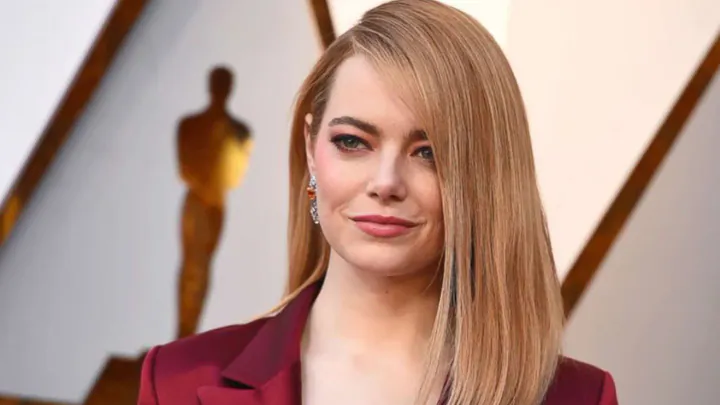
TL;DR: At the 97th Academy Awards on March 2, 2025, Anora won Best Picture along with four other awards, beating the BAFTA and SAG ensemble winner Conclave. The lesson for forecasters: follow the Producers and Directors Guilds, not the loudest campaign. Below is what won, why, and how to predict the next ceremony.
The Academy Award for Best Picture is an industry prize decided by roughly ten thousand voting members of the Academy of Motion Picture Arts and Sciences using a preferential, ranked-choice ballot. That single sentence explains more Oscar outcomes than any amount of red-carpet buzz, and it is why so many published predictions for the 2025 race missed the mark.
Who won the major awards at the 2025 Oscars?
Sean Baker's Anora dominated the 97th Academy Awards, converting five of its six nominations, with Baker personally collecting four statuettes in one night as director, writer, editor and producer. Conan O'Brien hosted. Here is the top-line result.
| Category | Winner | Film |
|---|---|---|
| Best Picture | Sean Baker and producing team | Anora |
| Best Director | Sean Baker | Anora |
| Best Actress | Mikey Madison | Anora |
| Best Actor | Adrien Brody | The Brutalist |
| Best Supporting Actor | Kieran Culkin | A Real Pain |
| Best Supporting Actress | Zoe Saldaña | Emilia Pérez |
| Best Original Screenplay | Sean Baker | Anora |
| Best Adapted Screenplay | Peter Straughan | Conclave |
| Best International Feature | Brazil | I'm Still Here |
| Best Animated Feature | Gints Zilbalodis and team | Flow |
Anora also became the rare Palme d'Or winner to take Best Picture, following Parasite. That double is worth noting for future forecasts: Cannes' top prize now carries genuine Oscar signal in a way it did not twenty years ago.
Why did the BAFTA and SAG front-runners lose?
Conclave won the BAFTA for Best Film and the Screen Actors Guild award for Outstanding Cast, and still lost Best Picture. That is not an upset so much as a misread of which electorate matters. BAFTA's voting body is heavily British and votes on a different schedule; SAG's ensemble prize is decided by actors alone, who reward large, showy casts and had little to reward in a two-hander like Anora.
The guilds that actually mirror the Academy's structure told a different story. The Directors Guild gave its feature award to Sean Baker, and the Producers Guild — which, crucially, uses a preferential ranked ballot much like the Academy's Best Picture vote — went to Anora. When the DGA and PGA agree, they are usually right.
| Award | Who votes | Ballot type | Predictive weight |
|---|---|---|---|
| Producers Guild (PGA) | Film and TV producers | Preferential ranked | Highest — structurally closest to the Oscar ballot |
| Directors Guild (DGA) | Directors | Plurality | High — a DGA loss for the eventual Best Director is rare |
| BAFTA Best Film | BAFTA membership | Plurality | Moderate — diverged in 2025 |
| SAG Outstanding Cast | SAG-AFTRA members | Plurality | Moderate — rewards ensemble size, not overall craft |
| Golden Globes | International voters and journalists | Plurality, split drama/comedy | Low for Best Picture, useful for momentum |
| Critics' groups | Film critics | Varies | Low — critics and industry voters often want different things |
How does Oscar voting actually work?
Nominations are made branch by branch: actors nominate actors, directors nominate directors, cinematographers nominate cinematographers. Best Picture nominations and all final winners are voted on by the full membership. Best Picture is the one category decided by a preferential count, where voters rank the nominees and the lowest-ranked films are eliminated until one title passes fifty percent.
That mechanism is the whole game. A polarizing film with passionate first-place support can lose to a broadly liked film that sits second or third on thousands of ballots. It also explains why a divisive title can collect thirteen nominations — where branch enthusiasm is enough — and then win almost nothing in the final round.
What does a collapsing front-runner look like?
Emilia Pérez led the 2025 field in nominations and finished with two wins, for Supporting Actress and Original Song, after a late-season controversy over resurfaced social media posts by its lead performer. It is the clearest recent worked example of a rule worth applying every year: nominations measure enthusiasm in January; wins measure consensus in February.
Preferential voting punishes a damaged film twice over. Members who are uneasy do not simply withhold a first-place vote — they push the title to the bottom of the ballot, where it is eliminated early and its remaining votes redistribute to rivals. If a front-runner takes reputational damage after voting opens, downgrade it hard rather than trimming its odds by a few points.
What did the acting races reveal about precursor reliability?
Both lead acting categories broke against the SAG winner. Timothée Chalamet won the Screen Actors Guild award for A Complete Unknown and lost the Oscar to Adrien Brody for The Brutalist. Demi Moore swept most of the season for The Substance and lost to Mikey Madison, who had won the BAFTA.
The practical rule: when SAG and BAFTA disagree in an acting category, treat the race as genuinely open and weight the film's overall strength. Madison's win traveled with a Best Picture juggernaut; Moore's did not. Performances attached to the eventual Best Picture winner have a real tailwind.
Do sequels and blockbusters ever win Best Picture?
Very rarely. The Godfather Part II and The Lord of the Rings: The Return of the King remain the headline exceptions, and both were the culminating chapter of a series the Academy had already embraced. Dune: Part Two was nominated for Best Picture in 2025 and won in the sound and visual effects categories — a typical outcome for large-scale genre filmmaking.
This is also where the most common prediction error lives. Dune: Messiah is currently scheduled for a December 2026 release, which places it in a later eligibility year entirely. A film qualifies for a given ceremony based on its theatrical release window, not its production announcements or trailer drops. Christopher Nolan, similarly, already won Best Director for Oppenheimer; his next feature belongs to a future race. If you are curious about how filmmakers pursue scientific plausibility in space stories, our piece on the communication delay in eleven minutes between Earth and Mars is a useful reality check against what the genre usually shows.
How do I build a reliable prediction ballot?
Work in sequence rather than reacting to headlines. The following order requires no insider access.
- Fix the eligibility year first. List only films that had a qualifying theatrical release in the calendar year being honored. Delete everything else, however exciting.
- Weight the festival ledger. Cannes, Venice, Telluride, Toronto and Sundance are where Best Picture contenders now surface. Sundance has produced eventual winners and near-winners, from Whiplash to CODA.
- Wait for PGA and DGA. Ignore the Golden Globes as a Best Picture oracle. If the guilds agree, lock the front-runner. If they split, expect a divided night.
- Check the below-the-line spread. A Best Picture winner almost always shows strength in editing. Anora won Film Editing. A nominee with no craft nominations is a long shot.
- Model the second-place vote. Ask which film the most people would tolerate at number two. On a preferential ballot, that film often wins.
What themes are actually moving through the awards pipeline?
Three currents are visible and worth tracking rather than guessing at. Independently financed, mid-budget features are winning the top prize more often than studio tentpoles. International films are no longer confined to their own category, with Brazil's I'm Still Here earning a Best Picture nomination alongside its international win. And artificial intelligence has moved from a plot device to a production controversy — questions about voice cloning and digital touch-ups surfaced in the 2025 season and now form part of campaign due diligence.
That last point is worth understanding technically as well as culturally, because the tooling is no longer exotic: the same class of models covered in our explainer on running AI models on your own device is what post-production houses are quietly experimenting with. Expect voters to keep asking harder questions about disclosure.
And if the human side of performance is what draws you to awards season, our short fiction about the understudy of rehearsal room B sits closer to the truth of the craft than most campaign trails do.
When does this method not apply?
Two honest caveats. First, the craft categories — sound, production design, makeup, visual effects — are decided largely by specialists who vote on technical merit, so Best Picture momentum predicts them poorly. Second, in a season with no clear guild consensus, the preferential ballot becomes genuinely unpredictable, and anyone claiming certainty in February is guessing with better vocabulary. Forecast the structure, accept the variance.
Key takeaways
- Anora won Best Picture at the 97th Academy Awards in March 2025, taking five awards including Director, Actress and Original Screenplay.
- The Producers Guild and Directors Guild are the strongest precursor signals; BAFTA, SAG ensemble and the Golden Globes all diverged from the Oscar result in 2025.
- Best Picture is decided by a preferential ranked ballot, which rewards broad acceptability over passionate but narrow support.
- A front-runner that takes reputational damage after voting opens falls further than the odds suggest, as the Emilia Pérez season demonstrated.
- Always confirm a film's theatrical eligibility year before predicting it — unreleased sequels belong to future ceremonies, not this one.
- Film editing nominations are a quiet but consistent marker of real Best Picture strength.
Frequently asked questions
Which film won Best Picture at the 2025 Oscars?
Anora, directed by Sean Baker, won Best Picture at the 97th Academy Awards on March 2, 2025. It took five awards from six nominations, including Best Director, Best Actress for Mikey Madison, Best Original Screenplay and Best Film Editing.
Why did Anora win when Conclave took both BAFTA and the SAG ensemble prize?
Because BAFTA and SAG use different electorates and different ballots than the Academy's Best Picture vote. BAFTA has a largely British membership, SAG is actors only, and neither uses the Academy's preferential ranked ballot. The Directors Guild and Producers Guild, which both went to Anora, historically align far more closely with Best Picture.
Is Dune: Messiah eligible for the 2025 Oscars?
No. Dune: Messiah is scheduled for a December 2026 theatrical release, which would place it in the eligibility window for the ceremony held in 2027, not 2025. Slotting an unreleased film into the wrong award year is the single most common mistake in amateur Oscar predictions.
Which precursor award best predicts Best Picture?
The Producers Guild of America award is generally the strongest single predictor, largely because the PGA uses a preferential ranked ballot much like the Academy's Best Picture vote. The Directors Guild award is the next most reliable signal, and a film that wins both is usually the front-runner.
Can an actor win Best Actor two years in a row?
Yes, but it is rare. Only a handful of performers have taken back-to-back acting Oscars, including Katharine Hepburn, Spencer Tracy and Tom Hanks. Voters tend to spread recognition around, so a recent winner usually needs a clearly superior performance and a strong campaign to repeat.
How many people vote on the Oscars?
The Academy of Motion Picture Arts and Sciences has roughly ten thousand voting members, organized into branches such as actors, directors, writers and cinematographers. Branches nominate within their own craft, but the entire membership votes on Best Picture and on the final winners in every category.
Does a big box office total help a film win Best Picture?
It helps visibility, not votes. Commercial success means more members have seen the film, which matters on a preferential ballot, but the Academy has repeatedly given Best Picture to modestly budgeted independent films. Anora, Moonlight and CODA all won without blockbuster grosses.