Eco-Friendly Transportation: The Healthiest Way to Commute
A practical, health-first look at eco-friendly transportation: which mode fits your distance, what the switch really costs, the air-quality trap most new bike commuters miss, and when driving is still the right call.
Rewritten with AI and republished automatically. Our editors set the standards and fix reported errors — how we work.
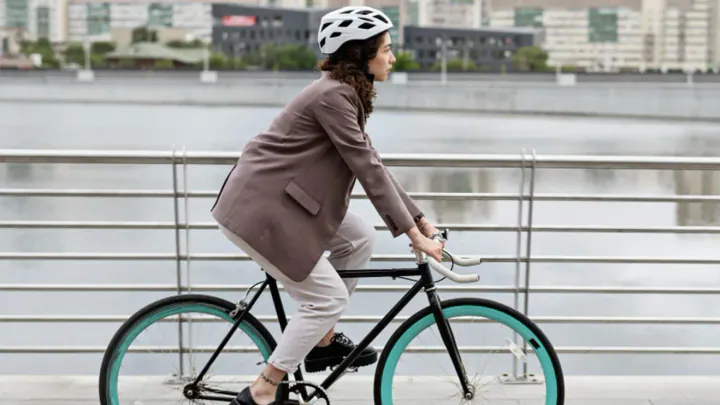
TL;DR: Eco-friendly transportation cuts emissions and adds daily movement at the same time. Match the mode to the distance: walk under a mile, bike or scoot one to five miles, e-bike or take transit beyond that. The savings are real but concentrated in parking, insurance and car ownership, not fuel alone.
Eco-friendly transportation is any way of moving through a city that produces little or no tailpipe emission per passenger-mile: walking, cycling, e-bikes, e-scooters, shared rides and electrified or high-occupancy public transit. We file this under health rather than environment for a simple reason. The climate benefit is spread across everyone, but the physical activity, the lower stress and the reclaimed time land on you personally, every single day you do it.
That personal payoff is why green commuting sticks when it sticks. Below is what a realistic switch looks like, including the parts most articles leave out.
Does eco-friendly commuting actually improve your health?
Yes, primarily because it converts dead time into movement. Research on active commuting consistently points in the same direction: people who walk or cycle to work get more weekly physical activity, tend toward better cardiorespiratory fitness and report lower commute-related stress than people who drive alone in congested conditions.
The mechanism is unglamorous. A 25-minute bike ride twice a day, five days a week, is over four hours of moderate activity you did not have to schedule. That is the entire problem with exercise solved by geography rather than willpower. If you want to understand what that effort level is doing for you, our guide to Zone 2 cardio training explains why the easy, conversational pace of a commute is more valuable than it feels.
There is a second, quieter benefit: light exposure. A morning walk or ride to a transit stop delivers outdoor light at the time of day when your circadian rhythm is most responsive to it, which is the same principle behind the 10-minute morning sunlight habit. People who make this switch often report sleeping better before they report getting fitter.
None of this is medical advice. If you have a cardiac condition, joint issues or are returning from injury, talk with a qualified healthcare professional before making a daily commute your primary exercise.
Which commute mode fits my distance?
Distance is the single best predictor of whether a green commute survives. Under one mile, walking beats everything. One to five miles is prime cycling territory. Beyond five miles, you want an e-bike, transit, or a combination.
| Mode | Distance sweet spot | Physical activity | Typical upfront cost | Weather resilience |
|---|---|---|---|---|
| Walking | Under 1.5 miles | Moderate, continuous | Good shoes | High |
| Standard bike | 1–5 miles | Moderate to vigorous | Bike, lock, lights, helmet | Medium |
| E-bike | 3–12 miles | Light to moderate | Significant; treat as a vehicle purchase | Medium |
| E-scooter | 0.5–2 miles | Minimal | Low if shared, moderate if owned | Low |
| Public transit | 2 miles and up | Walking at both ends | Pass or fare only | High |
| Carpool / EV | Any | None | Highest | High |
Our decision rule: compare door-to-door time, not speed. If the green option lands within about ten minutes of driving once you include parking, walking from the garage and searching for a space, it will win on habit. If it costs you forty extra minutes each way, no amount of good intention will hold it for a year.
How much does switching really cost — and save?
The savings come from eliminating fixed costs, not variable ones. Fuel and maintenance scale with mileage, but insurance, registration, financing and depreciation continue whether the car sits in the driveway or not. Driving 40 percent less does not cut your car budget by 40 percent.
A worked example, using illustrative numbers you should replace with your own:
- Scenario A — drive less, keep the car: you cut 3,000 miles a year. At roughly 15 cents a mile in fuel and wear, that is about $450 saved. Real, but modest.
- Scenario B — drop a downtown parking contract: a monthly space in many city centers costs more per year than a solid commuter bike. Cancel it and the bike pays for itself in one season.
- Scenario C — go from two cars to one: this is where the number gets large, because you remove an entire insurance policy, registration and depreciation stream at once.
If you are buying an e-bike, gear or an annual transit pass, budget for it deliberately rather than absorbing it in one painful month. None of this constitutes financial advice; your own insurance, tax and transit situation will differ.
What goes wrong when people try to switch?
Most green commutes fail for logistical reasons, not ideological ones. These are common failure points.
Riding the fastest route instead of the cleanest one
This is the mistake almost nobody warns about. Cyclists breathe several times more air per minute than a seated driver, so riding along a congested arterial can mean inhaling more pollution per mile than the cars beside you. Pollutant concentrations drop off sharply away from traffic lanes. A parallel residential street that adds three minutes is usually the better trade, and it is quieter and safer as well.
Buying too much bike, too early
A carbon road bike is a poor commuter. It has no rack mounts, no fenders, tires that hate potholes, and it is a theft magnet. A used, serviceable bike with fenders, a rack and puncture-resistant tires will out-commute an expensive one every time. Spend the saved money on a good lock and proper lights instead.
Ignoring the sweat problem until day one
Two fixes solve most of it: ride slower than you want to, and use panniers rather than a backpack. A backpack against your spine is the single largest source of commuting sweat. If your workplace has no shower, plan for a change of shirt and let the ride be genuinely easy. A small, repeatable outfit rotation makes desk-side changing far less annoying.
Treating e-scooters as low-risk
Small wheels, standing posture and low helmet use make scooters more injury-prone than bicycles per trip. Emergency departments report head injuries as a common scooter presentation. If a scooter is your link between transit and the office, carry a helmet, stay off wet or cracked pavement, and slow down for driveway crossings where drivers do not look for you.
Starting on Monday in January
Begin in mild weather, two days a week, on your easiest route. Habits built in good conditions survive bad ones; habits started in sleet do not.
When does this advice not apply?
Honestly: often. Eco-friendly transportation is a strong default, not a universal one.
- Caregiving and school runs. A parent doing daycare drop-off, a grocery run and a work commute in one chained trip has a genuine logistics problem that a bike may not solve, unless a cargo bike is realistic where you live.
- Night shifts and infrequent service. If the last bus is at 10 p.m. and your shift ends at 11, transit is not an option regardless of intent.
- Mobility limitations. Active commuting is not accessible to everyone. An EV, a carpool or a shared ride is still a meaningful improvement over solo driving.
- Genuinely unsafe streets. If there is no viable low-traffic route, the right answer is transit now and advocacy for infrastructure later, not heroic riding in a high-speed lane.
- Severe air quality days. During wildfire smoke or high-ozone advisories, an enclosed vehicle or transit is the health-protective choice. Skip the ride.
How do I build a sustainable commute that survives week three?
Plan the route before you plan the habit, and lower the barrier to the first ten minutes. A commute you have to think about each morning is one you will eventually skip.
- Map two routes: a fast one and a quiet one. Use the quiet one on low-energy days.
- Do a dry run on a weekend. Time it honestly, including locking up and changing.
- Pick a floor, not a target. Two green commutes a week that always happen beat five that collapse.
- Pre-stage everything. Helmet, lights charged, bag packed, transit app with the route saved the night before.
- Build a rain plan. Deciding in advance what you do when it pours prevents the first bad morning from ending the experiment.
- Protect recovery. Adding an hour of daily movement without adjusting sleep is a common way to burn out; our guide to recovering from sleep debt covers what that adjustment looks like.
What do the emissions numbers actually look like?
A typical gasoline passenger vehicle emits on the order of four to five metric tons of carbon dioxide per year in average US driving conditions, according to EPA estimates. Per passenger-mile, a well-used bus or rail line is dramatically lower, and walking and cycling are effectively zero at the point of use.
Two honest caveats. First, transit's per-passenger advantage depends heavily on how full the vehicle is; a near-empty late-night bus is not efficient. Second, electric vehicles remove tailpipe emissions but not manufacturing emissions, and their lifetime footprint depends on how clean your local electricity grid is. An EV is a large improvement over a gas car and a much smaller one over not driving.
How can I push for better transportation where I live?
Local transportation decisions are usually made in sparsely attended public meetings, which means individual participation carries unusual weight. Show up to planning or transportation board hearings, submit comments on street redesign and bus-network proposals, and join a neighborhood group that tracks them.
Concrete asks work better than general enthusiasm. Requesting protected bike lanes on a specific corridor, bus-priority signals at a named intersection, secure bike parking at a particular station, or safer crossings outside a school gives officials something actionable. At work, ask whether commuter benefits, transit subsidies, secure bike storage or a shower can be added; these are frequently cheaper for employers than parking spaces.
Key takeaways
- Match the mode to the distance: walk under 1.5 miles, bike 1–5, e-bike or transit beyond that.
- Compare door-to-door time rather than speed; a green commute within ten minutes of driving becomes a habit.
- Choose the quiet parallel street over the arterial — you breathe substantially less traffic pollution a block away from the main road.
- Real savings come from shedding parking contracts or a whole vehicle, not from fuel alone.
- Start in mild weather with a two-day-a-week floor, pre-stage your gear, and have a rain plan.
- If caregiving, night shifts, mobility needs or unsafe streets rule out active commuting, carpooling and transit are still meaningful improvements.
Frequently asked questions
What is the healthiest way to commute in a city?
Walking and cycling are the healthiest commuting modes because they build daily physical activity into a trip you were making anyway. Public transit ranks close behind, since most transit trips include several minutes of walking at each end. The best mode is the one you will realistically repeat four or five days a week.
How far is too far to bike to work?
Most people sustain a regular bike commute up to about 5 miles each way on a standard bike, and up to roughly 10 to 12 miles on an e-bike. Beyond that, distance usually beats motivation. A useful test is total door-to-door time: if biking is within about 10 minutes of driving, the habit tends to stick.
Do cyclists breathe in more pollution than drivers?
Cyclists breathe harder, so on a busy arterial road they can inhale more pollutants per mile than a driver in a sealed cabin. The fix is route choice rather than giving up: parallel side streets, greenways and separated paths typically have meaningfully lower concentrations than the main road a block away.
Does switching to transit or biking actually save money?
It saves the most when you eliminate a vehicle or a parking contract, not when you simply drive less. Fuel and wear are variable costs, but insurance, registration and depreciation continue whether the car moves or not, so partial switching produces smaller savings than people expect. This is general information, not financial advice.
Are e-bikes real exercise?
Yes, for most riders. Pedal-assist e-bikes typically keep effort in the light-to-moderate range rather than eliminating it, and because riders take longer and more frequent trips, weekly activity often ends up similar to or higher than on a standard bike.
What should I do if my city has no bike lanes?
Start with transit plus walking, which requires no infrastructure investment from you, and map low-traffic residential routes for any cycling. Then push locally: attend transportation or planning meetings, comment on street redesign proposals and support neighborhood advocacy groups, since these forums are usually decided by whoever shows up.
Is an e-scooter a good commuting option?
E-scooters work well for short trips of roughly one to two miles, especially as a link between transit and a destination. They carry a higher injury risk than bikes because of small wheels and low helmet use, so a helmet, daylight riding and avoiding wet or cracked pavement matter more than most riders assume.