How to Create No-Phone Zones at Home That Actually Stick
No-phone zones only work when the phone has somewhere better to be. Here's how to pick the right room, build a landing spot in an afternoon, enforce it without nagging, and handle the on-call exceptions most guides ignore.
Rewritten with AI and republished automatically. Our editors set the standards and fix reported errors — how we work.

TL;DR: A no-phone zone works only when the phone has a better place to be. Pick one room, build a charging station just outside it, agree on the rule out loud with everyone in the house, and review after two weeks. Total cost: under $40. Total setup time: an afternoon.
What exactly is a no-phone zone, and how is it different from screen-time limits?
A no-phone zone is a designated area of your home where phones are physically absent by household agreement, rather than merely silenced or turned face-down. The distinguishing feature is distance: retrieving the device costs you a walk, and that small friction is doing most of the work.
Screen-time limits target duration. No-phone zones target context. A screen-time app will happily let you burn your allowance at the dinner table; a no-phone zone protects a specific experience — a meal, a conversation, the first twenty minutes after you wake up — regardless of how many minutes you used elsewhere.
This distinction matters because the research on attention generally suggests that a visible phone degrades focus even when untouched. Face-down on the table is still a small open loop. Out of the room closes it.
Which room should I make phone-free first?
Start with the room where you already feel friction — the bedroom if you sleep badly, the dining table if meals feel hollow. Do not start with the room that is easiest, because an easy win in a room nobody uses teaches you nothing and motivates no one.
Rule of thumb: one zone at a time, held for three weeks, before adding a second. Households that declare four zones on a Sunday afternoon have usually abandoned all four by the following Sunday.
| Zone | Main payoff | Hardest part | Choose it first if… |
|---|---|---|---|
| Bedroom | Faster sleep onset, calmer mornings | Replacing the phone alarm | You scroll past midnight or wake and reach immediately |
| Dining table | Real conversation, slower eating | Getting every adult to comply | Meals have gone quiet or rushed |
| Family room during a set window | Shared attention, unstructured play | Competing with the TV | You live together but rarely talk |
| Reading or hobby corner | Sustained focus, restarted hobbies | Remembering the corner exists | You own books or instruments you never touch |
| Bathroom | Hygiene, shorter visits, small reset | Nobody polices it | You want a low-stakes place to practice |
How do I set up a no-phone zone in one afternoon?
Five steps, roughly two hours of work, most of it deciding rather than building.
- Choose the boundary. Name it precisely: "the bedroom after 10 p.m.," not "evenings." Vague zones die first.
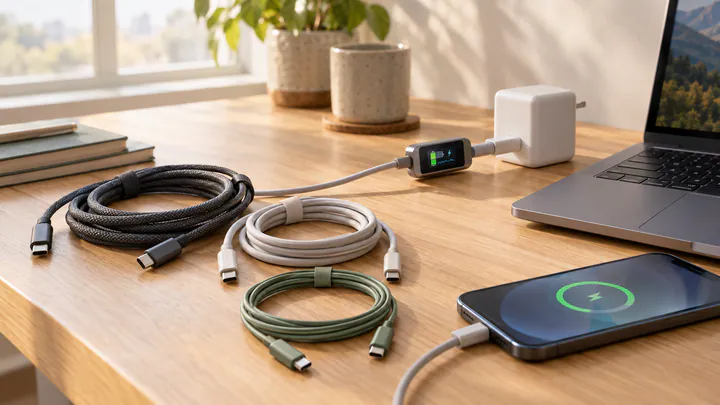
- Build the landing spot. Find a power outlet outside the zone. Put a tray, basket, or small shelf there with a charging cable already plugged in. This is the single highest-leverage step. If a nearby hallway or entry table can host it, even better.
- Remove the dependency. If your phone is your alarm clock, buy a $12 analog or digital clock before you start. If it is your timer, your recipe, or your white noise, solve that too.
- Say it out loud. Announce the rule to everyone affected, including guests, and invite objections now rather than mid-dinner.
- Fill the vacuum. Put something in the zone worth doing: a book, a deck of cards, a sketchpad. Empty phone-free rooms just feel like waiting rooms.
What does a no-phone zone cost to set up in 2026?
Between nothing and about $60, and the cheap version works about as well as the expensive one. A basket you already own plus a spare cable costs zero. A simple bamboo charging tray runs roughly $20 to $35, an analog bedside clock $10 to $25, and a multi-device charging station $40 and up.
Our advice is to spend nothing for the first two weeks. Prove the habit with a shoebox, then buy the nice tray as a reward. The reverse order — buying a handsome $150 station first — is one of the most common and most quietly demoralizing ways this project fails.
Which settings actually enforce a no-phone zone?
Physical distance does the enforcing; software just reduces temptation and handles emergencies. Three settings are worth configuring before you start.
- A scheduled Focus or Do Not Disturb mode that switches on automatically at your zone's start time. Automatic beats manual, because manual requires you to be disciplined at exactly the moment you are least disciplined.
- Emergency bypass for two or three contacts so a genuine crisis still reaches you. Both major mobile platforms support letting specific people ring through, and most allow repeated calls from the same number within a few minutes to break through as well.
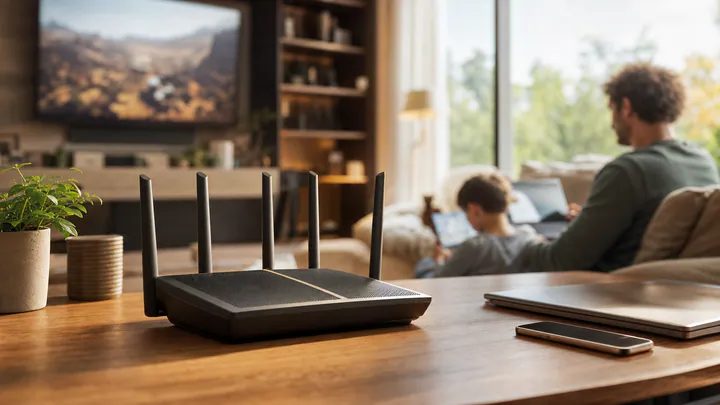
- Router-level schedules if you share a home with teenagers. Most modern routers can pause internet access to specific devices during set windows — a feature worth checking before you shop, alongside everything else covered in our look at whether Wi-Fi 7 is worth the router upgrade.
A note on grayscale mode: it helps some people considerably and does nothing for others. Try it for three days, keep it if you notice, drop it if you don't.
Why do no-phone zones fail after week three?
They fail for four predictable reasons, and all four are fixable in advance.
The rule was never made concrete
"Less phone at dinner" is a wish. "Phones go in the hall basket when the first plate hits the table" is a rule. Add a trigger event, not just a time.
One person is exempt
The fastest way to kill a household rule is an adult who keeps their phone "for work." If someone genuinely needs to be reachable, that person's exception should be explicit, time-bounded, and visible — not assumed.
The zone had nothing to replace the phone
Boredom is not a plan. A bedroom with a book on the nightstand survives; a bedroom with a bare nightstand sends you downstairs to retrieve your phone by night four.
The first slip was treated as a failure
You will check your phone at the table. Everyone does. The households that succeed shrug and reset at the next meal. The ones that quit decide the experiment was a failure and delete the whole system.
How do I handle on-call work, caregiving, and other real exceptions?
Write the exception into the rule instead of letting it quietly dissolve it. If you are on call two nights a week, the phone stays on the nightstand those two nights and in the hallway the other five — that is still a 70 percent reduction, and it's honest.
Specific situations that deserve a named carve-out:
- Caregivers waiting on a hospital, school, or elderly parent. Use emergency bypass plus a loud ringer and keep the phone within earshot outside the door.
- Shift workers and on-call staff. Zone by night, not by room.
- People who live alone and rely on a phone for personal safety. A phone in the hallway is still reachable in seconds.
- Medical monitoring apps — continuous glucose monitors, sleep apnea data, fall detection on a watch. Do not disable these to honor a house rule. Keep the watch, move the phone.
This does not apply cleanly if your household includes a young child with a medical device or a family member in crisis. In those cases, reachability wins outright, and the zone becomes a daytime practice instead.
Does a phone-free bedroom really improve sleep?
Usually yes, though not for the reason most articles give. Blue light gets the blame, but timing, stimulating content, and simple displacement — scrolling instead of sleeping — matter at least as much, which is why night-shift filters alone rarely solve the problem while removing the device generally does.
The practical test is a two-week trial with an analog alarm clock. If you fall asleep faster and wake less groggy, keep it. If nothing changes, the phone was not your main variable, and it's worth reading our guide to recovering from accumulated sleep debt before assuming the issue is behavioral. Persistent insomnia, daytime exhaustion, or anxiety that worsens at night deserve a conversation with a qualified healthcare professional rather than a rearranged nightstand.
Pairing works better than subtraction. Removing the phone at night is easier when the morning has its own anchor, such as ten minutes of morning sunlight. You're not deleting a behavior; you're swapping in a better one.
How do I know it's working?
Pick two observable signals before you start and check them at day 14. Vague improvement is unmeasurable; specific signals are not.
Good signals include: minutes from lights-out to sleep, number of dinners where someone told a story longer than a sentence, pages read in a week, or whether you can name one thing your partner said yesterday. Bad signals include screen-time dashboards, which fluctuate for a dozen unrelated reasons.
One hypothetical example: say someone moves her charger to the kitchen and sets a 9:30 p.m. Focus schedule. Week one she retrieves the phone four times. Week two, once. Week three, zero — and the actual change she notices isn't sleep at all, it's that she starts cooking again. Phone-free evenings can create enough runway for real meals. The benefit you get is often not the one you set out for.
Key takeaways
- A no-phone zone is defined by physical distance, not silenced notifications — build the charging station outside the room before you announce the rule.
- Start with one room where you already feel friction, hold it three weeks, then add a second.
- Spend nothing for the first two weeks; a shoebox proves the habit as well as a $150 station.
- Configure a scheduled Focus mode and emergency bypass contacts so genuine urgencies still reach you.
- Write exceptions for on-call work, caregiving, and medical devices into the rule instead of letting them erode it.
- Measure two concrete signals at day 14, and treat slips as data rather than failure.
Frequently asked questions
What is a no-phone zone?
A no-phone zone is a designated area of your home where phones are physically absent by agreement, not just silenced or face-down. The defining feature is separation: the device lives somewhere else, usually a charging station outside the room, so checking it requires standing up and walking away.
Which room should I make phone-free first?
Start with the bedroom if you sleep badly, or the dining table if your household feels disconnected. Choose the room where you already feel the friction; motivation comes from a problem you actually notice, not from a rule you imposed on a room that was fine.
What do I need to buy to set one up?
A charging cable, a power outlet outside the zone, and a tray or basket. That is roughly $10 to $40. Multi-device charging stations and analog alarm clocks are optional upgrades, and the biggest mistake is buying a $150 station before testing whether the habit sticks for two weeks.
How do I stay reachable for emergencies?
Use your phone's emergency bypass settings, which let designated contacts ring through even in Do Not Disturb or Focus modes, and place the phone outside the door where a repeated call is audible. Combine this with a cheap wall clock or landline if you are a caregiver or on-call worker.
Do no-phone zones work with teenagers?
They work when the rule applies to adults identically and the teen helped write it. A rule that confiscates a teen's phone while parents scroll at the table reads as control, not shared practice, and research on family media habits generally suggests parent modeling matters more than enforcement.
Is blue light really the reason phones hurt sleep?
Blue light is only part of it, and probably not the biggest part. Timing, arousing content, and the simple fact that scrolling displaces bedtime all contribute, which is why night-shift filters alone rarely fix the problem while physically removing the device usually does.
How long before I notice a difference?
Most households notice calmer meals within a week and sleep changes within two to three weeks. If nothing has shifted after a month of consistent practice, the phone is likely not your main variable and a conversation with a qualified professional about sleep or anxiety is a better next step.