Entryway Design 2026: Make the First 3 Feet Work
The entryway sets the tone for your entire home. Here is how we design a hardworking, calm, and beautiful first three feet in 2026.

TL;DR: A great entryway in 2026 is not about square footage — it is about designing the first three feet inside your front door to handle real life. We focus on five layers: a landing surface, smart storage, layered lighting, a grounding rug, and one intentional decorative moment. Get those right and the rest of your home instantly feels calmer, more organized, and more welcoming.
The entryway is the most overlooked room in most homes, and yet it is the space that shapes your first and last impression every single day. When we walk through client homes, the entry is almost always where friction lives: piled shoes, tangled keys, mail avalanches, a coat draped over a chair because there is nowhere else to put it. Fix that friction and the rest of the house tends to fall into place.
Below is our 2026 playbook for designing an entryway that works hard, looks intentional, and stays calm — whether you have a proper foyer, a hallway, or just a patch of wall inside your front door.
Why the first three feet matter more than the rest
Behavioral design research has a well-known idea: the environment you meet first sets your baseline for the environment that follows. If the first thing you see when you walk in is clutter, your brain reads the whole home as cluttered. If the first thing you see is a clean surface, a soft light, and a place to set down what you are carrying, you exhale.
The good news: you do not need a renovation. You need a system for roughly three feet of depth by whatever width you have.
Layer 1: The landing surface
Every entryway needs a horizontal surface within arm's reach of the door. This is where keys, sunglasses, mail, and the contents of your pockets land the second you step inside. Without it, those items migrate to the kitchen counter or the couch, and the clutter cycle begins.
What works in different spaces
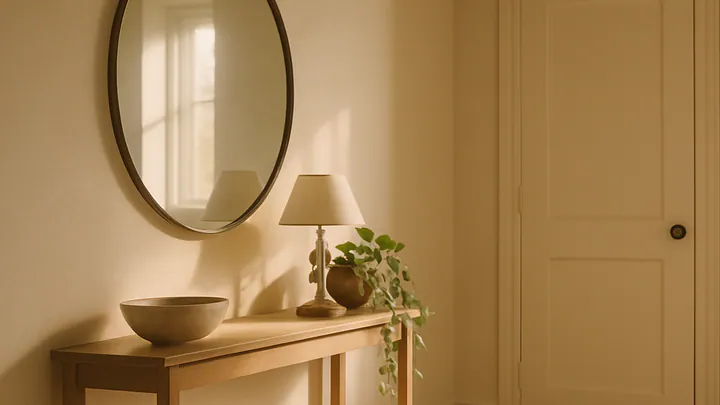
- Roomy foyer: A console table 30 to 48 inches wide, 10 to 14 inches deep.
- Narrow hallway: A floating shelf 6 to 8 inches deep, mounted at about 42 inches high.
- Door opens into living room: A slim demilune table or wall-mounted drop tray with a hook underneath.
- Truly no wall: A small basket on top of a low bench, or a repurposed bar cart tucked beside the door.
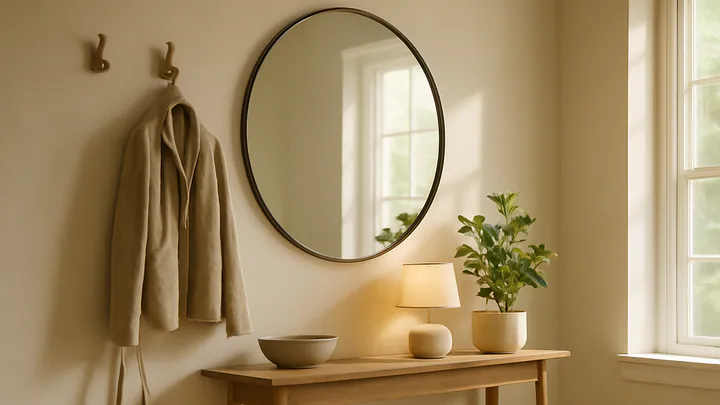
On the surface itself, we like a tray or shallow bowl for keys and small objects, a small lamp for evening ambience, and one living element like a trailing plant or a stem in a bud vase. That is the entire recipe.
Layer 2: Storage that hides the mess
The entryway holds more stuff than any other space of its size: shoes, coats, bags, umbrellas, dog leashes, packages, mail, sunscreen in summer, gloves in winter. If storage is not built in, you need to bring it in.
The three storage zones we plan for
- Foot-level (shoes): A slim bench with cubbies underneath, a tiered shoe rack tucked below a console, or a low basket for the two or three pairs actually in rotation. Store the rest in a closet — the entry is not shoe long-term parking.
- Mid-level (bags and daily carry): Hooks or a small ledge for the bag you actually use every day. Everything else belongs on a closet hook.
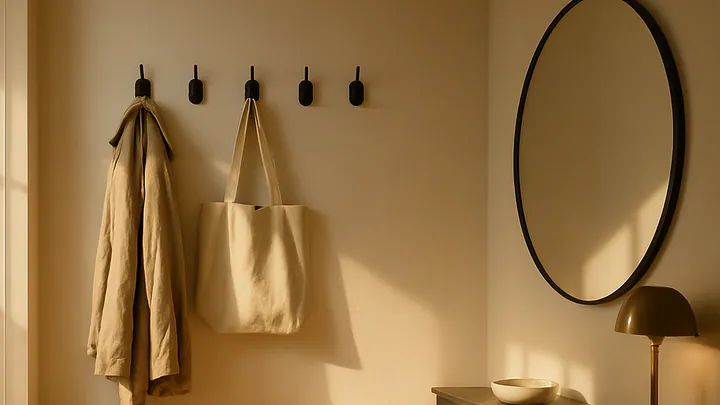
- Eye-level (coats and hats): A wall-mounted rail with hooks, or a freestanding coat tree if you cannot drill. We recommend rotating seasonally so only current-season coats are visible.
The rule we come back to constantly: if it is not used weekly, it does not live in the entryway. Everything else migrates to a closet, drawer, or seasonal bin.
Layer 3: Lighting that changes the whole mood
Most entryways are lit by a single, unflattering overhead fixture — or worse, borrowed light from the next room. Layered lighting is the single upgrade that makes an entry feel like a designer touched it.
We layer in three ways:
- Overhead: A warm-white bulb around 2700K in the existing fixture. If the fixture itself feels dated, swapping it is often a one-hour project.
- Table or wall: A small lamp on the console, or a plug-in sconce on the wall. Put it on a smart plug or timer so it turns on automatically at dusk. Walking into a softly lit home is a small daily luxury.
- Accent: A picture light over artwork, or an LED strip tucked under a floating shelf. Optional, but adds depth.
Layer 4: A rug that grounds the space
A rug does three practical jobs: it catches dirt, it defines the entry zone as separate from the rest of the room, and it absorbs sound so the space feels calmer.
For 2026, we are leaning toward washable low-pile rugs in natural fibers or performance blends. Jute, sisal, and flat-weave wool all hide dirt well. If you have pets or kids, a machine-washable rug is worth every dollar.
Sizing guidance we use:
- Narrow hallway: a runner that leaves 4 to 6 inches of floor on each side.
- Small foyer: a 3x5 or 4x6 rug that fits fully inside the entry zone.
- Open-plan entry: a rug large enough for both feet to land on when you close the door behind you.
Layer 5: One intentional decorative moment
After function is handled, the entry needs one thing that has nothing to do with utility — something that signals "someone lives here who cares." This is where personality enters.
Our favorite options, in order of impact per dollar:
- A generous mirror. Round, arched, or rectangular. Mirrors double the light, make small spaces feel larger, and give you a final outfit check before you leave.
- One large piece of art. A single oversized piece almost always beats a gallery wall in a small entry — less visual noise, more presence.
- A living plant. Pothos, snake plant, or a small olive tree if you have natural light. Living things soften every room.
- A scent. A reed diffuser or a small candle on a timer. Scent is memory, and a consistent home scent is a design detail most people overlook.
Common entryway mistakes we see
- Too many small objects. Three or four intentional items always beats a dozen tiny ones.
- Hooks mounted too high. A coat hook at 66 inches looks fine empty but makes hanging a heavy coat awkward. We prefer 60 to 64 inches for adults.
- Rug too small. A postage-stamp rug at the door makes the whole space feel undersized.
- Ignoring the wall opposite the door. That wall is the first thing you see when you enter. It deserves more than a light switch.
- Storing everything, editing nothing. The entry is a threshold, not a closet.
A weekend refresh plan
If you want a starting point, here is the two-day plan we give friends:
- Saturday morning: Empty the entry completely. Wipe surfaces. Sort every object into keep, relocate, or donate.
- Saturday afternoon: Measure your space and order or shop for the missing layers — a tray, a lamp, a rug, hooks, one piece of art.
- Sunday morning: Install hooks, place the rug, style the surface with tray, lamp, and one living element.
- Sunday evening: Set the lamp on a timer. Take one photo of the finished space so you have a reset reference for the next time it drifts.
Key takeaways
- Design the first three feet of your home first — it disproportionately shapes how the whole space feels.
- Every entry needs five layers: a landing surface, real storage, layered lighting, a grounding rug, and one intentional decorative moment.
- If it is not used weekly, it does not live in the entryway.
- A small lamp on a timer is one of the highest-return upgrades in the entire home.
- Renters can achieve the same effect with freestanding pieces, adhesive hooks, and a leaning mirror.
- Reset the space seasonally — rotate coats, refresh the scent, and take a new reference photo.
Frequently asked questions
What is the ideal depth for an entryway console table?
Most entryway consoles work well at 10 to 14 inches deep. That gives you enough surface for a tray, lamp, and small decor without blocking foot traffic in a narrow hallway.
How do I design an entryway if I do not have a foyer?
Create a symbolic threshold using a rug, a wall hook rail, and a slim floating shelf just inside the door. Even 24 inches of dedicated wall can function as an entry zone.
What lighting works best for a small entryway?
Layer a warm overhead fixture around 2700K with a small table lamp on a timer. The lamp provides a welcoming glow at night and softens harsh shadows from a single ceiling light.
How many hooks should an entryway have?
Plan for two hooks per household member plus two guest hooks. Mount them at varied heights if you have children, and leave at least four inches between hooks so bulky coats do not overlap.
What is the best flooring for an entryway?
Durable, water-resistant materials like porcelain tile, luxury vinyl plank, or sealed engineered wood handle wet shoes best. Layer a low-pile washable rug on top for warmth and grip.
How can I make a rental entryway feel intentional?
Use freestanding pieces: a slim shoe bench, a leaning ladder for bags, adhesive hooks, and a large mirror propped against the wall. None require drilling and all can move with you.