Bedroom Refresh 2026: Small Upgrades, Big Calm
A calm, restful bedroom in 2026 doesn't require a renovation. Here's how small, intentional upgrades transform sleep, mood, and daily routines.


TL;DR: A great bedroom refresh in 2026 isn't about buying more — it's about editing what's there, layering warm light, upgrading the bedding you actually touch every night, and quieting visual noise. Focus on five zones: light, bed, nightstands, floor, and air. Most people can transform how their bedroom feels in a single weekend for well under $300.
Our team spends a lot of time looking at how small home upgrades change daily life, and the bedroom is the room where those upgrades pay the biggest emotional dividend. It's the first space you see in the morning and the last one at night. When it feels calm, your whole day tends to feel more organized. When it feels chaotic, everything else follows.
Here's the framework we use, room by room and layer by layer.
Start with what's not working
Before you buy anything, sit on the edge of your bed and look around for two minutes. What annoys you? What do you avoid looking at? Where does clutter accumulate? Most bedroom problems fall into a small handful of buckets:
- Bad lighting — usually one harsh overhead bulb.
- Tired bedding — pilled sheets, a flat pillow, a duvet that's wrong for the season.
- Surface clutter — nightstands buried under chargers, receipts, hand cream, and half-read books.
- Cold, hard floors — no rug, or a rug that's too small.
- Stale air and blocked windows — heavy curtains, poor airflow, no plants.
Diagnose first, shop second. The upgrades below are ordered by impact-per-dollar, not by cost.
Layer 1: Fix the lighting first
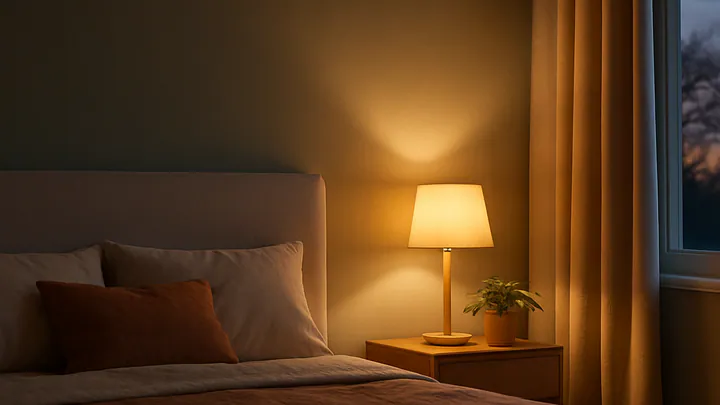
If we could only recommend one change, it would be this. Overhead lighting is functional, but it's rarely calming. The bedrooms that photograph beautifully — and, more importantly, feel wonderful to walk into — almost always have three or more low, warm light sources instead of one bright ceiling fixture.
What to actually do
- Swap ceiling and lamp bulbs to warm white (roughly 2700K). Cool white bulbs make a bedroom feel like an office.
- Add a bedside lamp on each side of the bed. Matching is optional; balance is not.
- Consider a small floor lamp or corner uplight to fill the room's dark corners.
- Put your main light on a dimmer, or use a smart bulb that dims via app.
- Add a very dim night-level light — a plug-in nightlight or a lamp with a low setting — so nighttime bathroom trips don't jolt you awake.
Warm, layered light signals to your nervous system that the day is winding down. That's not decoration; that's sleep hygiene.
Layer 2: Upgrade the things you touch every night
You spend roughly a third of your life in contact with your sheets, pillow, and duvet. This is the single most sensible place to invest, and it's where cheap upgrades feel disproportionately luxurious.
Bedding priorities
- Sheets: Look for breathable natural fibers — cotton percale for a crisp, cool feel, or linen for a relaxed, temperature-regulating drape. Thread count matters far less than fiber quality.
- Pillows: Replace pillows every 1–2 years. Keep one firmer and one softer so you can choose based on how you're sleeping that night.
- Duvet inserts: A lightweight summer duvet plus a warmer winter one is more useful than one middle-of-the-road option.
- A washable throw: One textured throw at the foot of the bed adds warmth visually and literally.
Wash sheets weekly, rotate two sets, and store the second set in a pillowcase from the same set so you never dig for matching pieces.
Layer 3: Tame the nightstands
Nightstands are the fastest-cluttering surface in the house. Our rule of thumb: three visible items, maximum. A lamp counts as one.
A calm nightstand usually holds:
- A lamp.
- One book or a small tray.
- A glass of water or a small plant.
Everything else — chargers, hand cream, lip balm, earplugs, remotes — belongs in a drawer or a small lidded box. If your nightstand doesn't have a drawer, add a shallow woven basket underneath. Charging cables should route out of sight; a small clip on the back leg of the nightstand solves 90% of cable chaos for a few dollars.
Layer 4: Ground the room with a rug
A rug does more than warm your feet. It defines the bed as the visual center of the room and absorbs sound, which is a big part of why cozy rooms feel cozy.
Rug sizing that works
- Aim for the rug to extend at least 18–24 inches past the sides and foot of the bed.
- For small bedrooms, a runner on each side of the bed is a smart budget alternative to one huge rug.
- Natural fibers (wool, jute, cotton) look more expensive and age better than synthetics.
If you already have a rug and it looks small, try shifting the bed further onto it before assuming you need a new one.
Layer 5: Fix the air and the light coming in
Two overlooked bedroom upgrades: airflow and window treatments. Both change how the room feels the moment you walk in.
- Open the windows daily, even briefly, to reduce that stale, closed-room feeling.
- Layer curtains: a sheer for daytime privacy and soft light, plus a heavier panel or blackout liner for sleep. This is one of the biggest visual upgrades under $150.
- Hang curtain rods high and wide — close to the ceiling and extending several inches past the window frame. Ceilings instantly look taller.
- Add one easy plant. A snake plant, pothos, or ZZ plant tolerates low light and neglect. Skip anything fussy in a bedroom you want to feel restful.
Layer 6: Quiet the visual noise
Calm bedrooms almost always share a subtle discipline: a limited palette. You don't need everything to match, but you do need everything to belong to the same family.
A simple palette rule
Pick one neutral base (white, cream, oat, greige, or warm gray), one deeper accent (forest, navy, terracotta, chocolate), and one natural texture (wood, rattan, linen, wool). Repeat those three across bedding, art, and accessories. Anything that doesn't fit the trio leaves the room or goes in a drawer.
Then edit the walls. One larger piece of art above the bed almost always looks calmer than a busy gallery wall in a small bedroom. If you love a gallery arrangement, keep frames the same color for cohesion.
Small upgrades under $50 that punch above their weight
- Warm-white bulbs for every lamp in the room.
- A linen-look duvet cover to instantly modernize old bedding.
- A small tray for the nightstand — it corrals clutter and looks intentional.
- Cable clips and a small charging station tucked in a drawer.
- A cordless, rechargeable table lamp for reading nooks and bedside if outlets are awkward.
- A door draft stopper if your bedroom runs cold or noisy.
- A linen spray or reed diffuser in a subtle scent like cedar, lavender, or fig.
A weekend refresh plan
If you want a concrete plan, here's the one we recommend to friends:
- Friday evening: Empty the nightstands and clear every horizontal surface. Wash all bedding, including the duvet cover and pillow protectors.
- Saturday morning: Deep clean — vacuum under the bed, wipe baseboards, wash the windows. Open the windows while you work.
- Saturday afternoon: Swap bulbs, add or reposition lamps, and rehang curtain rods higher if needed.
- Saturday evening: Remake the bed with fresh bedding and re-style the nightstands using the three-item rule.
- Sunday: Live in the room. Note anything that still feels off. Buy only what solves a real, specific problem.
That last step is the discipline that separates a refresh from a spending spree. Sit with the changes before adding more.
Key takeaways
- Diagnose problems before buying — most bedrooms need editing more than they need new things.
- Warm, layered lighting is the highest-impact upgrade in almost every bedroom.
- Invest in the bedding you touch nightly; it's the best cost-per-use purchase in the room.
- Follow the three-item rule for nightstands and a three-element palette for the room.
- A properly sized rug, layered curtains, and one low-maintenance plant do most of the aesthetic heavy lifting.
- Give yourself a weekend, not a renovation budget — then live with it before adding more.
Editorial note: The suggestions above are general home and lifestyle guidance from our editorial team, not professional interior design or health advice. If sleep problems persist despite improvements to your bedroom environment, we recommend speaking with a qualified healthcare professional.
Frequently asked questions
How much does a bedroom refresh cost in 2026?
A meaningful refresh can be done for under $200 by focusing on lighting, bedding layers, and decluttering. Larger changes like new curtains or a rug typically push the total to $400–$800.
What's the single most impactful bedroom upgrade?
Warm, layered lighting. Swapping harsh overhead bulbs for two or three low, warm light sources (a bedside lamp, a floor lamp, dimmable bulbs) changes how the room feels almost instantly.
How do I make a small bedroom feel calmer?
Reduce visual noise. Clear surfaces, use a consistent color palette, and keep only what you use daily on nightstands. Fewer, better objects nearly always feel calmer than more decor.
What bedding setup is best for restful sleep?
Breathable natural fibers like cotton percale or linen, a duvet you can adjust by season, and two pillow firmnesses so you can choose based on how you sleep. Wash sheets weekly.
Should I put a TV in the bedroom?
For most people, keeping screens out of the bedroom improves sleep quality and makes the room feel more restful. If you do want one, consider a wall mount and a way to hide it when not in use.
How can I refresh my bedroom without buying anything?
Rearrange the bed to a different wall, deep clean, launder all soft goods, edit surfaces down to three items, and open the windows. These four steps alone often make a room feel new.