Gadget Gift Ideas for 2026: What to Buy for Every Age
A gadget gift only works if the person actually uses it. Our 2026 guide covers the best picks for kids, teens, adults and seniors — plus the subscription fees, ecosystem lock-in and return-window traps that turn a great gift into a drawer ornament.
Rewritten with AI and republished automatically. Our editors set the standards and fix reported errors — how we work.

TL;DR: The best gadget gift is one the recipient can use within ten minutes of unwrapping it, on hardware they already own, with no monthly fee. Match the device to the person's existing ecosystem, check for hidden subscriptions, and confirm the return window before you buy.
A gadget gift is a piece of consumer technology given as a present — and it succeeds or fails on one thing: whether it fits into the recipient's life without demanding a project. Plenty of well-intentioned tech gifts end up in the drawer of good intentions, usually for reasons that were entirely predictable at the checkout page.
This guide keeps the useful part of a gift guide — concrete picks by age group — and adds the part most guides skip: the failure modes.
What makes a gadget a genuinely good gift in 2026?
Three tests. First, zero-setup or you-set-it-up: if the device needs the recipient's Wi-Fi password, an account creation and a firmware update, either do that work yourself or choose something else. Second, no ongoing cost unless you're covering it. Third, ecosystem match — an Android household does not want a gadget that only pairs properly with an iPhone, and vice versa.
A useful decision rule: if you cannot answer "what will they do with this on Tuesday morning?", it's a novelty, not a gift. Novelty gadgets are fine as stocking fillers. They are a poor centerpiece.
One more consideration that's newer than it sounds. A growing number of gadgets now do their processing on the device itself rather than in the cloud, which means less data leaving the house and fewer features that vanish when a company shuts a server down. If you're weighing two similar products, the one that works offline is usually the safer gift — our explainer on what on-device AI means for you covers why that shift matters for privacy and longevity.
Which gadget gifts should you avoid entirely?
Avoid anything that requires the recipient to change platforms, anything with a mandatory subscription you aren't paying for, and anything sized to the body without a sizing kit.
- Smart rings — they need a sizing kit mailed out days in advance. Guessing the size means a return, and returns on body-worn electronics are often restocking-fee territory.
- Cheap no-name smart home devices — many stop receiving security updates quickly, and a device on someone's home network is a device on someone's home network.
- Anything requiring a drill — video doorbells, security cameras and smart locks are household decisions, not surprises. Ask first.
- UV phone sanitizers — popular a few years ago, rarely used after week two. Effectiveness varies enormously by device and exposure time.
- Storage-locked kids' tablets bought against a parent's screen-time rules. That's a gift to you, not the child.
What are the best gadget gifts for kids?
For under-tens, choose screen-free or physically interactive tech: audio storytelling players and hands-on coding robots hold attention longer than another app.
- Audio story players (Toniebox and similar): a physical figure sits on a box and plays a story. No screen, no scrolling, and children can operate it alone from about age three.
- Coding robots (Botley 2.0, LEGO Boost): sequencing and logic through play, with no tablet required in Botley's case — an underrated advantage.
- Kids' tablets with parental controls (Amazon Fire Kids Edition and equivalents): bundle-in content libraries are usually free for a year, then renew at a monthly rate. Say so on the card.
- Instant print cameras: hugely popular with 7–12s, but the film is the real cost. Gift two extra packs with it or the novelty dies on Boxing Day.
Edge case: if the child has sensory sensitivities, skip anything with unskippable startup sounds or flashing LEDs. Check whether volume is limited in hardware, not just software.
What do you buy a teenager who already has everything?
Accessories that improve what they already own beat new devices. Teens are brand-loyal and specific; a mid-tier version of something they already love is safer than a category they haven't chosen for themselves.
- Wireless earbuds with a case that matches their phone's charging standard (USB-C now, for nearly everyone).
- Portable Bluetooth speakers — look for an IP rating if they take it outdoors. IPX7 survives a poolside accident; IPX4 does not.
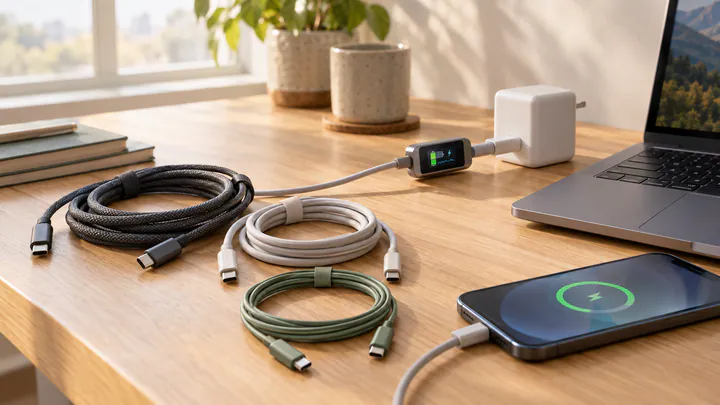
- A genuinely fast power bank, 10,000 mAh with USB-C Power Delivery. Unglamorous, used daily.
- Portable projectors: fun, but check lumens and the fact that most need a dark room. Under about 200 ANSI lumens, it's a summer-evening toy only.
- A creator accessory — clip mic, phone gimbal, ring light — if they actually post content.
If the teenager is heading to college, a small security upgrade is a surprisingly thoughtful gift. A hardware security key pairs well with the shift away from passwords we cover in our guide to passkeys, and costs less than most earbuds.
Which gadgets are actually worth it for busy adults?
Pick devices that remove a daily friction: temperature-controlled mugs for slow coffee drinkers, a second monitor or laptop stand for home workers, a robot vacuum for households with pets.
- Temperature-control mugs: real utility for people who reheat coffee twice a morning; useless for people who drink it in four minutes. Know which one you're buying for.
- Smart speakers and displays: only within the ecosystem they already use for their phone, calendar and music.
- Desk ergonomics: a monitor arm or vertical mouse is boring to unwrap and used eight hours a day.
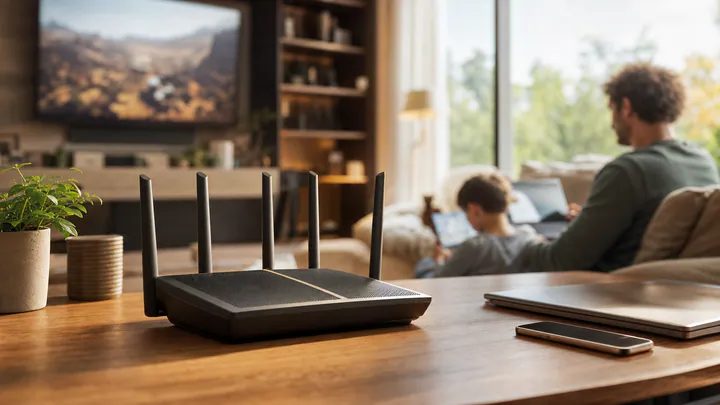
- Networking upgrades: for the household where everyone complains about the video calls. If they're still on an aging router, our take on whether Wi-Fi 7 is worth upgrading to will tell you whether to spend or save.
- A mini PC or a capable external drive for the tinkerer in your life — increasingly people want to run AI models on their own hardware, and that needs RAM and storage more than anything else.
What tech gifts actually help older relatives?
The best gifts for seniors are the ones that arrive already working. Digital photo frames, simplified tablets and large-button devices are all strong choices — provided you configure them before wrapping.
- Wi-Fi digital photo frames: family members email or app-upload photos and they appear automatically. Set up the account in your name, add the family to it, and hand over a frame that already has forty pictures on it. This is the single highest-hit-rate gift in this category.
- Simplified tablets with large text and one-tap video calling. Pre-install the calling app, sign in, and put three contacts on the home screen.
- Smartwatches with fall detection: helpful, not medical. They can miss slow falls and can raise false alarms, and they are not a substitute for a monitored service or professional advice. Anyone with genuine health concerns should talk to a qualified clinician about what's appropriate.
- Automatic pill dispensers and large-display talking clocks — undramatic, genuinely used.
Does not apply if: the recipient has no reliable home Wi-Fi. Half the gifts in this section become paperweights without it, and "I'll set up broadband for you" is a much bigger favor than it sounds.
How do you spot the hidden subscription before you buy?
Look for the words "cloud," "plan," "premium" or "library" on the product page, then find the price of that tier. If the core feature the gift is famous for sits behind the plan, budget for the first year or choose differently.
| Recipient | Strong pick | Typical price band | Setup burden | Likely ongoing cost |
|---|---|---|---|---|
| Child (3–8) | Screen-free audio player | $80–$110 plus figures | Low — Wi-Fi once | Optional; figures sold individually |
| Child (6–12) | Coding robot | $50–$130 | Low — batteries | None |
| Teen | Wireless earbuds | $50–$200 | Very low — pair and go | None |
| Teen / student | Hardware security key | $25–$60 | Medium — account enrollment | None |
| Adult | Smart plug or bulb set | $10–$40 | Medium — app, 2.4 GHz network | None |
| Adult | Video doorbell | $60–$200 | High — wiring, permission | Cloud clips, often monthly |
| Senior | Wi-Fi digital photo frame | $70–$180 | Do it yourself before wrapping | Sometimes, for extra storage |
| Anyone | USB-C power bank, 10,000 mAh | $25–$50 | None | None |
One practical gotcha worth knowing: a large share of budget smart plugs and bulbs only join 2.4 GHz Wi-Fi networks. On a modern router that broadcasts one combined network name, pairing can fail repeatedly until someone temporarily splits the bands. If your recipient isn't the type to do that, skip the smart plug.
How much should you spend, and how do you plan for it?
Set the budget before you browse, then shop inside it. Roughly $20–$40 buys a useful accessory, $50–$120 covers most solid mid-range gadgets, and above that you're into household or milestone territory where asking first beats surprising.
Gift spending is the classic irregular expense that wrecks a December — the fix is to save toward it monthly rather than absorb it in one month. That's general budgeting information, not financial advice.
A costly mistake: buying in an early-autumn sale and gifting in late December. Standard return windows run from the purchase date, so by the time the box is opened, the window may already be closed. Either buy within the retailer's stated extended holiday return period, or keep the receipt and accept the risk knowingly.
What's genuinely new and worth gifting in 2026?
The interesting shift this year is toward gadgets that process data locally: translation earbuds and recorders that work offline, cameras with on-device editing, and home hubs that don't phone home for every command.
- Offline translation devices — the offline mode is the feature that matters, because you use these most where roaming data is worst.
- Wearable health trackers in ring and patch form. Comfortable and discreet, but sizing and subscription fees are the two things to check. They inform habits; they don't diagnose anything.
- Matter-compatible smart home devices — the cross-brand standard means a Matter plug or bulb is far less likely to be orphaned by an ecosystem choice.
- Solar chargers and reusable smart notebooks for the eco-minded, both of which have matured from gimmick to genuinely usable.
How do you make sure the gift actually gets used?
Charge it, update it, sign it in and demonstrate it once. A gadget that gets its first successful use in the room where it was unwrapped has a dramatically better chance of becoming a habit.
Three small touches that cost nothing: include the charging cable type they'll need, write the account password on the card if you created one, and offer a specific follow-up ("I'll come by Sunday and put the family photos on it"). If the gift is destined for a shared space, think about where it will physically live — a smart display or charging valet only works if it has a home, which is the same logic behind making the first three feet of an entryway work.
And if you ship a gadget with a lithium battery, check the carrier's rules. Power banks in particular face restrictions on air freight and must travel in carry-on baggage, never checked, if you're flying with one.
Key takeaways
- Match the gadget to the ecosystem the person already uses — wrong-platform gifts are the number one return.
- Check for subscriptions before you buy; doorbells, kids' tablets, some frames and some wearables charge monthly.
- Do the setup yourself for children and older relatives. A working gift beats an impressive one.
- Buy inside the retailer's holiday return window, not months ahead, or the receipt is worthless.
- Boring accessories — power banks, good cables, ergonomic desk gear — get used daily and almost never get returned.
- Health-tracking gadgets inform habits; they don't diagnose. Point anyone with real concerns toward a qualified professional.
Frequently asked questions
What is the best all-around gadget gift for someone you don't know well?
A quality portable power bank or a pair of mid-range wireless earbuds, because neither requires an account, an ecosystem or a subscription. Both work with any phone, need no setup beyond charging, and are easy to return or re-gift if the recipient already owns one.
Do gadget gifts usually come with hidden subscription costs?
Many do. Video doorbells, kids' tablets, medical alert watches, some digital photo frames and several smart rings charge monthly or annual fees for cloud storage, content libraries or monitoring. Check the fee before you buy and tell the recipient, so they aren't surprised by a charge in month two.
When should I buy a gadget gift so the return window still works?
Buy as close to the giving date as your shipping allows, or confirm the retailer's extended holiday return policy in writing. Standard 30-day windows start on the purchase date, so a gift bought in October and opened in late December may already be past its return period.
Is it safe to give an older relative a smartwatch with fall detection?
It can be genuinely helpful, but treat it as a convenience feature rather than a medical device. Fall detection can miss slow slumps and can trigger false alarms, and no consumer wearable diagnoses conditions. Anyone with health concerns should consult a qualified medical professional about the right monitoring setup.
What's the most common mistake people make with tech gifts?
Buying into the wrong ecosystem. A smart speaker, plug or display tied to a voice assistant the recipient doesn't already use will need new accounts, a new app and a new habit — and it usually ends up unopened or returned.
Are gadgets appropriate gifts for young children?
Age-appropriate ones are. Screen-free audio players and physical coding robots give children something to do with their hands and generally suit younger kids better than open-ended tablets. If you do gift a tablet, choose a version with parental controls and agree the rules with the parents first.
How much should I spend on a gadget gift?
Match the price to the relationship, not the spec sheet. Roughly $20 to $40 covers a genuinely useful accessory, $50 to $120 covers most solid mid-range gadgets, and anything above that is usually a household or milestone gift that's worth discussing with the recipient first.