Sheer Fashion in 2026: Wearing the Transparent Trend
Sheer dressing moved from the runway to real wardrobes, but it only works when the fabric, lining and layering are right. Here is how to test opacity before you buy, style sheer for work, and avoid the mistakes that ruin delicate fabrics.
Rewritten with AI and republished automatically. Our editors set the standards and fix reported errors — how we work.
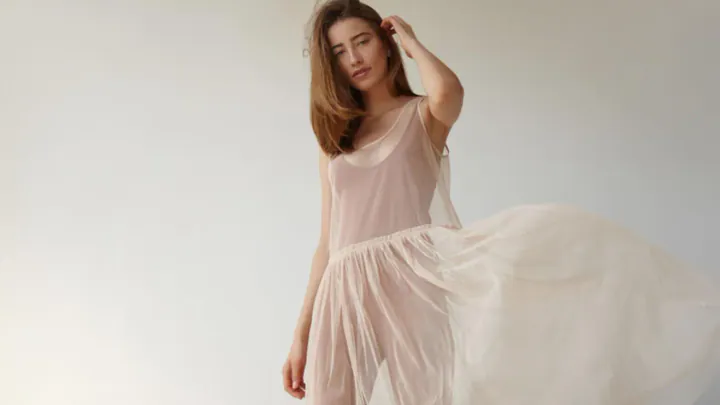
TL;DR: Sheer dressing works when exactly one area is transparent and everything else is deliberate. Test opacity with a phone flashlight before buying, choose the fabric by how it drapes rather than how it looks on the hanger, and layer with a slip, bodysuit or camisole. Skip it where dress codes or safety rules say otherwise.
What exactly is sheer fashion, and which fabrics count?
Sheer fashion is a category of clothing made from fabrics that transmit light, so the skin or a layer beneath is partly visible through the cloth. It covers everything from a barely-there organza sleeve to a full mesh dress worn over bike shorts.
The word "sheer" describes opacity, not a single material. In practice you will meet six fabrics again and again, and they behave nothing alike once they are on a body. Buying tulle when you wanted chiffon is a common disappointment.
| Fabric | Feel and drape | Typical opacity | Best for | Watch out for |
|---|---|---|---|---|
| Chiffon | Fluid, floats away from the body | Semi-sheer, fogs rather than reveals | Blouses, maxi skirts, layered dresses | Snags easily; slippery to tailor |
| Organza | Crisp, holds volume and sculptural shapes | Clearly transparent | Statement sleeves, overlays, occasion wear | Creases hold; needs low-heat pressing |
| Tulle | Stiff open net, adds bulk | Very transparent in one layer | Skirts, layered volume, contrast panels | Can look costume-like below several layers |
| Mesh (nylon/elastane) | Stretchy, clings to the frame | Sheer but forgiving in dark shades | Long-sleeve tops, turtlenecks, activewear panels | Fabric softener kills the stretch recovery |
| Lace | Textured, pattern breaks up the transparency | Varies wildly by pattern density | Trims, blouses, dress panels | Scratchy backings; catches on jewelry |
| Voile / georgette | Soft, matte, slightly grainy | Semi-sheer, most wearable daily | Summer shirts, wide trousers, scarves | Shows perspiration on light colors |
One clean rule: crisp fabrics (organza, tulle) add volume and stand away from you. Fluid fabrics (chiffon, georgette, mesh) follow your shape. Decide which effect you want before you decide on a color.
How do I test how sheer a garment really is before buying?
Turn on your phone flashlight, lay the fabric flat over the screen, and try to read text through it. If the letters are legible through one layer, that garment will read as fully transparent in daylight — and more so under camera flash. If the text is blurred but the light glows through, it is semi-sheer and will work with a matching-tone layer underneath.
Two details that trip people up online. First, product photos are usually shot against a mid-gray backdrop, which flatters sheer fabric and hides how much it reveals against skin. Second, sheer garments in light colors — white, ivory, pale pink — are meaningfully more transparent than the same weave in black or navy, because dark dye absorbs light instead of scattering it.
The flash edge case: direct on-camera flash penetrates thin black knit and lace far more than the human eye does. A top that looks discreet in a restaurant can appear close to transparent in a photo taken across the table. If you know you will be photographed, add a lining in a shade close to your own skin tone and the problem disappears.
How do I style sheer clothing without feeling exposed?
Use the one-zone rule: pick a single area to be sheer and keep everything else structured and opaque. Sheer sleeves with an opaque bodice. A sheer skirt over solid shorts. A mesh top under a blazer with only the forearms and shoulders showing.
What you put underneath changes the entire meaning of the garment:
- Matched to your skin tone — the sheer layer reads as texture, and the outfit looks quietly expensive.
- Matched to the garment color — the sheer section becomes a tonal detail, the safest office-friendly option.
- Deliberately contrasting — a black bodysuit under white organza, for example, turns the layering into the design. This is the most fashion-forward choice and the least forgiving.
Balance weight, too. Sheer reads best against something substantial: raw-hem denim, a leather jacket, a heavy knit, a tailored trouser. Our guide to the denim shapes worth buying now pairs well here — a stiff straight-leg jean under a chiffon shirt is the easiest sheer outfit there is.
Footwear does quiet work as well. Sheer fabric moves, so a shoe with visual weight — a loafer, a block heel, a clean sneaker — stops the whole look from floating.
Can you wear sheer to the office in 2026?
In most non-uniformed workplaces, yes — provided the sheer element sits on the sleeves, shoulders, back yoke or as an overlay, and the torso is fully opaque. Read your dress code first: a large number still include a line about undergarments not being visible, which rules out a mesh top over a bra regardless of how it is styled.
Practical office formulas that hold up in meetings:
- Sheer-sleeve blouse with an opaque body, tucked into high-waisted trousers.
- Fine mesh turtleneck worn under a sleeveless knit dress, so only the neck and arms are sheer.
- Chiffon midi skirt with a full lining, plus a structured knit and closed-toe shoes.
This does not apply if you work in a role with safety or hygiene requirements — labs, kitchens, clinical settings, manufacturing floors — where flame-resistant, coverage or contamination rules override styling entirely. It also does not apply to client-facing roles with a published formal dress standard. Sheer is a style choice, not a case to argue with HR.
If you are building a small, high-functioning work wardrobe, sheer belongs as an accent, not a foundation. The core still wants the reliable pieces we cover in our 30-piece capsule wardrobe guide.
Which sheer pieces are worth buying, and what do they cost?
Start with one layering piece and one statement piece. A fine mesh long-sleeve or turtleneck is the highest-mileage sheer item most people own, because it slides under dresses, vests and short-sleeve knits and instantly restyles clothes you already have.
| Piece | Role | Typical price band | Buy cheap or invest? |
|---|---|---|---|
| Mesh long-sleeve / turtleneck | Layering workhorse | Low to mid | Buy mid — cheap mesh pills and loses stretch fast |
| Chiffon or georgette blouse | Office and evening crossover | Mid | Invest; fabric quality is immediately visible |
| Lined chiffon maxi skirt | Warm-weather and occasion wear | Mid | Invest in the lining quality, not the print |
| Organza overshirt or sleeve top | Statement layer | Mid to high | Buy cheap first to test whether you wear it |
| Sheer-panel activewear | Function plus detail | Mid | Buy from brands that publish fabric weight |
| Transparent trench or raincoat | Novelty outer layer | Low to mid | Buy cheap — low wear frequency, short trend life |
Budget for the hidden cost: many sheer garments arrive unlined. Having a tailor add a simple lining or a slip to match usually costs less than a new garment and roughly doubles how often you will reach for it. Factor that in before you decide something is a bargain.
Neutrals — black, ivory, charcoal, a deep brown — integrate with everything and age slowly. If your wardrobe leans toward the restrained aesthetic described in our guide to building a timeless wardrobe, a black mesh layer and a well-cut organza sleeve will do more for you than a novelty print.
What are the most common sheer styling mistakes?
The costliest mistake is buying an unlined light-colored sheer garment online and discovering it is fully transparent on arrival, then wearing it once. The flashlight test in-store, or a careful read of the product description for the word "lined," prevents almost all of these.
Three more worth naming:
- Stacking two sheer layers. Chiffon over mesh does not create modesty; it creates a hazy, muddled texture that photographs badly. One sheer layer, one solid layer.
- Ignoring visible seams and hardware. Bra hooks, bodysuit snaps and thick waistband elastic all show through. Choose smooth, seamless underlayers, or make the underlayer an obvious design choice.
- Wearing sheer in the wrong season. Single-layer mesh is not warm, and organza does not breathe as well as its appearance suggests. In summer, voile and georgette are the ones that actually feel cool.
How do I care for sheer fabrics so they last more than one season?
Wash cool, wash gently, and keep sheer items away from anything abrasive. Hand wash silk chiffon and organza; put mesh and lace in a zipped mesh laundry bag on a delicate cycle. Dry flat or on a padded hanger, never in a hot dryer.
Two specifics that matter more than people expect. Skip fabric softener on nylon and elastane mesh — it coats the fibers and reduces the stretch recovery that keeps the garment from bagging at the elbows. And store tulle and organza hanging rather than folded, because sharp creases in stiff sheers are genuinely hard to press out at the low iron temperatures these fabrics tolerate.
Snags are the number one killer. Remove rings and bracelets before dressing, and keep sheer pieces away from velcro, rough shelving and cat-friendly furniture. A single pulled thread on fine mesh travels.
Is sheer fashion actually more sustainable?
Not by default, despite the common claim that less fabric means less waste. Most affordable sheer clothing is virgin polyester or nylon, it snags easily, and it frequently needs an added lining — which cancels much of the material saving.
What genuinely reduces impact is wear frequency. A black mesh top you layer forty times a year has a far better footprint than a recycled-fiber organza dress worn once. If you want to shop the trend more responsibly, look for recycled nylon mesh, brands that publish fabric composition and weight, and second-hand occasion pieces — sheer eveningwear turns up in resale constantly because it is worn so rarely.
Treating sheer as an accent inside a deliberately small wardrobe, rather than a category you accumulate, is the approach we take in our guide to building a closet you actually love.
Key takeaways
- Test opacity with a phone flashlight before you buy; if you can read text through one layer, plan on a lining.
- Apply the one-zone rule — a single sheer area, everything else structured and opaque.
- Pick the fabric by drape: organza and tulle add volume, chiffon and mesh follow the body.
- For work, keep sheer on sleeves, shoulders or overlays, and check your dress code for rules on visible undergarments.
- Dark shades, matched-tone underlayers and mid-price mesh give the best return on wear.
- Skip fabric softener on mesh, store stiff sheers hanging, and keep them away from anything that snags.
Frequently asked questions
How do I know if a top is too sheer before I buy it?
Hold the fabric flat against your phone screen with the flashlight on — if you can read text through a single layer, it will read as fully transparent in daylight and under camera flash. Two layers of the same fabric, or a lining, usually shifts it to semi-sheer.
What is the difference between organza, chiffon, tulle and mesh?
Organza is crisp and holds a shape, chiffon is fluid and drapes close to the body, tulle is a stiff open net used for volume, and mesh is a stretch knit that clings. They look similar on a rack but behave completely differently once worn.
Can I wear a sheer top to the office?
Usually yes, if the sheer element is a sleeve, shoulder or overlay and the torso is opaque through a camisole, bodysuit or lined shell. Check your employer's dress code first — many still specify that undergarments must not be visible.
Does black sheer fabric photograph the same as it looks in person?
No. Direct camera flash penetrates thin black knits and lace far more than the eye does, so a top that reads as modest in a room can look almost transparent in event photos. If you will be photographed with flash, add a lining in a shade close to your skin tone.
How do I wash sheer clothing without ruining it?
Hand wash or use a mesh laundry bag on a delicate cycle in cool water, skip fabric softener on nylon and elastane mesh because it degrades stretch recovery, and dry flat or hang away from direct heat. Never wring chiffon or silk organza.
Is sheer clothing more sustainable because it uses less fabric?
Not automatically. Lighter fabrics use less material, but most sheer garments are made from virgin polyester or nylon, are prone to snagging, and often need an extra lining layer. Longevity and how often you actually wear the piece matter far more than its weight.
What should I wear under a sheer skirt or dress?
A slip, bike shorts, or a bodysuit in either a shade close to your skin or a deliberate contrast color. A matching-tone lining makes the sheer fabric read as texture; a contrasting one turns the layering into the design feature.