Rug Tufting at Home: Tools, Costs, and Your First Rug
Rug tufting turns yarn and a stretched cloth into a custom rug in a weekend. Here's the gear that matters, what a starter setup really costs, a step-by-step first project, and the beginner mistakes — like forgetting to mirror your design — that waste a whole afternoon.
Rewritten with AI and republished automatically. Our editors set the standards and fix reported errors — how we work.
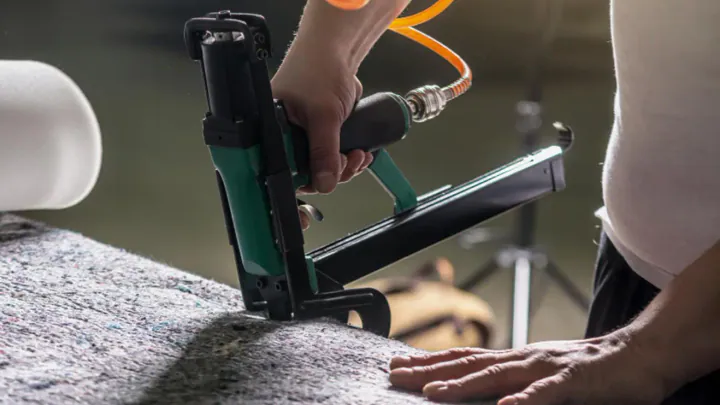
TL;DR: Rug tufting is punching yarn through a stretched backing cloth with a handheld gun to build a pile rug. A home setup runs roughly $300–$600, a small rug takes a weekend, and the two things that decide whether it works are drum-tight frame tension and a proper carpet adhesive on the back.
What is rug tufting, exactly?
Rug tufting is a rug-making method in which a handheld tufting gun drives loops of yarn through a stretched primary backing cloth to form a dense pile, which is then locked in place with adhesive and covered with a secondary backing. It is the home-scale version of how most commercial area rugs are made.
You work from the back of the cloth. The gun punches yarn through and the pile builds on the far side — the side you'll eventually walk on. That single fact drives most beginner decisions, including the mirroring problem we cover below.
Two pile styles exist. A loop pile gun leaves the yarn as uncut loops, giving a tidy, low, berber-like texture. A cut pile gun slices each loop, producing the fluffy, carvable surface most people picture when they think of a tufted rug. Cut pile is more forgiving for beginners because trimming hides small inconsistencies.
What equipment do you actually need to start?
Six things are non-negotiable: a tufting gun, primary tufting cloth, a wooden frame with gripper strips, rug yarn, carpet adhesive, and a secondary backing fabric. Everything else — carving shears, a glue spreader, a shop vacuum — makes the job nicer but won't stop you starting.
- Tufting gun. Cut pile for a first purchase. Duo guns that switch between cut and loop cost more and add a failure point.
- Primary tufting cloth. Buy purpose-made tufting cloth with printed grid lines rather than plain monk's cloth. It stretches less, and the grid keeps large designs square.
- Frame. A 4 x 4-foot wooden frame with carpet gripper strips on all four sides. Many tufters build one from 2x2 lumber for less than a bought frame.
- Yarn. Acrylic rug yarn is cheap and widely available; wool carves more crisply and wears longer. Plan on roughly a pound of yarn per square foot of medium-pile rug and buy extra of any color you can't easily reorder.
- Adhesive. Latex-based carpet or rug adhesive. Craft glue and hot glue do not hold pile.
- Backing. Rug felt, canvas, or non-slip cloth, plus binding tape or fabric glue for the edges.
Safety gear belongs on the essentials list too: hearing protection (the motor is genuinely loud), a dust mask while carving, and ventilation while the adhesive cures. If wrist or shoulder pain persists after a session, stop and consult a qualified health professional rather than working through it — the gun's vibration is repetitive-strain territory.
How much does a rug tufting setup cost in 2026?
A realistic all-in starter budget is $300–$600, with the gun and the frame taking the largest bites. Prices vary by region and supplier, so treat the table below as a planning range rather than a quote.
| Item | Typical range | Notes |
|---|---|---|
| Cut-pile tufting gun | $150–$250 | Entry electric models; duo guns run higher |
| Frame (4 x 4 ft) | $40–$120 | Cheaper if you build it yourself |
| Primary tufting cloth | $10–$25 per yard | Gridded cloth is worth the premium |
| Rug yarn | $20–$60 per rug | Acrylic at the low end, wool at the high end |
| Carpet adhesive | $25–$50 | One container covers several small rugs |
| Backing + binding | $15–$35 | Felt or non-slip cloth plus edge tape |
| Carving shears, mask, ear protection | $30–$70 | Electric carvers cost more but save hours |
Because the up-front spend arrives all at once and the per-rug cost afterwards is small, save toward the gun and frame, then let materials come out of ordinary spending.
How do you make your first tufted rug, step by step?
Seven steps: design, mount, thread, tuft, rough trim, glue and back, then carve and bind. Keep the first rug under 2 x 2 feet and use three colors or fewer.
- Design and mirror it. Sketch on paper, then flip the sketch before transferring it to the cloth with a marker. Simple closed shapes — a blob, a checkerboard, a flower — beat fine detail at this stage.
- Mount the cloth drum-tight. Stretch it over the gripper strips until it sounds like a drum when tapped. Any sag causes skipped stitches and yarn that pulls back out.
- Thread the gun. Run the yarn through the guides so it feeds with no drag, and set the pile height before you start, not halfway through.
- Tuft outlines first, then fill. Keep the gun's face flat against the cloth and move at a steady walking pace. Outlining each color area first keeps edges crisp.
- Rough trim. Flip and shear off obvious high spots so the surface is roughly level. Save fine carving for after the glue cures.
- Glue and back. Apply a full, even coat of carpet adhesive to the reverse, press the backing fabric on, and let it cure fully — usually 24 hours in a ventilated room. Rushing this step is the number one cause of shedding rugs.
- Carve and bind. Cut the rug from the frame leaving a 1.5–2 inch margin, fold and glue or tape that margin under, then carve the surface and bevel the edges.
What mistakes ruin a first tufted rug?
Four failures account for most scrapped first projects: a loose frame, a mirrored design nobody mirrored, thin adhesive, and wrong yarn. All four are avoidable before you switch the gun on.
The mirror trap
Because you tuft from the back, the front is reversed. Anyone tufting a name, a date, a monogram, or a logo who forgets to flip the artwork ends up with a rug that reads backwards — and there is no fix short of re-tufting. Decision rule: if the design would look wrong in a bathroom mirror, flip it before you draw it.
Skimping on glue
A thin, patchy coat of adhesive leaves whole regions of pile held in place by friction alone. They shed on the first vacuum. Use enough that the yarn bases are visibly coated, and if in doubt apply a second coat after the first has tacked up.
Yarn that fights the gun
Chenille, very slippery synthetics, and single thin strands jam or slip out. Rug-weight acrylic, wool, or a bundle of thinner yarns held together feed reliably. Test any new yarn on a scrap corner of cloth before committing a whole rug to it.
Starting too big
A 3 x 5-foot rug is not a harder version of a small one — it is a different project, with sag, color-matching, and yarn-quantity problems that don't appear at small scale. Two or three small rugs first will teach you more, faster.
Is tufting right for your space, or should you punch needle instead?
Tufting needs a dedicated 4 x 4-foot wall or corner, tolerance for noise, and somewhere the fiber dust can settle without ruining anything. If you don't have that, punch needle or latch hook gives similar handmade texture with none of the infrastructure.
| Method | Speed | Noise & mess | Space needed | Best for |
|---|---|---|---|---|
| Cut-pile tufting gun | Fast | Loud, dusty | Large standing frame | Fluffy, carvable rugs; larger pieces |
| Loop-pile tufting gun | Fast | Loud, less dust | Large standing frame | Flat, tidy, low-pile texture |
| Punch needle | Slow | Silent, clean | Lap-sized hoop | Apartments, small wall art, evenings |
| Latch hook | Slowest | Silent, some fluff | Lap-sized canvas | Kids, travel projects, shag texture |
| Hand-tufting tool | Medium | Quiet | Small frame | Testing the craft before buying a gun |
There's also a strong case for a studio class first. A couple of hours on someone else's equipment tells you more about whether you'll enjoy the noise and the standing than any video will — and you leave with a finished rug.
Where should a tufted rug actually go in your home?
Bedsides, reading corners, wall hangings, and under coffee tables. Keep them away from bathrooms, exterior doors, and anywhere they'll be repeatedly soaked, because moisture attacks the latex adhesive that holds the pile in.
A small tufted piece works beautifully in a landing zone — just pair it with a proper non-slip pad and expect to replace it sooner than a machine-made rug. If you're planning that area from scratch, our guide to making the first three feet of your entryway work covers what the surface underneath needs to do.
Care is simple but non-negotiable: vacuum on suction only (a beater bar will pull loops), spot clean with a damp cloth, and never put a glue-backed rug in a washing machine.
Can rug tufting pay for itself?
It can cover its own materials fairly quickly; treating it as reliable income is a different question. Here's honest math on a 2 x 3-foot custom rug: roughly $35 in yarn, cloth, glue, and backing, plus six hours of tufting and finishing and a day of drying. At even a modest hourly rate for your time, the sale price has to clear $150 before you're earning anything at all.
That's why most sellers concentrate on custom commissions and mid-sized pieces rather than tiny coasters, and why shipping costs — tufted rugs are heavy and bulky — matter more than beginners expect. None of this is financial advice; it's simply the cost structure to check before you count on the craft as income.
Why do people find tufting calming?
It combines repetitive physical motion with a visible result that grows by the minute — the same combination that makes bread-making and gardening absorbing. The gun demands just enough attention that it crowds out rumination, without demanding the concentration of, say, learning an instrument.
If you're deliberately building screen-free time into your week, tufting slots neatly alongside the habits in our digital declutter guide, and it pairs well with the structured evenings described in building a day that works. It is a hobby, not a treatment — anyone managing anxiety or a mood condition should talk to a qualified professional about what belongs in their routine.
What designs work best for a first rug?
Bold shapes with thick outlines, three colors or fewer, and no small internal detail. Yarn has a minimum resolution: anything thinner than about half an inch tends to disappear once the pile is carved.
- Abstract blobs and wavy stripes — forgiving of uneven edges
- Checkerboards and simple geometrics — the grid on your cloth does the drafting
- Large botanical silhouettes — leaves and petals read well at rug scale
- Single large letters or monograms — high impact, but mirror them first
- Flat, poster-style character art — avoid gradients and shading
Save gradients, portraits, and fine lettering for after you've carved a few rugs and learned how much detail survives the shears.
Key takeaways
- Rug tufting means punching yarn through a stretched backing cloth with a gun, then locking the pile with carpet adhesive and a secondary backing.
- Budget roughly $300–$600 for a full home setup; materials for a small rug afterwards are usually $25–$60.
- Drum-tight frame tension and a generous, fully cured adhesive coat decide whether the rug sheds or lasts.
- You tuft from the back, so mirror any text or asymmetric artwork before drawing it on the cloth.
- No wall space or noise tolerance? Punch needle delivers a similar handmade look silently, at lap scale.
- Keep finished rugs away from water, vacuum on suction only, and never machine wash them.
Frequently asked questions
Is rug tufting hard for a complete beginner?
No — most people tuft a recognizable first rug within a few hours, because the gun does the stitching for you. The hard parts are frame tension, consistent gun speed, and finishing (gluing and carving), which take two or three projects to feel natural. Start with a simple shape under 2 x 2 feet.
How much does it cost to start rug tufting?
Expect roughly $300 to $600 for a complete home setup in 2026, including a cut-pile gun, a frame, primary tufting cloth, carpet adhesive, backing fabric, and enough yarn for a couple of rugs. A single small rug's materials usually land in the $25 to $60 range once you own the tools.
Do I have to mirror my design before I draw it?
Yes, if the design isn't symmetrical. You tuft from the back of the cloth, so the finished front is a mirror image. Text, numbers, logos, and asymmetric characters must be flipped before you draw them, or the rug comes out reversed.
What yarn works best for tufted rugs?
Acrylic rug yarn is the cheapest and easiest to find, wool carves the most cleanly and wears best, and blends split the difference. Avoid single-strand thin yarn, chenille, and anything very slippery — they jam the gun or pull straight back out of the cloth.
Is a tufting gun too loud for an apartment?
It's loud enough to annoy neighbors — a high-pitched motor whine plus vibration transmitted through the frame and floor. Wear hearing protection, tuft during normal daytime hours, and put rubber feet or a mat under the frame. If that's not workable, punch needle gives similar results silently.
Can you wash a tufted rug?
No — never machine wash a glue-backed tufted rug. Water softens the adhesive and can loosen the pile. Vacuum with a suction-only setting, spot clean with a damp cloth and mild soap, and keep tufted rugs out of bathrooms and entryways where they'll get soaked.
How long does one rug take?
A simple 2 x 3-foot rug is typically 4 to 8 hours of tufting plus a full day of glue drying and an hour or two of carving and binding. Detailed designs with many color changes can easily double the tufting time.
Should I take a studio class before buying a gun?
If one exists near you, yes. A two- to three-hour tufting workshop lets you feel the gun, the noise, and the physical effort before committing several hundred dollars — and it's the fastest way to learn frame tension, which is the single thing beginners get wrong.