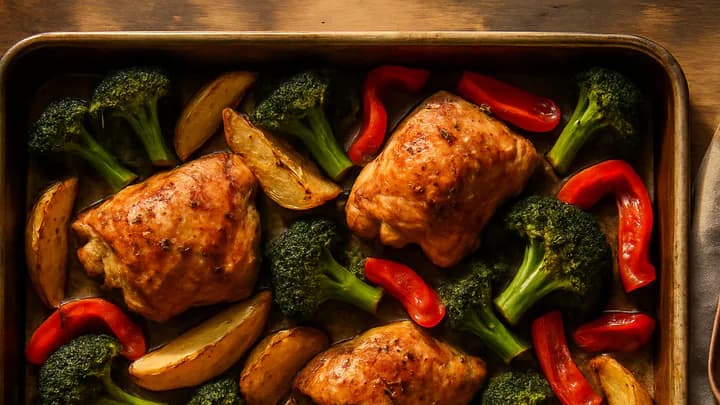
Sheet-Pan Dinners in 2026: Fast, Balanced Meals
Sheet-pan dinners are the smartest weeknight strategy of 2026. Here's how to build balanced, flavorful meals on one tray with minimal cleanup and maximum payoff.

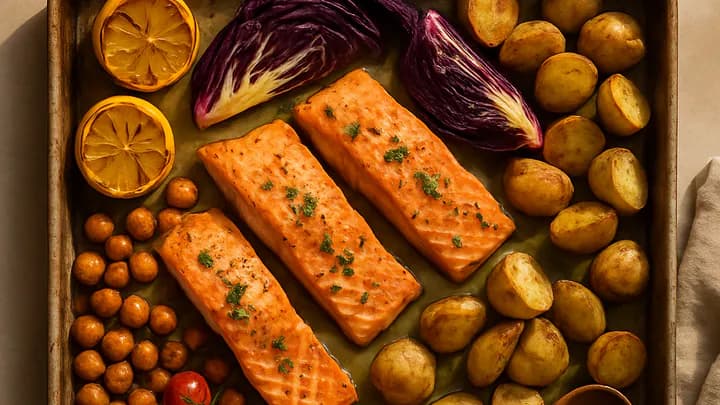
TL;DR: Sheet-pan dinners are the most reliable weeknight strategy for 2026 because they deliver a full, balanced meal on one tray in under an hour, with minimal cleanup. The formula is simple: pick a protein, add a dense vegetable and a quick vegetable, coat everything with fat and seasoning, and roast at 425°F. Master the timing and layout, and you'll cook dinner faster than delivery can arrive.
We've spent the last few years watching home cooks quietly abandon complicated weeknight recipes in favor of one-tray meals — and honestly, we understand why. A well-built sheet-pan dinner hits every note we ask of a modern weeknight: it's fast, it's balanced, it uses whatever's in the fridge, and it leaves exactly one pan to wash. In this guide, we'll walk through the framework our team uses to build sheet-pan dinners that actually taste like something you'd order out, plus the small technique fixes that separate a great tray from a soggy one.
Why sheet-pan dinners are having a moment in 2026
Sheet-pan cooking isn't new, but it's evolved. What used to be a beige tray of chicken and broccoli has become a genuine culinary format, with cooks layering global flavors, thoughtful textures, and better technique. A few trends are pushing this shift.
- Rising grocery costs have made cooks more intentional. One tray means less waste and better use of odd vegetable ends.
- Smaller households want real meals without three pots of leftovers.
- Air fryer fatigue is real — many of us love the crispiness but miss the capacity of a full oven.
- Time-poor weeknights reward any format where prep and cooking can overlap.
The result is a cooking approach that feels modern precisely because it's honest. You're not pretending to make three separate dishes. You're making one good one.
The universal sheet-pan formula
Once you internalize this formula, you can stop looking up recipes. Every great sheet-pan dinner has four components.
1. A protein (roughly 1 to 1.5 pounds for four servings)
Choose something that cooks in 15–25 minutes at high heat. Boneless chicken thighs, salmon fillets, large shrimp, Italian sausage, firm tofu, or a can of drained chickpeas all work. Chicken breasts are trickier because they dry out — if you use them, cut them thinner and pull them earlier.
2. A dense vegetable (about 1.5 pounds)
This is your slow-cooking anchor: potatoes, sweet potatoes, carrots, parsnips, cauliflower florets, butternut squash, or Brussels sprouts. Cut these into pieces roughly the size of a walnut so they finish in the same window as your protein.
3. A quick vegetable (about half a pound)
Added partway through or scattered on top: cherry tomatoes, asparagus, bell peppers, zucchini, spinach, thin broccolini, or halved lemons. These bring freshness, color, and a bit of acidity.
4. Fat, seasoning, and a finishing element
Two to three tablespoons of olive oil, salt, pepper, and a flavor direction — a spice blend, a marinade, a chili crisp, or a mustard glaze. The finishing element is what elevates the tray after cooking: fresh herbs, a squeeze of citrus, crumbled feta, toasted nuts, or a drizzle of tahini or yogurt sauce.
Technique fixes that transform your results
The difference between a great sheet-pan dinner and a disappointing one usually comes down to five small things.
Use a big enough pan
A standard half-sheet pan (roughly 18 by 13 inches) is the minimum for a family meal. Two smaller pans on separate racks beat one crowded pan every time. When ingredients touch, they steam. When they have space, they brown.
Preheat the pan when it matters
For extra-crispy potatoes, tofu, or chickpeas, slide the empty oiled pan into the oven while it preheats. Adding ingredients to a screaming-hot surface gives you an immediate sear that changes the texture entirely.
Cut for cook time, not for looks
Dense vegetables should be cut smaller than you think. A potato in one-inch cubes will not finish at the same time as a salmon fillet. Half-inch cubes will.
Season in layers
Salt and oil before roasting; add acid, herbs, and a finishing sauce after. Delicate flavors like lemon zest, fresh basil, or flaky salt lose their punch in a 425°F oven, so save them for the end.
Stagger the additions
Start dense vegetables alone for 15 minutes. Add the protein. Add quick vegetables in the final 8–10 minutes. This one habit fixes most sheet-pan disappointments.
Five combinations to build your rotation
Here are five reliable templates we return to. Treat them as starting points — swap freely based on what's in your fridge.
- Harissa chicken with chickpeas and lemon: chicken thighs, chickpeas, red onion wedges, halved lemons, harissa paste and olive oil. Finish with cilantro and yogurt.
- Miso salmon with sweet potato and broccolini: roast sweet potato cubes first, add miso-glazed salmon and broccolini for the final 12 minutes. Finish with sesame seeds and scallions.
- Italian sausage with peppers, potatoes, and fennel: everything at once for 30 minutes at 425°F. Finish with red wine vinegar and parsley.
- Sheet-pan shrimp fajitas: peppers and onions roasted for 15 minutes, shrimp tossed in chili-lime seasoning added for the last 6–8. Serve with warm tortillas.
- Crispy tofu with cauliflower and peanut drizzle: preheat the pan, roast cornstarch-coated tofu and cauliflower florets, finish with a peanut-lime-soy sauce and cilantro.
Planning a week around one pan
Sheet-pan cooking rewards a little upstream thinking. On shopping day, we like to buy two proteins, two dense vegetables, and a handful of quick vegetables, then mix and match across three or four dinners. Pantry sauces — chili crisp, a good mustard, tahini, miso, harissa — do the heavy lifting on flavor without asking you to plan every meal in advance.
Leftovers also travel well. Roasted vegetables and protein reheat beautifully in a lunchbox, or get tossed with greens and a fresh dressing the next day. A well-executed Tuesday sheet pan is often Wednesday's grain bowl.
Common mistakes to avoid
- Overcrowding the pan. If in doubt, use two pans.
- Skipping the parchment when using sticky glazes — you'll fight the pan for twenty minutes.
- Under-salting vegetables before roasting. Season generously; you can't fix bland roasted broccoli after the fact.
- Ignoring internal temperature. A quick-read thermometer is the single best upgrade for consistent results with chicken and fish.
- Forgetting the finish. A squeeze of lemon or a sprinkle of herbs is what makes it feel like a meal, not a tray of components.
Key takeaways
- The universal formula is protein + dense vegetable + quick vegetable + fat, seasoning, and a finish.
- 425°F is the default oven temperature for almost everything.
- Cut dense vegetables small, and stagger quick vegetables in later so nothing overcooks.
- Give ingredients space on the pan — crowding causes steaming instead of browning.
- Finish with acid, fresh herbs, or a sauce to elevate a good tray into a great meal.
- Stock a few pantry sauces so you can build dinner without a recipe.
Editorial note: This guide reflects general home-cooking best practices. When cooking poultry, seafood, and eggs, follow food-safety guidance from a trusted authority in your country and use a food thermometer to confirm safe internal temperatures.
Frequently asked questions
What is the ideal oven temperature for sheet-pan dinners?
For most sheet-pan dinners, 425°F (220°C) is the sweet spot. It's hot enough to caramelize vegetables and crisp proteins without drying them out, and it works for the majority of combinations you'll build.
Should I line my sheet pan with parchment or foil?
Parchment is best for delicate items and easy cleanup, while foil handles higher heat and sticky glazes better. For most everyday dinners, parchment gives you better browning without the food sticking.
Why do my vegetables steam instead of roast?
Overcrowding is the usual culprit. When ingredients are packed too closely, moisture gets trapped and they steam. Give everything a single layer with a little breathing room, and use a second pan if needed.
Can I cook chicken and vegetables on the same pan safely?
Yes, as long as the chicken reaches an internal temperature of 165°F (74°C). Place raw poultry so juices don't pool onto ready-to-eat items, and always wash surfaces that touched it.
What proteins work best for sheet-pan dinners?
Chicken thighs, salmon fillets, shrimp, sausage, tofu, and chickpeas are all excellent. They cook quickly, hold up to high heat, and pair naturally with roasted vegetables.
How do I keep everything from finishing at different times?
Cut dense vegetables like potatoes and carrots smaller, and add quick-cooking items like shrimp or spinach partway through. Staggering by cook time is the single biggest upgrade to your results.