Who Gets to Read the Scale at Ver-o-Peso
A short story about a Belém fish seller who, gutting fish before dawn, tells her new apprentice how she won the right to read the market's brass scale at fifteen, and what it cost.
Drafted with AI. This version has not been reviewed by an editor, so it carries no ads — how we work.

Story Time is original short fiction. The characters, places and events in this story are invented.
"Not the belly. Hold him by the gill, Keila, or he'll go back to the river through your fingers."
The dourada went anyway, a gold slab sliding off the tiles and slapping onto the wet concrete, and Keila went after it with her sandals squealing. She is fourteen and has been at my stall six days. She has her mother's eyebrows and her own way of apologising, which is to say nothing and work faster. Behind us the ice truck was backing up to the loading edge with that beeping that sets off the dogs, and the boys were dragging the blocks down the ramp with hooks, steam coming off them in the warm dark like they were cooking. Over on the iron roof of the market the urubus were already sitting in a row, waiting for us to make the day's mess.
"Again," I said. "Thumb in the gill. Knife in at the vent, up to the throat. Don't saw. You're not cutting bread."
She cut. It was ugly, but it was a cut. I took the next fish, a pescada amarela, and opened it in one stroke so she could see the line.
"Tia Dalvina," she said, not looking up, "when do I get to weigh?"
Six days. I laughed, and she went red, and I felt bad, because I had asked exactly the same thing at exactly her age, only I hadn't asked. I had taken.
So I told her. You can gut and listen at the same time. That is most of what this job is.
The stall belonged to Raimunda Leal then, God keep her, a woman with forearms like mooring posts. I was the youngest of four helpers. I scaled, I hauled ice, I chased urubus off the offal bucket with a broom. And I watched Seu Bené.
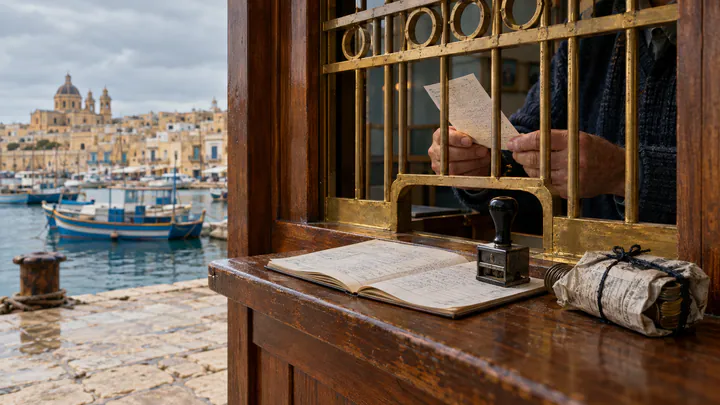
Seu Bené read the scale. This scale, Keila, the same one: the brass beam, the two pans, the little box of weights with the green felt worn down to the wood. In those days nobody here trusted the spring scales with the dial; a dial can be bent with a fingernail. Brass is brass. You put the fish in one pan and the weights in the other until the beam sits level, and you read it out loud so the whole row can hear, and you take the money. The weigher was the one Raimunda trusted with the cash tin. The weigher sat on a stool. The weigher did not haul ice.
Bené had been weighing at Ver-o-Peso since before the war, he said, though he never said which war. He was half deaf from forty years of boat engines. When customers called their orders he leaned in with his good ear, and when the river was loud, or the rain was loud, he guessed. Mostly he guessed right.
I was good at numbers. I could add a whole morning's sales in my head while scaling a tucunaré, and I had started doing it, quietly, checking his sums against mine. Twice a week, maybe, he'd be off by a little. A hundred grams. A few centavos, nothing. I told myself I was keeping a record for Raimunda's sake. I kept it in a school notebook under the ice chest.
"That's smart," Keila said.
"Gut your fish."
You know the rain here. Three o'clock, you could set a clock by it. In February it comes down on the tin so hard you can't hear the person next to you shouting. Everyone crowds under the stalls, the açaí sellers drag their baskets in from the quay, and for half an hour the market turns into one big room full of wet people buying fish because they're standing in front of it.
That afternoon Socorro Pinheiro came in out of it with her plastic bag over her hair. She ran a pensão in Cidade Velha, eight rooms, men off the river boats, and every Friday she bought pescada from us for their supper. She counted every coin twice. She had to; the men paid her late or not at all.
She called for a kilo and a half. Bené cut her a piece and dropped it on the pan, and I saw it before he did. On the weights side, from the customer before, there was a five-hundred-gram weight he had never lifted off. He added the kilo, and the beam settled, and he called it out: "Two kilos!"
The fish was a kilo and a half. The beam was level because his forgotten half-kilo was sitting there pretending to be fish.
Bené didn't hear himself, I think. Socorro didn't hear him at all; nobody could hear anything under that rain. She paid what he asked. I stood there with a bucket of scales in my hands and my mouth closed, and I watched her count the coins out twice, and I let her go.
That night I wrote it in the notebook with the date and the amount. The next morning I showed Raimunda.
Keila had stopped cutting. "Did she believe you?"
"She believed the notebook. Three months of little mistakes, and then a big one, with a name next to it. Socorro, a regular. Raimunda did not like her regulars being cheated, even by accident. She put me on the stool the following week."
"And Seu Bené?"
I opened another pescada. My hands know the line; I don't have to look.
"Raimunda kept him on to clean and carry. He was too proud to leave. The first morning I sat in his place, he brought over the box of weights himself, set it down, and took out the five-hundred-gram one. Turned it in his fingers. Put it in my hand. 'You count very well, menina,' he said. 'You counted this one too.' That's all. Then he went to haul ice with the boys, sixty-three years old."
The ice truck pulled away. A urubu dropped off the roof and walked along the quay like a priest.
"Socorro never came back," I said. "Somebody told her, or she weighed it at home, I never found out which. She started buying from Seu Lúcio, three stalls down, who gave short weight on purpose, which she probably knew. She'd rather be cheated by someone who meant it."
I wiped my knife on the rag and went to the shelf under the counter and took down the box. The felt is almost gone now. The kilo weight has a dent in the base from the time Raimunda threw it at a thief. I put the box on the tiles in front of Keila, between her fish guts and mine.
"These are yours to look after," I said. "Clean them on Sundays. Dry them. If one goes missing, I'll know before you do."
She touched the lid like it might be hot.
"What about the money?" she said. "Socorro's. Did you ever—"
"Every Saturday for a year. Out of my wages. I'd walk down to Lúcio's stall when she was there and put coins in her hand, folded in paper. Much more than the half-kilo, in the end. She never thanked me and she never stopped taking it. One Saturday in the next rains she closed my hand round the paper and said, 'Enough, girl.' That was all she ever said to me."
Keila looked at the box and not at me. I could see her doing the sum in her head: a year of Saturdays. She is good at numbers too. That's why her mother brought her to me.
"Open it," I said. "Weigh this one for me. I'll read."
It was a tambaqui, a fat one, black-backed. She set it on the pan carefully, with both hands, and I put in the two-kilo weight, and the beam swung, and I added two hundred grams, and it came down level and sat there as quiet as a sleeping dog. Two kilos two hundred. Anyone could see it.
"Two kilos four," I said, loud enough for the row.
Out on the quay the first boats were coming in with their engines coughing, and Lúcio's grandson was rolling up his shutter with a sound like a long sneeze. Keila's hand was still on the edge of the pan. I watched her look at the beam, and at the weights, and at me, and at the fish, and back at the beam. I watched her decide whether I was old, or tired, or testing her, or simply the woman who signs her pay.
I waited. I had waited forty seconds once, under the rain, and said nothing, and paid for it for a year.
She took her hand off the pan.
"Tia Dalvina," she said, very quietly. "It's two-two."
"Who's going to hear that?" I said. "The fish? Say it again. Say it so Bené could hear it."
She swallowed, and she said it again.