Entryway Organization in 2026: Calm Home Starts Here
A well-planned entryway sets the tone for your entire home. Here's how to design a small, hardworking landing zone that keeps daily life running smoothly.

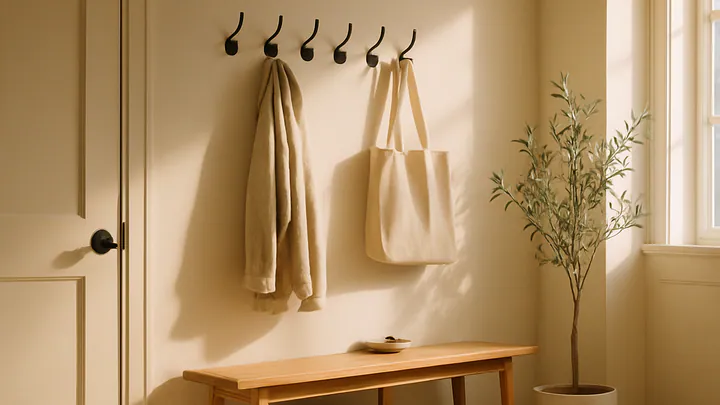
TL;DR: A well-organized entryway is the highest-leverage upgrade in most homes. In 2026, the best entryways are compact, hardworking landing zones with three essentials: a drop surface for keys and mail, vertical storage for coats and bags, and a durable floor plan for shoes and wet gear. You don't need a mudroom or a big budget — you need a defined zone, honest storage, and a weekly reset habit.
Our team spends a lot of time thinking about the small spaces that shape daily life, and the entryway keeps coming up. It's the first thing you see when you come home and the last thing you touch on the way out. When it works, the whole house feels calmer. When it doesn't, clutter tends to spread through the rest of the home like a slow leak.
Why the entryway matters more than its square footage
Most entryways are tiny — a few feet of wall, a corner by the door, sometimes just the edge of a hallway. But they carry an outsized load. Every arrival and departure passes through them, which means every set of keys, every jacket, every damp umbrella, every package, and every school bag lands there first.
If the entryway has no clear system, those objects don't disappear. They migrate. Keys end up on the kitchen counter. Coats drape over dining chairs. Shoes creep into the living room. What looks like a whole-home clutter problem is often just a missing landing zone.
The goal isn't a magazine-perfect foyer. It's a small, honest space that absorbs the friction of daily life so the rest of your home can breathe.
The three functions every entryway needs
Before you shop for anything, define the jobs your entryway has to do. In our experience, almost every functional entryway handles three core tasks.
1. A drop zone for small essentials
This is the single most important element. You need one dedicated surface — a shelf, a tray, a small bowl, the top of a console — where keys, wallet, sunglasses, and the day's mail always land. Not sometimes. Always.
The rule we recommend: if it fits in your pocket and travels with you daily, it lives in the drop zone when you're home. That one habit eliminates most of the morning scramble.
2. Vertical storage for outerwear and bags
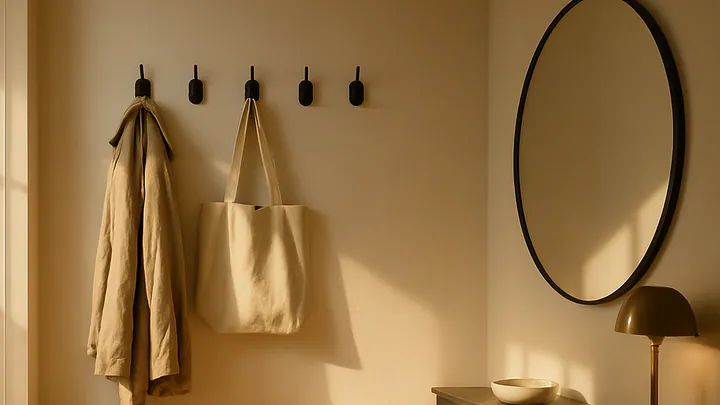
Coats, jackets, tote bags, backpacks, and dog leashes all want to hang. Hooks are almost always more useful than a coat closet for daily items, because the friction of opening a door and finding a hanger is enough to make most people give up.
Mount a row of sturdy hooks at a height that works for the tallest person in the household, and a second lower row if you have kids. Reserve the closet, if you have one, for out-of-season and rarely used pieces.
3. A plan for shoes and wet gear
Shoes are the biggest source of entryway chaos. A closed cabinet, a bench with baskets underneath, or a simple boot tray all work — what matters is that there's a defined home for them, and that home holds only what you actually wear this season.
For wet weather, a rubber tray or a washable mat near the door protects your floors and gives damp boots somewhere to drip without soaking a rug.
Designing the space you actually have
Very few of us have a proper mudroom. Most entryways fall into one of four shapes, and each has a workable solution.
The narrow hallway entry
If your door opens into a corridor, go vertical and shallow. A slim console table (10 to 12 inches deep), a tall wall of hooks, and a wall-mounted shoe cabinet keep the floor clear. Add a mirror above the console to bounce light and give the space a final-check function on your way out.
The direct-to-living-room entry
When the front door opens straight into a main room, the trick is to define the arrival zone visually without building a wall. Use a rug that stops three or four feet from the door, a low bench or console that acts as a soft boundary, and a cluster of hooks or a small shelf on the nearest wall. The eye reads it as a distinct space even without architecture.
The tiny apartment entry
In a small apartment, over-the-door hooks, a single floating shelf, and a slim shoe cabinet can be the entire system. Skip the bench if the floor space is tight — a wall-mounted flip-down seat or simply leaning against the wall to put on shoes is fine. Prioritize the drop surface and hooks above all else.
The generous foyer
If you're lucky enough to have real square footage, resist the urge to fill it. A bench with storage, a runner rug, a console with a lamp, and a well-edited hook wall will feel more welcoming than a room stuffed with furniture. Empty floor space is a feature, not a flaw.
Materials that age well
The entryway takes more abuse than almost any other space in the house. Wet shoes, dripping umbrellas, dropped bags, muddy paws, and constant traffic add up quickly. Choose materials that can handle it.
- Floors and rugs: low-pile wool, jute, or flat-weave cotton with a washable backing. Indoor-outdoor rugs are quietly excellent here.
- Benches and consoles: solid wood, powder-coated metal, or sealed rattan hold up better than veneered particleboard, which swells when wet.
- Hooks and hardware: metal beats plastic every time. Look for hooks rated for the weight of a heavy winter coat plus a full bag.
- Trays and baskets: woven baskets are forgiving of mess, and a simple metal or silicone boot tray contains water without staining.
Lighting and the small touches that make it feel like home
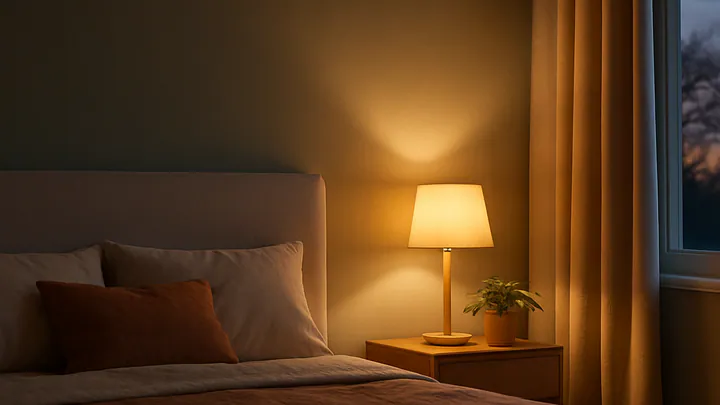
An entryway with only overhead light usually feels like a transit corridor. Adding a small table lamp, a plug-in wall sconce, or even a warm smart bulb on a timer transforms the arrival experience. Coming home to a softly lit corner is a genuinely different feeling than fumbling for a switch in the dark.
A few small elements go a long way: a mirror for a last look, a candle or small plant for a bit of life, and a piece of art at eye level. Keep the surfaces mostly clear — the drop tray, a lamp, maybe one object you love. That's usually enough.
The weekly reset habit
No system survives without maintenance, but the entryway is one of the easiest spaces to keep tidy because it's small and visible. We recommend a five-minute reset once a week:
- Empty the drop tray — file the mail, return the sunglasses to the car, put the keys back.
- Return coats and bags that don't belong to their real homes.
- Wipe the drop surface and the floor near the door.
- Shake out or vacuum the entry rug.
- Put away any shoes that aren't in this week's rotation.
Twice a year — usually when the weather turns — do a deeper edit. Rotate seasonal coats and shoes into and out of storage, donate anything you didn't wear last season, and reassess whether the setup still fits your life.
Common mistakes to avoid
- Too much storage. A giant hook wall invites clutter. Fewer, better hooks force you to edit what stays.
- Open shoe shelves at the door. They look tidy in photos and messy in real life. Closed storage or a low basket is more forgiving.
- Delicate finishes. A glossy white bench looks great for a week. Choose surfaces that hide scuffs.
- No drop surface. If there's nowhere to put your keys, they'll live on the kitchen counter forever.
- Ignoring the ceiling and walls. Vertical space is free real estate — shelves, hooks, and pegboards can multiply a small entry's capacity.
Key takeaways
- Every functional entryway needs three things: a drop surface, vertical storage, and a plan for shoes.
- Define the zone visually — a rug, a bench, or a console does the work of a wall.
- Choose materials that can handle water, mud, and daily wear without looking tired.
- Warm lighting and one or two personal touches make the arrival feel like coming home.
- A five-minute weekly reset is the difference between a system that lasts and one that collapses in a month.
- Edit ruthlessly — the entryway rewards restraint more than any other room in the house.
The best entryways aren't the biggest or the most designed. They're the ones that quietly do their job, day after day, so the rest of the home can be about something other than looking for your keys.
Frequently asked questions
What is the ideal size for a functional entryway?
Even a strip of 3 to 4 feet along a wall can work as a functional entryway. What matters more than square footage is having a defined surface for keys, a place to sit, and vertical storage for coats and bags.
How do I create an entryway if my front door opens directly into the living room?
Use a narrow console table, a low bench, or a slim shoe cabinet to visually separate the arrival zone. A rug that stops a few feet from the door and a wall hook cluster can define the space without a wall or partition.
What is the most important item in an entryway?
A dedicated drop surface for keys, wallets, and mail is the single most useful element. It prevents the daily hunt for essentials and keeps clutter from migrating into the rest of the home.
How can I store shoes in a small entryway?
A tilt-out shoe cabinet, an under-bench basket system, or a low tray for wet shoes usually works better than open shelving. Keep only the current season's most-worn pairs at the door and rotate the rest elsewhere.
What flooring or rug works best near the front door?
Durable, washable materials perform best. Look for low-pile rugs with rubber backing, indoor-outdoor weaves, or a boot tray for wet months. Anything you can shake out or wipe down will age gracefully.
How often should I declutter my entryway?
A quick weekly reset of five to ten minutes keeps things manageable, with a deeper seasonal edit when you swap coats and shoes. Regular small resets prevent the pileups that make the space feel chaotic.