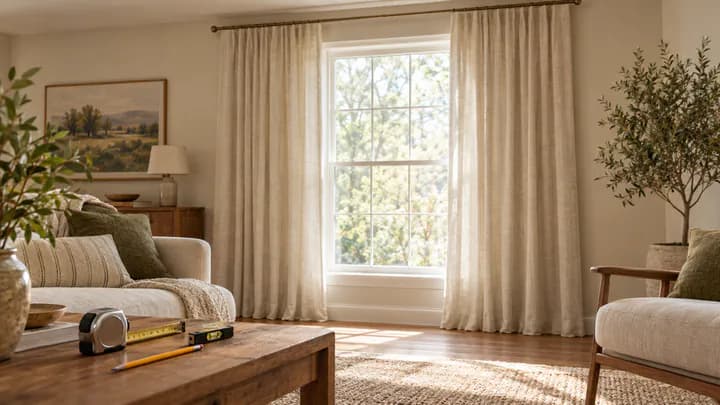
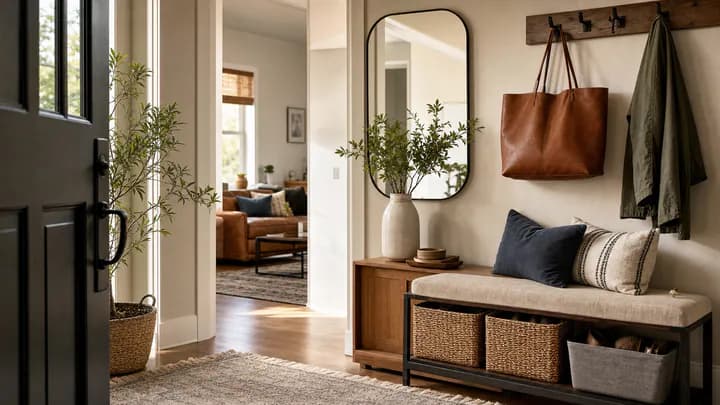
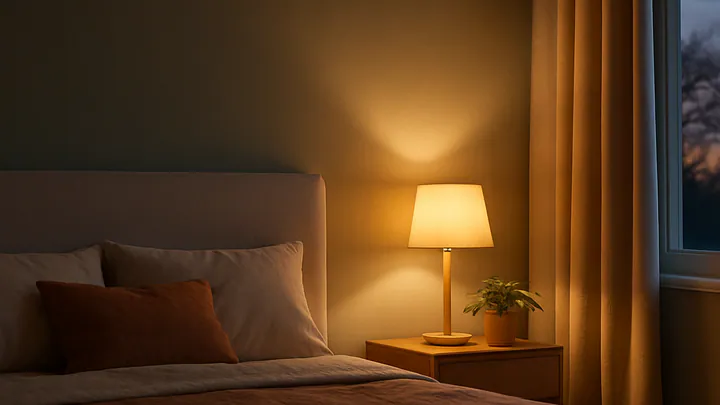
Cozy Lighting Layers: How to Warm Up Any Room in 2026
One bright ceiling light is why most rooms feel cold. Layered lighting fixes it with three light types, one color temperature, and dimmers — a weekend project for renters and owners alike.
Drafted with AI and published automatically. Our editors set the standards and fix reported errors — how we work.
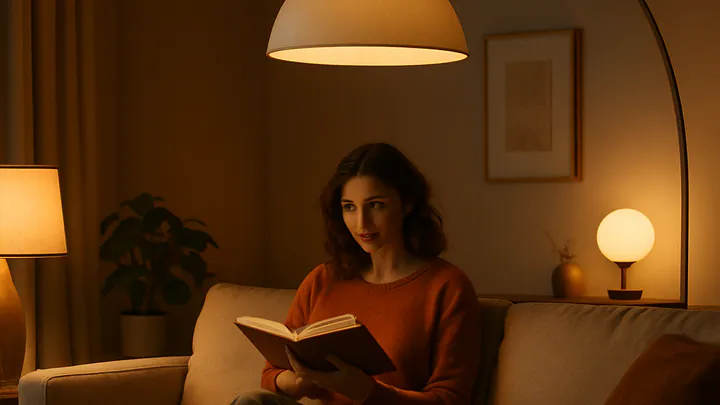
TL;DR: One bright ceiling light is why a room feels cold. Layer three kinds of light instead — ambient, task, and accent — at different heights, all in the same warm color temperature near 2700K, all on dimmers or smart plugs. Three sources per room minimum. Rental-friendly, and doable in a weekend.
What actually makes a home feel good to walk into after a long day? It is rarely the paint, the rug, or the sofa. It is almost always the lighting — specifically, whether the room has been lit in layers or lit like a dentist's office.
Layered lighting is a design method that combines general, focused, and decorative light sources at varying heights so a single room can shift between bright and functional and soft and restful. It used to require an electrician and a budget. In 2026 it requires warm LED bulbs, a couple of lamps, and about two hours.
Why does one overhead light make a room feel cold?
Because top-down light from a single point is the one lighting condition that almost never occurs in nature. It flattens faces, erases the shadows that give textiles and wood their texture, and leaves the corners of the room dark while the center is glaring. Your brain reads the combination as institutional rather than domestic.
Builders make it worse by installing whatever bulb is cheapest, which is usually a cool 4000K or higher. So the default American room is one cold, high, undimmable source doing the work of three. Research on light and sleep generally suggests that bright, cool-toned light in the evening delays wind-down, while low, warm light supports it — which is a second reason to stop lighting your evenings from the ceiling. Morning light matters as much as evening light.
What are the three lighting layers, and what does each one actually do?
Ambient light lets you move through a room safely. Task light lets you do something specific. Accent light does no work at all — it exists to make the room look interesting. You need all three, and most homes have only the first.
| Layer | Job | Typical height | Examples |
|---|---|---|---|
| Ambient | Even, gentle base illumination | Ceiling, or bounced off it | Dimmed ceiling fixture, torchiere floor lamp, flush mount |
| Task | Bright, directed light for an activity | Waist to shoulder height | Swing-arm reading lamp, under-cabinet strip, desk lamp, vanity sconces |
| Accent | Visual interest, pockets of glow | Low or on a surface | Picture light, plant uplight, bookshelf lamp, candle-flicker sconce |
The practical consequence: when task lighting is missing, people crank the ambient layer to compensate, and the mood dies. A 5-watt reading lamp beside the chair does more for comfort than doubling the ceiling output.
What color temperature should each room be in 2026?
Use 2700K as your default everywhere people relax, 3000K where you prep food or get ready, and reserve 4000K and above for garages, closets, and workshops. If you change nothing else after reading this, change your bulbs — it is the cheapest upgrade in home design.
| Kelvin | Feel | Best for |
|---|---|---|
| 2200K–2400K | Candle and firelight | Accent fixtures, bedside lamps after dark, dining rooms |
| 2700K | Classic warm white | Living rooms, bedrooms, hallways, most lamps |
| 3000K | Soft white | Kitchens, bathrooms, laundry rooms |
| 3500K–4000K | Neutral to cool | Desk task lamps, utility spaces, color-critical work |
| 5000K+ | Daylight, clinical | Garages, workshops, closets — rarely anywhere else at home |
The rule that matters most: never mix temperatures within one sightline. Not just one room — one sightline. If you can see the kitchen from the sofa, the kitchen bulbs are part of the living room scheme. A 2700K lamp next to a 4000K fixture creates a dissonance people feel without being able to name it.
Two specifications the bulb aisle rarely explains. CRI (color rendering index) describes how truthfully a bulb renders color; look for 90 or above in any room where you look at skin, food, or art. And dim-to-warm LEDs drop from 2700K toward 2200K as you lower them, mimicking an incandescent filament. They cost a few dollars more per bulb and they are the closest thing to a cheat code in this whole article.
How many lamps does a room actually need?
Three light sources minimum, at three different heights, with one near each dark corner. A standard 12-by-14-foot living room is comfortable with four to five sources; an open-plan space usually needs six before the edges stop going gloomy.
A rough output guide, since "watts" no longer means anything with LEDs: a 60-watt-equivalent bulb produces roughly 800 lumens. For a living room, aim for something in the range of 1,500 to 2,500 total lumens spread across several fixtures rather than concentrated in one — spread is the entire point.
Two decision rules worth using constantly:
- Sit down first. If you can see a bare bulb or filament from your normal seated position, it needs a shade, a lower wattage, or a different angle.
- Light below eye level is what reads as cozy. A tall torchiere throwing light from above your head is ambient, not intimate. Table lamps at roughly 58–64 inches to the top of the shade when standing, or shade bottom near seated eye level, do the emotional work.
What should I do in each room?
Living room
Ceiling fixture on a dimmer at 30–40%, two lamps flanking the seating, one accent piece — a picture light, a shelf lamp, or an uplight tucked behind a plant so it throws leaf shadows on the wall. All 2700K.
Bedroom
Skip the overhead entirely after sunset. Bedside lamps at 2200K–2700K, a dresser lamp, and optionally warm fairy lights for the last half hour before sleep. More ideas in our calm, cozy bedroom refresh guide.
Kitchen
Under-cabinet LED strips at 3000K for the counters — they eliminate the shadow your own body casts when you stand at the cutting board. Pendants over the island, plus one small lamp on open shelving or the counter so the kitchen has an evening setting, not just a working one.
Bathroom
Put the light beside the mirror, not above it. Sconces or vertical bars at roughly eye height on both sides cross-light the face and remove the under-eye shadows that overhead-only bathrooms create. Even, adequate bathroom light is also a safety matter for older residents.
Home office
A 3500K–4000K task lamp on the desk, warmer 2700K ambient light behind and around you. The contrast keeps the work surface sharp without bathing your whole field of view in cool light. Position the lamp on the opposite side from your writing hand.
Entryway
The first three feet of a home set the tone, and a single cold ceiling bulb undoes everything. One warm lamp or sconce on the console beats an overhead every time — we cover the rest of that square footage in our guide to making the first three feet work hard.
Are smart bulbs worth it, and what should you skip?
Worth it if you rent, or if you want lights to dim and warm at sunset without touching anything. Not worth it if you already have good dimmers and lamps you turn on by hand — the automation is the product, not the bulb.
Pay for: tunable white (2200K at night, 4000K in the morning), scheduled scenes tied to sunset rather than a fixed clock time, smooth low-end dimming — cheap bulbs jump from off to 20% with nothing in between — and Matter compatibility, the cross-brand standard that finally lets bulbs from different makers live in one app. Skip color-changing party modes, voice control as your primary interface, and anything requiring a proprietary hub.
The mistake almost everyone makes: smart bulbs in a fixture controlled by a wall switch. Someone flips the switch, the bulb loses power, and every schedule you built stops working. Either use a smart switch instead of smart bulbs, or move the lamp to a smart plug. Since all of this leans on your network, a shaky router undermines the whole setup.
What can renters do this weekend for under $200?
All five of these travel with you and touch no wiring:
- Replace every bulb in your main living areas with 2700K warm-white LEDs at CRI 90+.
- Add one plug-in wall sconce on each side of the bed or sofa — cord covers cost a few dollars and hide the trail.
- Put two lamps on smart plugs scheduled to switch on at sunset.
- Clip a battery or rechargeable picture light above your favorite piece of art.
- Tuck a strand of warm LED fairy lights behind a bookshelf or headboard for the lowest evening setting.
Say you are lighting a one-bedroom rental: eight warm bulbs, two plug-in sconces, two smart plugs, one rechargeable table lamp, and a battery picture light can come in under two hundred dollars total.
What goes wrong most often?
- One bulb to rule them all. No single fixture can do ambient, task, and accent work at once.
- Cool bulbs beside the bed. 4000K daylight bulbs in a bedroom work against your evening wind-down.
- Undimmable everything. Check the box says "dimmable" — many cheap LEDs are not, and running them on a dimmer shortens their life and makes them buzz.
- Old dimmers, new bulbs. Dimmers designed for incandescent loads often flicker with LEDs because the LED draws less than the dimmer's minimum load. Fit an LED-rated dimmer and keep bulb brands consistent on one circuit. Hardwired work belongs to a licensed electrician.
- Opaque shades everywhere. A solid metal shade throws two hard pools and lights nothing else. Mix in at least one linen or paper shade that glows.
- Forgetting the corners. Dark corners visually shrink a room. One small uplight in each far corner makes a space feel noticeably larger.
When does cozy lighting not apply?
Warm and dim is a style choice for living areas, not a universal prescription. Aging eyes need substantially more light to see the same detail, and low warm light on stairs, in hallways, and in bathrooms can genuinely raise fall risk — those zones want brighter, even, glare-free light and motion-activated night lights, and anyone planning around vision or mobility needs should consult a qualified professional.
Two other honest exceptions. If you do color-critical work at home — makeup, sewing, painting, photo editing — you need a high-CRI neutral task light regardless of how the rest of the room feels. And if flicker gives you headaches, check reviews for flicker performance specifically; the cheapest dimmable LEDs are the usual culprits.
Key takeaways
- Every room needs three layers — ambient, task, and accent — at three different heights.
- Default to 2700K in living areas and bedrooms, 3000K in kitchens and baths, and never mix temperatures within one sightline.
- Buy dimmable, CRI 90+ bulbs, and consider dim-to-warm for lamps you use late at night.
- Put lamps on dimmers or smart plugs scheduled to sunset; avoid smart bulbs in switch-controlled fixtures.
- Renters can layer an entire apartment for under $200 with plug-in sconces, smart plugs, and warm LEDs.
- Corners and artwork are where accent lighting earns its keep — and safety zones like stairs and bathrooms are where brightness wins over mood.
Editorial note: this article offers general home design guidance. For any hardwired fixture, switch, or rewiring work, please consult a licensed electrician in your area.
Frequently asked questions
What is layered lighting in a home?
Layered lighting is the practice of combining three types of light in one room — ambient (general), task (focused), and accent (decorative) — at different heights. Together they create depth, flexibility, and warmth that a single overhead fixture cannot produce, no matter how good the fixture is.
What color temperature makes a room feel cozy?
Bulbs between 2200K and 2700K produce the warm, candle-like glow most people read as cozy. Use 2700K as your default for living rooms, bedrooms, and hallways, 2200K–2400K for accent fixtures and late-evening lamps, and 3000K where you need crisper task light in kitchens and bathrooms.
How many light sources should a room have?
At least three, at three different heights — for example, an overhead fixture on a dimmer, a table lamp at seated eye level, and a floor lamp or sconce. Large or open-plan rooms usually need five or six before the corners stop going dark.
Can I mix warm and cool bulbs in the same room?
No — and the rule extends to everything you can see from one seat, including an adjoining open-plan kitchen. Mixed color temperatures create a visual dissonance people notice without being able to name it. Pick one Kelvin number per sightline and buy every bulb to match.
Are smart bulbs worth it for cozy lighting?
Yes, mainly for renters and for anyone who wants lights to dim and warm automatically at sunset. The features worth paying for are dimming quality, tunable white, scheduled scenes, and Matter compatibility. Color-changing modes and proprietary hubs are usually not worth the premium.
Why do my LED bulbs flicker or buzz when dimmed?
Almost always a compatibility problem between the bulb and the dimmer, not a faulty bulb. Older dimmers were designed for incandescent loads and often sit above the minimum load an LED draws. Fitting an LED-rated dimmer, or using the same brand of bulb throughout the circuit, usually resolves it — and any hardwired work should be done by a licensed electrician.
How can renters add layered lighting without rewiring?
Plug-in wall sconces, clip-on or battery picture lights, floor lamps with inline dimmers, rechargeable cordless table lamps, and stick-on puck lights cover every layer with zero electrical work. Add smart plugs so the lamps come on at sunset by themselves.
Does warm, dim lighting suit everyone?
No. Aging eyes need considerably more light to see safely, and dim warm light on stairs, in hallways, or in bathrooms can raise fall risk. Anyone doing color-critical work — makeup, sewing, painting, photo editing — also needs a high-CRI neutral task light. Keep the cozy layers for living areas and consult a qualified professional about lighting for vision or mobility needs.