Modern Home Makeover: A Room-by-Room Plan That Works
A modern home makeover is really a sequencing problem, not a shopping problem. Here is the order to work in, what each tier realistically costs, the lighting specs that separate a finished room from a furnished one, and the errors that waste the most money.
Rewritten with AI and republished automatically. Our editors set the standards and fix reported errors — how we work.
TL;DR: A modern home makeover works when you sequence it correctly — declutter, fix layout and lighting, then hard finishes, then paint, then furniture, then styling. Most failed makeovers are not a taste problem. They are a room bought in the wrong order, lit at the wrong color temperature, and sized to the wrong rug.
A modern home makeover is a cosmetic and functional refresh of an existing space that improves how it looks and how it works, without moving walls or changing the building's structure. That last part is the useful distinction: the moment you relocate plumbing or take out a load-bearing wall, you are renovating, and the budget, permits, and timeline change category entirely.
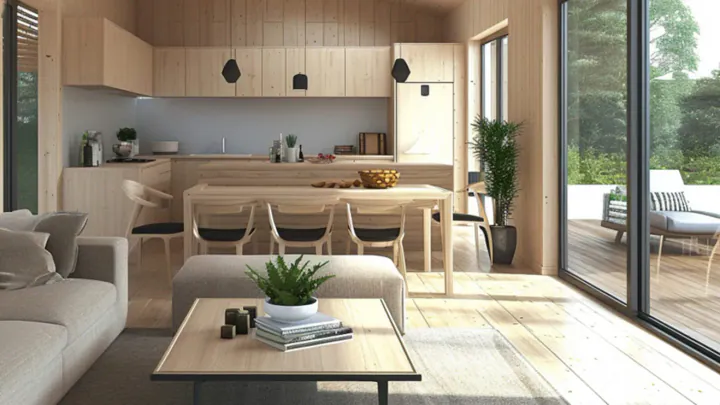
The original promise of "modern" design still holds — clean lines, honest materials, restraint in the number of competing ideas per room. But the version that actually feels good to live in is warmer than the showroom version: natural wood, textured textiles, and enough soft light that the room does not read like a rental listing photo.
What order should I do a home makeover in?
Work in this sequence: declutter, resolve layout, plan lighting, replace hard finishes, paint, buy furniture, then style. The order matters because each stage constrains the next, and going backwards is where money disappears.
The most counterintuitive rule is paint last, not first. Paint comes in effectively unlimited colors and can be matched to a sofa, a rug, or a tile you have already committed to. A sofa cannot be matched to a paint color you already rolled on the wall — you will be searching a finite catalog for a specific shade of green that does not exist in the fabric you want.
Layout also precedes purchases. Tape the footprint of any large piece on the floor with painter's tape and live with it for two days. Walk the path from door to seat to kitchen. If you have to turn sideways anywhere, the piece is too big, and no amount of styling fixes a room you have to edge through.
The decluttering stage is not optional
Removing roughly a quarter of what is in a room does more visually than most purchases will. Our rule: anything you have not touched in twelve months and could replace for under about $50 leaves. Everything else needs an assigned home — closed storage for the utilitarian, open shelving for the maybe three things per shelf you actually want seen.
How much does a modern home makeover cost in 2026?
Cosmetic work on one room usually costs a few hundred to a couple of thousand dollars in materials if you supply the labor. Furnishing a main living space properly — seating, rug, lighting, window treatments — commonly runs into the low-to-mid four figures. Once flooring, cabinetry, or electrical work enters the scope, plan on five figures. Prices swing enormously by region, so treat these as planning brackets, not quotes.
| Tier | What it covers | Typical spend per room | Timeline |
|---|---|---|---|
| Refresh | Declutter, paint, bulbs, rug, textiles, art rehang | Low hundreds to ~$1,000 | A weekend |
| Restyle | Above plus new seating or bed, lamps, window treatments, storage | Roughly $1,500–$5,000 | 2–6 weeks, lead times dominate |
| Rework | Above plus flooring, added circuits, built-ins, cabinet refacing | $8,000 and up | 1–3 months, trades required |
| Renovate | Moving walls, plumbing, or windows — no longer a makeover | Highly variable, permits likely | 3 months+ |
If the Restyle or Rework tier is where you want to land, save toward it deliberately rather than financing it in pieces. Treating each room as its own line item keeps a makeover from turning into a slow drip of credit-card purchases. Nothing here is financial advice; it is just cheaper to buy the right sofa once than the wrong sofa twice.
Which rooms give the biggest payoff per dollar?
The entryway and the bedroom return the most per dollar, because both are small, and small rooms take less material to transform. The living room returns the most per hour of enjoyment because you are in it the longest. Kitchens return the least per dollar in a cosmetic makeover, since the elements that read as dated — cabinet boxes, counters, appliance sizes — are the expensive ones.
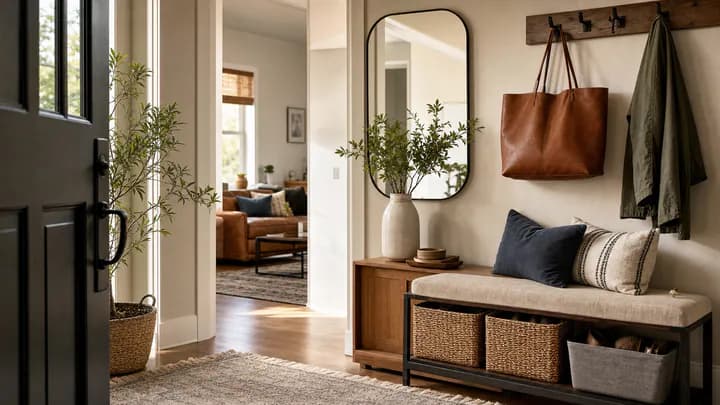
- Entryway. A hook rail, a runner, a light fixture, and somewhere to drop keys. It is the first and last thing anyone experiences, and our breakdown of how to make the first three feet of your home work covers the layout in detail.
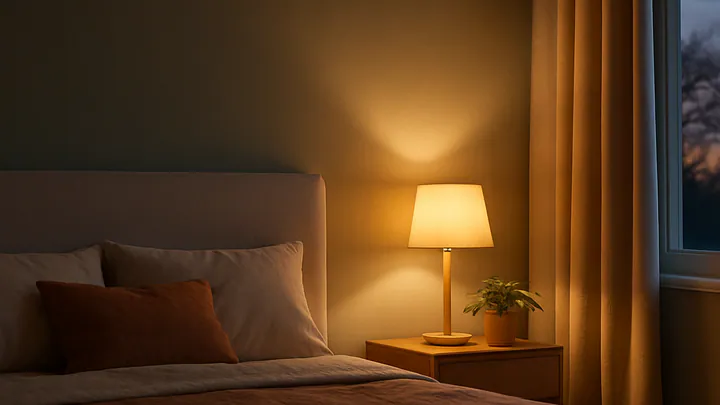
- Bedroom. Lighting on dimmers, one large rug or two runners, and clear nightstands. Most of the gains are subtractive, as we lay out in this guide to calm, cozy bedroom upgrades.
- Living room. The rug and the lamps do more than the sofa, which surprises people who budget the other way around.
- Kitchen. Hardware, faucet, and under-cabinet lighting are the high-leverage cosmetic moves. Cabinet painting is real work, not a weekend.
How do I pick a modern color palette that won't date?
Anchor on warm neutrals for the large surfaces, add one saturated color across two or three items, and let materials rather than paint supply most of the variation. Whites, warm grays, greige, and clay tones on walls; deep blue, olive, terracotta, or ochre as the accent; oak, linen, wool, unglazed ceramic, and matte metal for texture.
Test paint properly. Buy samples, paint them on large pieces of poster board rather than directly on the wall, and move the boards around the room — morning, afternoon, and under your evening lamps. A north-facing room will pull almost any gray toward blue, and a south-facing room will warm everything by a full step. This is the cheapest hour you will spend on the entire project.
This does not apply if you own a home with strong period character. Fighting original millwork, encaustic tile, or leaded glass with flat modern neutrals usually produces a room that looks confused. Work with the existing material palette and let "modern" show up in furniture and lighting instead.
Why does lighting matter more than furniture?
Because light determines how every other decision reads. A well-chosen sofa under a single ceiling fixture at 5000K looks like office furniture. The fix is specific and cheap: three layers of light per room — ambient, task, and accent — every bulb in a sight line at the same color temperature, and dimmers wherever possible.
- Color temperature: 2700K–3000K in living rooms and bedrooms; 3000K–3500K in kitchens and work zones. Mixing temperatures in one room is the single most common lighting error.
- Color rendering: look for CRI 90+. Below that, wood tones go flat and skin tones go gray.
- Height: pendants roughly 30–36 inches above a table or island; the bottom of a living-room shade near seated eye level.
- Count: aim for at least three light sources per room, ideally none of them the overhead alone after dark.
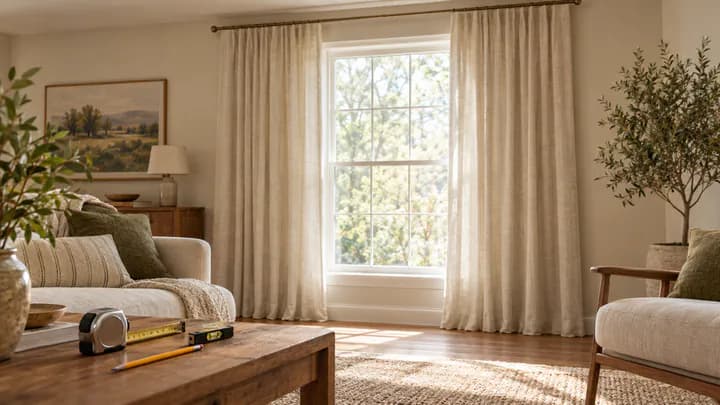
Natural light is the free layer. Hang curtain rods four to six inches above the window frame and wide enough that the fabric stacks off the glass when open — that one adjustment makes windows look larger and rooms taller. Sheer panels, top-down/bottom-up shades, or frosted film solve privacy without sacrificing the daylight.
What should I DIY and what should I hire out?
Our decision rule: do it yourself if a mistake is visible and reversible; hire it out if a mistake is invisible or dangerous. Paint, shelving, furniture assembly, hardware swaps, and styling are all reversible. Wiring, gas, waterproofing behind tile, and structural anything are not.
| Task | Verdict | Why |
|---|---|---|
| Painting walls and trim | DIY | Slow but forgiving; prep is 80% of the result |
| Swapping a light fixture on an existing box | DIY with care | Only with the breaker off and a tester; otherwise hire |
| Adding new circuits or recessed lighting | Pro | Permits, code, and fire risk |
| Floating or click-lock flooring | DIY if patient | Subfloor flatness is the hidden difficulty |
| Tile in wet areas | Pro | Waterproofing failures show up as rot years later |
| Custom cabinetry and built-ins | Pro | Tolerances and material cost punish errors |
A middle path that people underuse: pay a designer for a single consultation. Two to four hours of someone solving layout and scale is cheap relative to one returned sectional, and layout is the error you cannot decorate around.
How do I make smart home tech look intentional?
Choose devices that hide, standardize on one ecosystem, and fix the network before adding anything. Smart bulbs and in-wall dimmers, motorized shades, and a thermostat are the three upgrades with a genuine daily payoff; most of the rest is novelty that adds visual clutter and another app.
Network first is not a throwaway line. A dozen connected devices on an aging router produces exactly the frustration that makes people rip the system out. If you are adding shades, cameras, and speakers, check whether your router can handle them before you buy the devices, not after.
Design-wise: run cables inside furniture or in paintable raceways, avoid white plastic pucks on dark surfaces, and put every smart bulb in a room on one group so guests are not confronted with a lamp that will not turn on from the switch.
What are the most common and costly makeover mistakes?
The expensive errors are almost always about scale, sequence, or lighting — rarely about color. Here are the ones we see repeatedly.
- The undersized rug. A 5x8 in a living room floats like a bathmat. Most living rooms want 8x10 or larger, with at least the front legs of every seating piece on it. Rugs are expensive to get wrong twice.
- Buying furniture before measuring the route in. Measure doorways, stair turns, and elevator depth. A sectional that fits the room but not the landing is a restocking fee.
- Art hung too high. Center the piece around 57–60 inches from the floor, and hang art above a sofa within six to twelve inches of the back — not stranded halfway to the ceiling.
- One-fixture rooms. A single overhead is a ceiling, not a lighting plan.
- Matching furniture sets. A bedroom or living room bought as a complete set reads like a showroom floor. Vary wood tones and shapes deliberately.
- Trend-chasing on permanent surfaces. Put the trend in a cushion, a lamp, or a coat of paint. Keep the flooring, counters, and sofa boring and good.
How do I make it sustainable without pretending?
The most sustainable makeover is the one that reuses the most. Reupholstering a well-built frame, repainting solid cabinet doors, and rewiring a good vintage lamp all beat buying new, and usually beat it on quality too. After reuse, the measurable wins are efficiency-related: LED lighting throughout, a programmable or learning thermostat, weatherstripping, and appliances chosen on their energy rating rather than their finish.
Be skeptical of vague "eco" labeling on furniture. Concrete things to look for instead: FSC-certified wood, low-VOC or zero-VOC paint, GREENGUARD-certified textiles and mattresses, and solid-wood or plywood construction that can be repaired rather than particleboard that cannot. Low-VOC paint also matters for indoor air quality during the project itself — ventilate while painting regardless, and if anyone in the household has a respiratory condition, consult a qualified professional about timing and ventilation.
Styling: the last five percent
Styling is what makes a furnished room look finished, and it should take an afternoon, not a budget. Group objects in odd numbers and varying heights. Keep about a third of every shelf empty. Add one living thing — a pothos or snake plant survives most households. Layer two textiles minimum per seating area: something woven and something soft.
Then stop. The discipline of removing three objects at the end is the difference between modern and merely new.
Key takeaways
- Sequence beats shopping: declutter, layout, lighting, hard finishes, paint, furniture, styling — and paint goes near the end because it can match anything.
- Budget in tiers. A refresh is hundreds, a restyle is thousands, and the moment electrical or flooring is involved you are in a different project.
- Lighting is the highest-leverage spend in any room: three layers, matched color temperature at 2700K–3000K for living spaces, CRI 90+, and dimmers.
- Get scale right — rug size, art height, and the route the furniture takes through the door cause more expensive regret than color ever does.
- DIY anything reversible and visible; hire out anything hidden, wet, or electrical.
- Start with the entryway or bedroom if you want visible progress fast; they are small, cheap, and used every single day.
Frequently asked questions
What order should I do a home makeover in?
Work top-down and dirty-to-clean: declutter, then fix layout and lighting, then hard finishes (floors, tile), then paint, then furniture and textiles, then art and styling. Paint late, not early — it is the one element that can be matched to anything you have already chosen.long.
How much does a modern home makeover cost?
A cosmetic refresh of one room typically runs a few hundred to about $2,000 in materials if you do the labor; a full furnishing and lighting overhaul of a main living space commonly lands in the low-to-mid four figures; anything involving flooring, cabinetry or electrical work moves into five figures. Costs vary widely by market and by how much you reuse.
Which room should I makeover first?
Start with the room you use most at the time of day you are home — for most households that is the living room, and for shift workers or remote workers it may be the bedroom or office. The exception is the entryway: it is small, cheap to fix, and it changes how the whole house reads on arrival.
What color temperature should modern home lighting be?
Use 2700K to 3000K bulbs for living rooms and bedrooms, and 3000K to 3500K for kitchens and work areas, with a CRI of 90 or higher. The single most important rule is to keep every bulb in one sight line at the same Kelvin value — mismatched temperatures make a well-designed room look unfinished.
What size rug do I need for a living room?
Big enough that at least the front legs of every seating piece sit on it — for most living rooms that means 8x10 feet, not the 5x8 that people buy by default. An undersized rug visually shrinks a room and is one of the most common and most expensive-to-correct makeover mistakes.
Can I do a modern makeover in a rental?
Yes, and the leverage points are different: lighting, rugs, textiles, freestanding storage, and removable window treatments do almost all the work. Skip anything that requires a hole in the wall or a change to hard finishes, and prioritize pieces that will move with you to the next place.
Is it worth hiring an interior designer for a makeover?
A single paid consultation — often two to four hours — is worth it if you are stuck on layout, scale, or a tricky architectural feature, because layout mistakes are the ones you cannot style your way out of. Full-service design usually only makes financial sense on projects with construction involved.