Creative Journaling Ideas: 9 Techniques That Actually Work
Creative journaling turns a notebook into a place where words, color and paper scraps live together. Here are nine techniques worth trying, the supplies each one needs, and the practical details — paper weight, glue, drying time — that decide whether a page survives.
Rewritten with AI and republished automatically. Our editors set the standards and fix reported errors — how we work.
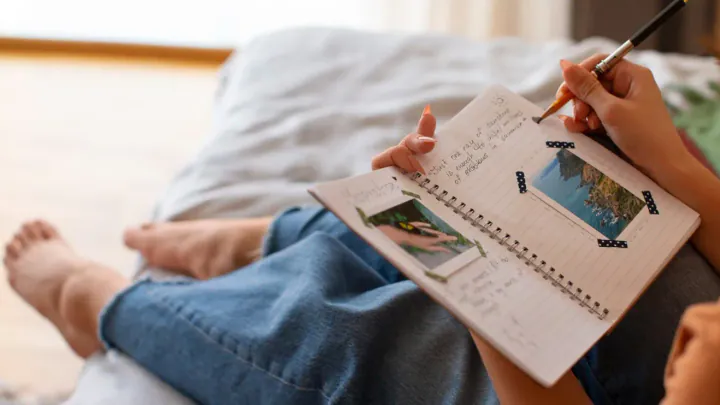
TL;DR: Creative journaling combines writing with color, collage and layout so a page records how something felt, not just what happened. Start with one technique, use paper of at least 160 gsm, keep a five-minute fallback entry, and add supplies only when a technique proves it will stick.
What is creative journaling, and how is it different from a diary?
Creative journaling is a notebook practice that combines written reflection with visual elements — painting, collage, lettering, diagrams, pasted ephemera — so the page itself carries meaning. A diary records events in sentences. A creative journal records events, moods and ideas through whatever medium fits them best, which on a given day might be three lines of text and a rectangle of blue paint.
The term overlaps with several neighbors. Art journaling usually implies paint and heavier mixed media. Bullet journaling, the method developed by designer Ryder Carroll, is a rapid-logging system for tasks and events that many people decorate. Scrapbooking centers on photographs and printed memorabilia. You do not have to pick a camp; most long-running journals borrow from all three.
What every version shares is a low barrier to entry. You need paper, something to make a mark with, and a tolerance for pages that do not come out the way you pictured them.
Which creative journaling technique should I start with?
Start with the technique that matches the time and supplies you already have, not the one that photographs best. If you have five minutes and a pen, use one-word prompts. If you have an hour and a box of magazines, collage. The table below is our decision shortcut.
| Technique | Time per page | Supplies needed | Drawing skill | Best for |
|---|---|---|---|---|
| Mood color wash | 10–15 min | Watercolor or gouache, heavy paper | None | Days when words feel flat |
| Themed pages | 15–30 min | Pen, optional tabs | None | Gratitude, books, travel, intentions |
| Collage with found material | 20–45 min | Scissors, glue stick or tape runner | None | Using up scraps and ticket stubs |
| Timeline journaling | 20–30 min | Ruler, pen, two colors | Low | Reviewing a year or planning one |
| One-word prompts | 5 min | Pen only | None | Rebuilding a broken habit |
| Dream journaling | 5–10 min | Bedside notebook, pen | None | Capturing imagery before it fades |
| Mandala pages | 30–60 min | Compass or circle template, fineliner | Low–medium | Focus and wind-down |
| Memory maps | 30–60 min | Pen, colored pencils | Medium | Trips and single memorable days |
| Full mixed media | 45–90 min | Most of the above plus gesso | Medium | Pages you want to keep for years |
Our rule of thumb: your first month should contain at least three one-word prompt pages for every one ambitious spread. Ambitious spreads are what people abandon journals over.
How the nine techniques actually work
- Mood color wash. Lay a broad wash in the colors your day felt like, let it dry, then write two or three lines in a corner once the paper is flat again.
- Themed pages. Dedicate recurring spreads to gratitude, travel memories, books finished, monthly intentions or self-care check-ins. Tab them so the journal becomes a searchable archive.
- Collage. Cut and paste magazine phrases, wrapping paper, postcards, pressed flowers and photographs into a visual story.
- Timeline journaling. Draw one long horizontal or vertical line, mark events and moods along it, and use small icons for milestones. Excellent for year-in-review pages.
- One-word prompts. Freedom. Change. Silence. Growth. Use the word as a title and respond in any form — a paragraph, a sketch, a list, a single sentence.
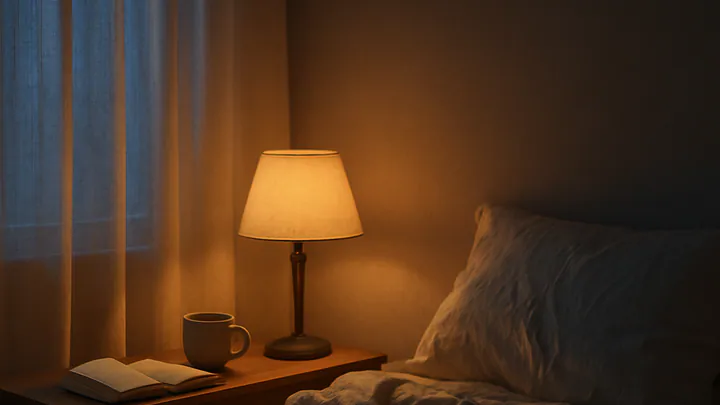
- Dream journaling. Keep the notebook within arm's reach of the bed and write on waking, before checking your phone.
- Mandala pages. Concentric circles and repeated symmetrical marks, with writing curved around the outer ring and an affirmation or date in the center.
- Memory maps. Small icons — a suitcase, a coffee cup, a rain cloud — connected by arrows, annotated with names and places.
- Mixed media. Watercolor plus quotes, pen sketches plus washi tape borders, pressed flowers plus reflection. Layer, dry, layer again.
What supplies do I actually need, and what can wait?
Four things get you started: a mixed-media notebook, a waterproof fineliner, an adhesive, and one color medium. Everything else is an upgrade you should only buy after a technique has earned its place in your routine.
Buy first: a notebook of at least 160 gsm paper, a pigment-ink fineliner in 0.3 or 0.5 mm, a tape runner or acid-free glue stick, and a compact pan watercolor set or a dozen colored pencils. Buy later, if at all: brush pens, alcohol markers, stencils, stamps, gesso, washi tape in quantities beyond two rolls.
One practical detail that saves a lot of frustration: make the first page of any new journal a test page. Swatch every pen and paint you own on it, then flip it over and check what bled through. That single page tells you which markers you can never use on a two-sided spread — information that would otherwise cost you a ruined entry. If accumulating supplies is itself the problem, the same restraint that powers a 30-piece capsule wardrobe works surprisingly well on a craft drawer.
How do I stop my pages from buckling and bleeding through?
Buckling is a paper-weight problem and bleed-through is an ink problem, and both are solved before you make a mark. Standard notebook paper is roughly 70–100 gsm; it cannot hold water. Mixed-media paper at 160 gsm handles light washes and most markers. True wet-on-wet watercolor needs 200–300 gsm.
Three fixes that work:
- Use less water. Most buckling comes from a brush that is too wet, not from paper that is too thin.
- Dry between layers. Fully dry, not nearly dry. A second wet layer on a damp page is how paper pills and tears.
- Press afterward. Close the journal and weigh it down under books overnight. Rippling flattens substantially, though never entirely — accept a little texture as part of the medium.
Alcohol markers are the biggest offender for bleed-through. If you love them, work on one side of each sheet only, or glue the next page down behind your artwork so the ghost never shows.
How do I keep ephemera from ruining the page later?
Most pasted material degrades, and two items degrade fast enough to matter. Thermal-printed receipts and many transit tickets fade to blank within a few years — heat and sunlight accelerate it. If a ticket stub matters to you, photograph or photocopy it and glue the copy in, keeping the original in an envelope at the back.
The second offender is anything still holding moisture. Flowers need one to two weeks fully pressed between absorbent paper before they go anywhere near a journal; glued in damp, they mold and stain outward through the surrounding pages. The same applies to leaves and citrus peel.
A few more handling notes worth knowing:
- Magazine paper is acidic and will yellow. That is fine for most journals — just do not expect archival stability.
- Glue sticks wrinkle thin paper as they dry; a tape runner does not. Use the runner for magazine clippings, PVA for thicker card.
- Photographs printed on inkjet paper smear if wet media touches them. Seal around, never over.
- Bulk adds up. Ten collage pages can warp a journal's spine enough that it will not close flat — plan thick pages near the back.
What do I write when I have no idea what to write?
Use a fixed three-part format so the blank page never asks an open question: a date, a color, and one sentence. That takes under five minutes, requires no inspiration, and counts as a complete entry.
When you want more, prompts that reliably produce something usable include: what I noticed today that I would not have noticed last year; a conversation I keep replaying; the shape my week would be if I drew it; what I would tell myself last January; five things within reach of where I am sitting.
Timeline pages are the strongest tool for a stuck stretch, because they ask for retrieval rather than invention. Draw the line, mark six moments from the last year, and the writing usually follows on its own.
What are the most common creative journaling mistakes?
The costliest mistake is treating the journal as a portfolio. The moment a page has to be good enough to show someone, the practice stops being a practice — and this is the single most common reason journals stall at page twelve.
Others we see repeatedly:
- Buying the expensive notebook first. A beautiful journal raises the stakes of every page. Start on something you would not mind wasting.
- Skipping the first page. Leave it blank or use it as your test page, so you never have to make a "page one" that sets the tone.
- Copying a spread you saw online. Reproducing someone else's layout produces a page with none of your own information in it.
- Scrolling for inspiration before starting. Twenty minutes of feed is twenty minutes of journaling time and a guaranteed comparison hangover. A short digital declutter does more for a creative habit than any new pen.
- Waiting for a free evening. Journaling attaches best to an existing anchor — coffee, commute, bedtime — which is why it fits so neatly into an established morning routine.
How does dream journaling work in practice?
Dream recall fades within minutes of waking, so the only technique that reliably works is writing before you move, speak, or look at a screen. Keep the notebook and a pen on the nightstand, note the date and how you feel on waking, then capture images in fragments rather than full sentences.
Over weeks, recurring motifs become visible, and those motifs are genuinely useful creative raw material — a source of imagery, color and mood for other pages. What they are not is a diagnosis. Dream symbol dictionaries are not evidence-based, and a journal is not a substitute for care. If nightmares are frequent or your sleep is consistently poor, that is a conversation for a qualified health professional.
When is creative journaling not the right tool?
Creative journaling is a reflective and expressive practice, not a therapeutic intervention. If you are processing grief, trauma or a mental health condition, the added friction of paint and collage can slow down the very expression you need — and unstructured writing about distressing events is not always helpful on its own. Registered art therapists work with these materials for exactly this reason, within a clinical framework. Speak with a qualified professional rather than relying on a notebook.
It is also the wrong tool for time-sensitive task management. If your journal has to tell you about a dentist appointment on Thursday, keep the logistics somewhere fast and searchable and let the creative pages stay creative. Mixing the two usually means the appointment gets missed and the page gets rushed.
Key takeaways
- Creative journaling pairs written reflection with visual elements; the page's color, layout and pasted material carry as much meaning as the sentences.
- Paper weight decides everything — 160 gsm for light media, 200–300 gsm if you paint wet-on-wet. Make page one a swatch and bleed-through test.
- Keep a five-minute fallback entry (date, color, one sentence) so a busy week never ends the habit.
- Press flowers for one to two weeks before gluing, and copy thermal-printed tickets, which fade to blank within a few years.
- Perfectionism, expensive notebooks and copied layouts kill more journals than lack of talent ever has.
- For grief, trauma or persistent sleep problems, consult a qualified professional; a journal supports care, it does not replace it.
Frequently asked questions
What is creative journaling?
Creative journaling is a notebook practice that combines written reflection with visual elements such as drawing, painting, collage, and lettering. Unlike a plain diary, the page itself carries meaning through color, layout, and pasted material, not just sentences.
Do I need to be good at drawing to keep an art journal?
No. The most reliable creative journaling techniques — collage, washi tape borders, mood color washes, one-word prompt pages, timelines — require no drawing skill at all. Drawing ability helps with illustrated memory maps and mandalas, but even those work with simple repeated shapes.
What paper weight do I need for a journal I'll paint in?
Aim for at least 160 gsm mixed-media paper for light washes and markers, and 200–300 gsm watercolor paper if you use wet-on-wet techniques. Standard notebook paper is usually 70–100 gsm and will buckle, pill, and bleed through to the next page.
How much does it cost to start creative journaling?
A usable starter kit is a mixed-media notebook, a fineliner or two, a glue stick or tape runner, and a small set of watercolors or colored pencils. Everything else — brush pens, stamps, stencils, alcohol markers — is optional and best added only after you know which techniques you actually return to.
How do I stop paint from warping my journal pages?
Use less water, work on heavier paper, and let each layer dry fully before adding the next. If a page has already buckled, press the closed journal under a stack of heavy books overnight; it will flatten most of the ripple, though never completely.
Is dream journaling reliable?
Dream journaling is useful for capturing imagery and noticing recurring motifs, but it is not a diagnostic tool and dream symbol dictionaries are not evidence-based. If nightmares are frequent, distressing, or disrupting your sleep, speak with a qualified health professional rather than relying on self-interpretation.
How often should I journal to keep the habit?
Consistency matters more than length — three short entries a week beats one elaborate spread a month. Keep a five-minute minimum entry format you can fall back on, such as a date, a color swatch, and one sentence, so a busy week never breaks the streak entirely.