Protein-Focused Diet: How It Drives Sustainable Fat Loss
A protein-focused diet doesn't melt fat on its own — it makes a calorie deficit survivable by protecting muscle and blunting hunger. Here's how much protein you actually need, what 30 grams looks like on a plate, and the mistakes that quietly derail progress.
Rewritten with AI (Claude) and republished automatically. Our editors set the standards and fix reported errors — how we work.
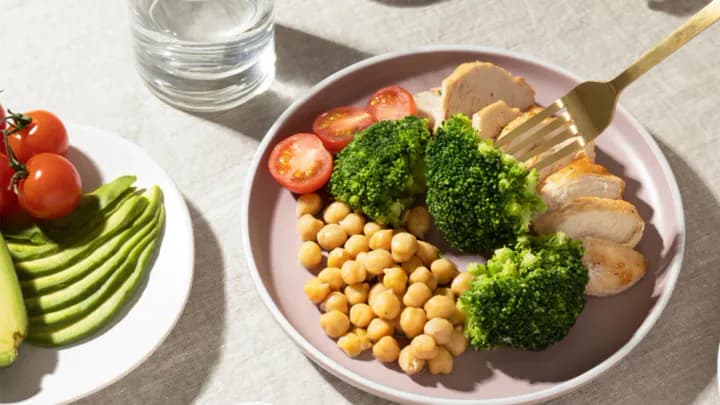
TL;DR: A protein-focused diet builds every meal around a substantial protein source. It doesn't burn fat by itself — a calorie deficit does that. What protein does is protect muscle while you lose weight, blunt hunger, and cost your body more energy to digest. Target roughly 0.7–1.0 g per pound of goal body weight, spread across three or four meals.
What is a protein-focused diet, exactly?
A protein-focused diet is an eating pattern in which each meal is planned around a concentrated protein source first — poultry, fish, eggs, dairy, soy, or legumes — with carbohydrates and fats arranged around it. It is not a low-carb diet, not a fad protocol, and not a fixed menu. It's a sequencing rule: decide the protein, then build the plate.
That distinction matters because most people don't fail at dieting from lack of knowledge. They fail at 4 p.m. on day nine, when hunger and fatigue stack up. Protein is the single macronutrient that reliably makes a deficit more tolerable, which is why we treat it as the structural element of a fat-loss diet rather than a nice-to-have.
How does protein actually support fat loss?
Three mechanisms do the work, and they compound. None of them are magic; all of them are well documented in nutrition research.
1. It preserves lean mass during weight loss
When you lose weight, some of what you lose is muscle. The proportion is not fixed — it responds to protein intake and to whether you're doing resistance training. Higher protein plus lifting shifts the ratio meaningfully toward fat. This is the most important benefit and the least visible one, because the scale can't tell you what kind of weight you dropped.
2. It costs more energy to digest
The thermic effect of food (TEF) is the energy your body spends processing what you eat. Protein sits highest, generally estimated around 20–30% of its own calories, versus roughly 5–10% for carbohydrate and under 3% for fat. On a 150-gram protein day that's a real but modest advantage — think tens of calories, not hundreds. Anyone selling it as a metabolic override is overselling it.
3. It changes appetite signaling
Protein-rich meals increase satiety hormones such as peptide YY and GLP-1 and tend to suppress ghrelin more durably than equivalent-calorie carbohydrate meals. The practical result: you eat less later without consciously restricting. Research generally supports the idea that people spontaneously reduce intake when protein rises, even when they aren't told to.
Honest caveat: none of this applies if total calories don't change. Adding a 250-calorie shake on top of your current diet will not produce fat loss. Protein has to replace something, not join it.
How much protein do you need per day in 2026?
For fat loss, aim for 0.7 to 1.0 grams of protein per pound of goal body weight — about 1.6 to 2.2 grams per kilogram. Calculating from goal weight rather than current weight keeps the number sane for people carrying significant excess body fat. The government RDA of 0.8 g/kg is a floor for preventing deficiency, not an optimum for someone in a deficit.
| Goal body weight | Lower end (0.7 g/lb) | Upper end (1.0 g/lb) | Per meal across 4 meals |
|---|---|---|---|
| 130 lb / 59 kg | 91 g | 130 g | 23–33 g |
| 150 lb / 68 kg | 105 g | 150 g | 26–38 g |
| 180 lb / 82 kg | 126 g | 180 g | 32–45 g |
| 210 lb / 95 kg | 147 g | 210 g | 37–53 g |
Older adults generally need the upper end, because the muscle-building response to a given dose of protein blunts with age. Athletes in heavy training also sit high. Sedentary people in a mild deficit can sit comfortably at the lower end and be fine.
One correction worth making: you'll see 1.2 g per pound quoted around the internet. There's little evidence that going that high adds anything for fat loss, and it crowds out fiber, vegetables, and fats you also need. If you're already struggling to hit 120 grams, chasing 200 is the wrong problem to solve.
What does 30 grams of protein look like on a plate?
Roughly: 4 ounces of cooked chicken breast, five large eggs, 1¼ cups of Greek yogurt, one and a half cans of tuna, or about 8 ounces of firm tofu. That comparison is the fastest way to understand why plant-based eaters need more volume and more planning.
| Food | Protein per typical serving | Cost tier | Best for |
|---|---|---|---|
| Chicken breast, 4 oz cooked | ~35 g | Mid | Batch cooking, lowest calories per gram of protein |
| Eggs, 2 large | ~12 g | Low | Breakfast base; pair with whites to raise protein cheaply |
| Greek yogurt, nonfat, 1 cup | ~20–23 g | Low–mid | No-cook meals, snacks, dessert substitutes |
| Canned tuna or salmon, 1 can | ~20–25 g | Low | Shelf-stable lunches; salmon adds omega-3s |
| Cottage cheese, 1 cup | ~24–28 g | Low | High satiety, slow-digesting evening option |
| Lentils, 1 cup cooked | ~18 g | Very low | Fiber plus protein; excellent for gut health |
| Firm tofu / tempeh, 100 g | ~15–19 g | Low | Plant-based main; tempeh is more concentrated |
| Whey or blended plant powder, 1 scoop | ~20–25 g | Mid | Gap-filling when a real meal isn't realistic |
A decision rule we use with people who hate tracking: anchor three meals at 30+ grams and stop counting. If breakfast, lunch, and dinner each clear 30 grams, most adults are inside their range without a single app entry.
What does a realistic protein-focused day look like?
Here's a day that lands near 140 grams without tasting like a diet:
- Breakfast (~35 g): Three eggs scrambled with spinach, plus ¾ cup Greek yogurt with berries.
- Lunch (~40 g): Grilled chicken over quinoa and greens with olive oil and lemon.
- Snack (~20 g): Cottage cheese with cucumber and black pepper, or a shake if you're out.
- Dinner (~40 g): Baked salmon with roasted Brussels sprouts and a sweet potato.
Weeknight execution is where most plans die, which is why we're partial to one-tray cooking — our guide to fast, balanced sheet-pan dinners covers the protein-plus-vegetable formula that makes this repeatable. And because legumes and fermented dairy carry protein alongside fiber and live cultures, they do double duty; our practical gut health guide explains why that pairing matters when protein intake climbs.
Does protein work better with exercise — and which kind?
Yes, and resistance training is the multiplier. Protein supplies the raw material; lifting supplies the signal telling your body to keep the muscle it has. Without that signal, a high-protein diet still slows lean-mass loss, but it doesn't stop it.
Two or three full-body sessions a week is enough to change outcomes for most people in a deficit. Cardio helps with the energy side of the equation, and low-intensity aerobic work is easy to recover from alongside lifting — our Zone 2 cardio guide covers how to pace it without eating into strength progress.
On timing: the old "anabolic window" of 30 to 60 minutes has been substantially walked back. Total daily protein matters far more than the clock. Eat within a few hours of training and you've captured essentially all of the benefit.
What are the most common protein mistakes?
These are the ones we see repeatedly, in rough order of how much damage they do.
- Adding protein instead of substituting it. The costly version: a shake with breakfast, a bar mid-afternoon, and no reduction anywhere else. Calories rise, fat loss stalls, and the person concludes protein doesn't work.
- Confusing product weight with protein content. A 60-gram bar does not contain 60 grams of protein — usually closer to 15. Same trap with "high-protein" breads and snacks where the claim rests on a serving size nobody eats.
- Back-loading everything into dinner. A 15/20/90-gram split across the day leaves most of the day in a poor position for muscle retention and for appetite control. Spread it.
- Choosing fatty cuts and calling it a protein meal. Ribeye and bacon deliver protein at a high calorie cost. In a deficit, leaner cuts buy you more food volume for the same calories.
- Dropping fiber and fats. When protein crowds the plate, vegetables and olive oil are usually what get squeezed out. Constipation, poor satiety, and hormonal complaints follow. Keep water intake up too — higher protein increases urea production and fluid needs modestly.
How do you do this on a tight grocery budget?
Protein per dollar is the metric, not protein per gram. Eggs, dry lentils, canned tuna, cottage cheese, frozen chicken thighs, and store-brand yogurt consistently beat everything marketed as a fitness product.
- Buy dry beans and lentils in bulk — the cost per 20 grams of protein is hard to beat.
- Freeze meat bought on markdown; portion it before freezing so defrosting matches a meal.
- Plain protein powder is a cost-effective gap-filler; flavored ready-to-drink bottles rarely are.
- Canned fish and eggs need no cooking skill and no meal prep window.
If food spending is genuinely tight, treating groceries as a planned category rather than a variable one helps. This is general information, not financial advice.
Who should not follow a high-protein diet?
Anyone with chronic kidney disease, reduced kidney function, liver disease, a history of calcium oxalate stones, or a metabolic disorder affecting amino acid handling should have protein targets set by a clinician, not by an article. Pregnancy and adolescence also change the calculus.
For people with healthy kidneys, intakes in the ranges above have a good safety record. But "healthy kidneys" is an assumption many people haven't actually tested. If you have hypertension, type 2 diabetes, or a family history of kidney disease, get baseline labs before making a large change, and consult a qualified healthcare professional about what's appropriate for you.
What else changes when protein goes up?
Beyond body composition, adequate protein supports tissue repair, immune function, and the amino acid pool your body draws on for neurotransmitter synthesis. Those benefits are real but undramatic — they show up as feeling less wrecked, not as a transformation.
One underrated interaction: sleep. Chronic short sleep reliably increases appetite and makes deficits harder to hold, which can quietly cancel out everything protein is doing for satiety. If your diet keeps collapsing in the evening, the fix may be upstream — our guide to recovering from sleep debt addresses the lever that matters most there.
Key takeaways
- Protein doesn't create fat loss — a calorie deficit does. Protein determines how much of that loss is fat rather than muscle, and how bearable the deficit feels.
- Target 0.7–1.0 g per pound of goal body weight; older adults and heavy trainers sit at the top of that range.
- Anchor three meals at 30+ grams each and you'll hit your target without tracking anything.
- The most expensive mistake is adding protein on top of an unchanged diet instead of swapping it in.
- Pair it with two or three resistance sessions a week; that's what turns retained protein into retained muscle.
- Kidney, liver, pregnancy, and stone-history considerations override general guidance — talk to a qualified professional before a large change.
Frequently asked questions
How much protein should I eat per day to lose fat?
Most adults losing fat do well on roughly 0.7 to 1.0 grams of protein per pound of goal body weight (about 1.6 to 2.2 grams per kilogram). A 180-pound person aiming for 160 pounds lands at roughly 110 to 160 grams per day. Going far above that range adds cost and effort without much extra benefit.
Does a high-protein diet cause fat loss without a calorie deficit?
No. Fat loss still requires an energy deficit; protein makes that deficit easier to hold and changes what you lose. Higher protein intakes preserve more lean mass and reduce hunger, so a larger share of the weight you drop comes from fat rather than muscle.
Is a high-protein diet bad for your kidneys?
In people with healthy kidneys, higher protein intakes within the ranges discussed here have not been shown to cause kidney damage. If you have chronic kidney disease, a history of kidney stones, liver disease, or you're pregnant, protein targets should be set by a qualified clinician rather than a general guide.
How much protein can the body use in one meal?
You absorb essentially all the protein you eat, but the muscle-building response to a single meal plateaus somewhere around 25 to 40 grams of high-quality protein for most adults. That's an argument for spreading protein across three or four meals rather than a reason to avoid a large portion at dinner.
Can you follow a protein-focused diet as a vegetarian or vegan?
Yes, though it takes more planning. Plant proteins are generally lower in leucine and less concentrated, so aim toward the higher end of your range, lean on soy foods, seitan, lentils, legumes, and dairy or eggs if you eat them, and consider a blended plant protein powder to close gaps.
Do I need a protein shake right after a workout?
No — the post-workout window is far wider than the old 30-minute rule suggests. Total daily protein matters most; if you've eaten a protein-containing meal within a few hours either side of training, a shake is convenience, not necessity.
Why am I not losing fat despite eating a lot of protein?
Usually because total calories haven't changed. Protein was added on top of an existing diet rather than in place of something, or high-fat protein sources pushed calories up. Track a normal week honestly before adjusting anything else.