The Umbrella Mender of Rainfall Alley
In an alley where the rain never quite stops, a quiet mender fixes broken umbrellas — and one afternoon, a stranger brings in one that refuses to close.
Drafted with AI and published automatically. Our editors set the standards and fix reported errors — how we work.

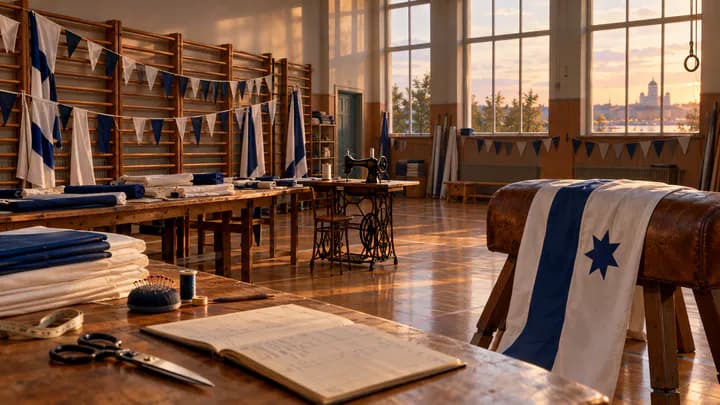
The alley behind Merton Street had its own weather, and everyone in the neighborhood knew it. Even on the brightest August afternoon, if you turned off the main road and passed under the low brick arch, the air cooled by ten degrees and a fine, patient rain began.
Ines had kept her shop there for eleven years. The sign above the door read only MENDING, in letters she'd painted herself the week her mother died. Inside, the shop smelled of oiled canvas, wet wool, and the faint metallic tang of small brass rivets. Umbrellas hung from the rafters in loose flocks, some folded neat as sleeping bats, others open and drying, their ribs like the bones of tiny fish.
She could fix almost anything. A snapped stretcher. A splayed runner. A jammed catch that refused to click. People brought her umbrellas that had been in the family for three generations, umbrellas that had survived weddings and funerals and one very memorable ferry crossing. Ines listened to each story the way another woman might listen to symptoms, nodding slowly, running her thumb along the ferrule.
“Come back Thursday,” she'd say. And on Thursday it would be ready, and it would open with a soft, contented whumph, as if pleased to be itself again.
The Stranger's Umbrella
He came in on a Tuesday, which Ines remembered because Tuesdays were slow and she had been eating a pear over the newspaper. He was tall and slightly stooped, with a coat too heavy for the season and hair the color of wet slate. He carried a black umbrella under his arm, tightly furled, tied with what looked like a shoelace.
“I was told,” he said, “you fix things.”
“I fix umbrellas,” said Ines, wiping pear juice from her chin.
“Then we agree.” He set the umbrella on the counter with the care of a man handing over a sleeping animal. “It won't close.”
Ines raised an eyebrow. “It looks closed.”
“It is currently tied,” he said. “That is not the same thing.”
She undid the shoelace. The umbrella sprang open with a startled snap, filling half the counter, and would not be persuaded down again. She pressed the runner. She pressed the catch. She held it upside down and stared into the black canopy, which was very black indeed — not the flat black of dye but the deep, pooling black of a well at night.
“How long has it been like this?” she asked.
“Since a Tuesday,” he said. “Some years ago.”
Ines glanced at him. His face was mild, unhurried, the face of someone who had been carrying an open umbrella for years and had made peace with the geometry of doorways.
“I'll need to keep it a few days,” she said.
“Take a week. Take longer.” He set a small paper card on the counter with an address written on it in careful, sloping handwriting. “I live above the bakery on Wren Street. The one with the blue shutters.”
“I know it.”
He paused at the door. “Thank you for not asking why.”
“Umbrellas are private,” said Ines. “So are the people who carry them.”
He smiled, small and tired, and stepped out into the alley's patient rain.
What the Canopy Held
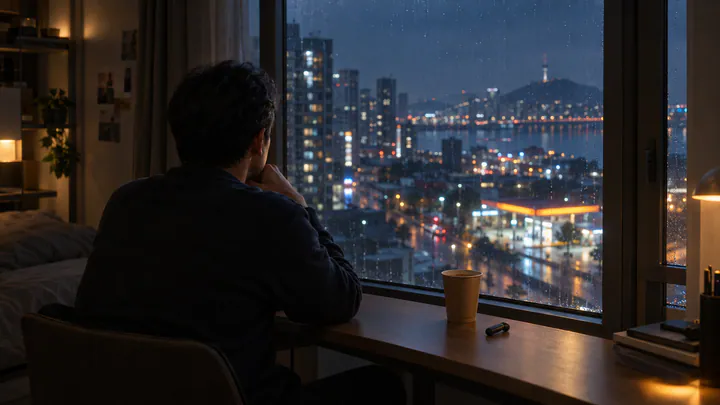
That night, after she locked the shop, Ines sat with the umbrella under her workbench lamp. She turned it in her hands. There was nothing structurally wrong with it. The ribs were sound. The spring was tight. The catch clicked into place obediently when she pushed a pencil against it — and then, the moment she let go, it released again, as if the umbrella were quietly, politely refusing.
She held it up and looked into the canopy.
At first she thought it was only the shine of the lamp on wet fabric. Then she realized the canopy was showing her something. A kitchen, small and yellow, with a woman at the stove stirring a pot. A child at the table drawing on the back of an envelope. A window with rain streaking down it. The woman turned, laughed at something the child said, and reached to push hair out of her eyes with the back of her wrist.
Ines lowered the umbrella slowly. Her hands were shaking, though she wasn't sure why. She hadn't recognized the kitchen. She hadn't recognized the woman. But she recognized the gesture — the wrist to the forehead, the small tired laugh — because she had done it herself a thousand times, and so had her mother, and so had every woman she'd ever loved.
She set the umbrella carefully in the corner, still open, and went to bed.
In the morning she tried again. This time the canopy showed her a garden, wet with new rain, and a man kneeling to tie a tomato vine to a stake. The day after that: a hospital corridor, a nurse walking away, a hand she couldn't see gripping the arm of a plastic chair.
By Friday she understood. The umbrella wasn't broken. It was holding something open that its owner could not put down.
Wren Street
She walked to the bakery on Wren Street on Saturday morning, the umbrella under her arm, tied again with the shoelace. The blue shutters were open. She climbed the narrow stairs and knocked.
He answered in shirtsleeves, holding a cup of tea.
“I can't fix it,” she said.
He nodded, unsurprised. “I thought perhaps not.”
“But I don't think it's broken.”
He looked at her then, really looked, the way a person looks when they have been waiting a long time to be understood without having to explain.
“Come in,” he said. “I've just made tea.”
The flat was small and warm and smelled of bread from the ovens below. There were photographs on the mantel — a woman with hair pushed back from her forehead, a boy with a drawing pencil, a tomato garden. Ines set the umbrella on the table between them, still open, its dark canopy catching the lamplight.
“I couldn't make it close,” she said. “But I could hold it for a while. If you wanted to set it down.”
He was quiet a long time. Then he reached across the table and, very gently, took her hand instead of the umbrella. His palm was warm from the teacup.
“That,” he said, “might be enough.”
Outside, in the alley behind Merton Street, the rain kept on, patient as ever. But in the flat above the bakery with the blue shutters, a black umbrella stood open in the corner of a warm kitchen, and for the first time in some years, no one was carrying it.