Best High-Protein Snacks for Energy, Focus, and Fitness
A practical guide to high-protein snacking: how much protein a snack actually needs, the ten options worth keeping stocked, a label rule that filters out sugar bars in disguise, and the mistakes that quietly undo the effort.
Rewritten with AI and republished automatically. Our editors set the standards and fix reported errors — how we work.
TL;DR: A snack only counts as high-protein if it delivers at least 10 grams. The reliable winners are Greek yogurt, cottage cheese, eggs, tuna pouches, edamame, jerky, and seeds. Prep two portions at a time, read labels for the protein-per-calorie ratio, and stop buying bars that are candy with a claim on the wrapper.
A high-protein snack is a small, portion-controlled food or combination that supplies roughly 10 to 25 grams of protein, enough to blunt hunger and contribute meaningfully to your daily total without functioning as a full meal. That number matters more than any brand name, and it is the single thing most snack shopping gets wrong.
Why do high-protein snacks actually work?
Protein is the most satiating of the three macronutrients, and it digests more slowly than refined carbohydrates, which is why a yogurt at 3 p.m. holds you until dinner while a granola bar does not. It also supplies the amino acids your body uses to repair muscle tissue after training or a long day on your feet.
There is a second, less obvious benefit. Protein-forward snacks tend to flatten the blood sugar curve compared with sugar-dominant ones, and that steadier curve is what people are describing when they say they stopped crashing mid-afternoon. Research generally supports protein's role in fullness and in preserving lean mass during weight loss; it is not a magic lever, but it is one of the few nutrition changes that reliably makes a difference people can feel.
Sports nutrition guidance commonly places protein needs for active adults well above the basic minimum — often in the range of 1.2 to 2.0 grams per kilogram of body weight per day. Most people do not fail at that target because breakfast and dinner were wrong. They fail because the gap between meals was filled with crackers.
How much protein does a snack need to count?
Ten grams is the floor. Twenty is the target if the snack is replacing a light meal or following training. Below about 7 grams, the protein is nutritionally real but too small to change how full you feel, so the snack behaves like a carbohydrate break.
Here is our working decision rule, and it takes three seconds at the shelf: aim for at least 1 gram of protein per 10 calories. Greek yogurt passes easily. A 200-calorie bar with 6 grams of protein fails, no matter what the front of the package says. Nuts sit right on the line, which is why they are a good companion food rather than the main event.
Spreading protein across the day also matters. Research generally suggests the body uses protein more efficiently when it arrives in reasonable doses at several points rather than in one enormous dinner, which is exactly the gap a well-built snack fills. If your mornings are the weak spot, our guide to high-protein breakfast ideas for busy mornings covers the other end of the same problem.
Which high-protein snacks are worth keeping stocked?
These ten cover every situation we could think of: desk, gym bag, car, late night, and no-refrigerator travel. Protein values are typical approximations and vary by brand, so the label always wins.
| Snack | Typical serving | Protein (approx.) | Calories (approx.) | Needs refrigeration? | Best for |
|---|---|---|---|---|---|
| Plain Greek yogurt | 3/4 cup (170g) | 15–18g | 100–140 | Yes | Best overall ratio |
| Low-fat cottage cheese | 1/2 cup | 12–14g | ~90 | Yes | Late night, slow release |
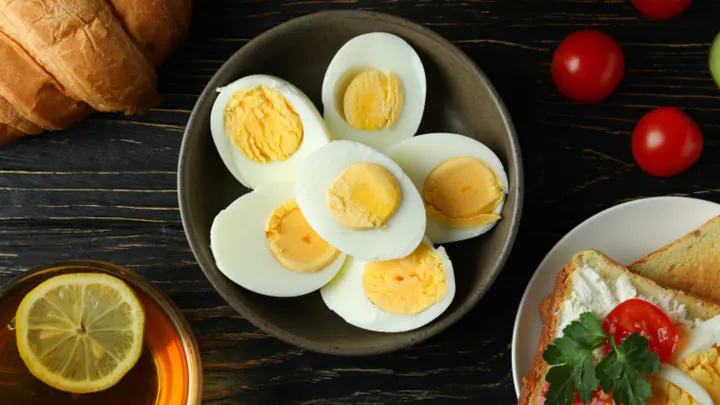
| Hard-boiled eggs | 2 large | ~12g | ~140 | Yes | Batch prep, cheapest |
| Tuna or salmon pouch | 2.6 oz pouch | 16–18g | 70–120 | No | Desk drawer, travel |
| Beef or turkey jerky | 1 oz | 9–12g | 70–100 | No | Hiking, long drives |
| Shelled edamame | 1/2 cup | ~9g | ~90 | Frozen | Plant-based, high volume |
| String cheese + apple | 1 stick + 1 fruit | 7–8g | ~170 | Yes | Kids, lunchboxes |
| Roasted chickpeas | 1/2 cup | 6–7g | 120–150 | No | Crunch craving |
| Pumpkin seeds | 1 oz | 8–9g | ~160 | No | Pantry backup |
| Whey or plant protein shake | 1 scoop + liquid | 20–25g | 120–180 | No (powder) | Post-workout |
The ones that need a note
Greek yogurt: buy plain and add fruit yourself. Flavored tubs frequently carry 12 to 18 grams of sugar, which erases much of the advantage. Frozen berries stirred in cold work as well as fresh and cost less.
Cottage cheese: the casein content means slower digestion, which is why it earns its reputation as an evening snack. If the texture is the obstacle, blend it — whipped cottage cheese on toast with black pepper is a genuinely different food.
Nut butter: two tablespoons is about 7 grams of protein and roughly 190 calories, so it is a fat source with some protein attached, not a protein source. Use it to make a snack satisfying, not to hit a protein number.
Jerky: excellent protein density, but a single ounce can carry 400 to 600 milligrams of sodium. Fine on a hike. Less fine as a daily desk habit if blood pressure is on your radar.
What mistakes quietly waste your snacking calories?
The most expensive mistake is buying "protein" versions of foods that were never protein foods. Protein cookies, protein chips, and protein granola often land at 5 to 8 grams for 200 or more calories — a worse ratio than a plain egg, at four times the price.
Three more that come up constantly:
- Eating nuts straight from the bag. A single ounce of almonds is about 23 nuts. Distracted handfuls routinely triple that, which turns a 160-calorie snack into a 500-calorie one with roughly 18 grams of protein to show for it. Portion into small containers on shopping day.
- Treating the shake as an addition rather than a replacement. A post-workout shake is a snack. If it lands on top of a full afternoon of eating rather than instead of something, the math stops working.
- Ignoring sugar alcohols. Many low-sugar bars use erythritol, maltitol, or similar. In sensitive people these cause bloating and cramping, and eating one before a run or a class is a mistake you make exactly once.
One more honest caveat: this does not apply uniformly. If you have chronic kidney disease, liver disease, or a history of kidney stones, protein targets should be set with a qualified healthcare professional rather than a snack list. The same goes for anyone managing diabetes who is adjusting meal timing, and for people with tree nut or dairy allergies, where the substitutions matter more than the totals.
How do you build a week of protein snacks in 20 minutes?
Boil a dozen eggs, portion nuts into ten small bags, and roast one tray of chickpeas. That is the entire routine, it takes about twenty minutes of active time, and it covers roughly two weeks of mid-afternoon decisions.
A worked example of one realistic day, assuming a 3 p.m. slump and a 6 p.m. gym session:
- 3 p.m.: 3/4 cup plain Greek yogurt with frozen blueberries — about 16g protein, roughly 150 calories. Holds through the commute.
- 5:15 p.m.: one hard-boiled egg and ten almonds — about 9g protein, roughly 200 calories. Enough to train on without sitting heavy.
- 9 p.m.: 1/2 cup cottage cheese with cinnamon — about 13g protein, roughly 100 calories. Slow-digesting, and it ends the kitchen-wandering.
That is around 38 grams of protein from snacks alone, at under 500 calories, without cooking anything on the day itself. Pair the habit with cooking that works the same way — our approach to fast, balanced sheet-pan dinners is built on the same batch-once principle, and leftover roasted chicken or salmon becomes tomorrow's snack.
Edge case worth knowing: if you have no refrigerator at work, the shelf-stable trio is tuna pouches, roasted soy nuts, and single-serve protein powder in a shaker. That combination gets you past 10 grams in every scenario without relying on a communal fridge that someone will inevitably clean out.
Do high-protein snacks really help focus and energy?
Indirectly, yes — mostly by preventing the crash rather than creating a lift. Protein supplies amino acids that serve as precursors for neurotransmitters, and steadier blood sugar means fewer of the foggy troughs that get misread as needing another coffee.
Be careful not to overstate it. A snack is not a cognitive enhancer, and no food compensates for a bad night. If the 3 p.m. fog is a daily feature rather than an occasional one, the cause is usually upstream.
What we can say with confidence: people who front-load protein and snack on it deliberately tend to report fewer sharp hunger spikes and less reactive eating late in the evening. That is a behavioral win, and behavioral wins are the ones that last.
How do you read a label in ten seconds?
Check protein grams first, added sugar second, ingredient count third. If protein is under 10 grams per serving, put it back. If added sugar is over 8 grams, put it back. If the ingredient list runs longer than a paragraph, it is a processed food with a health claim on it.
Two extras that most guides skip. First, serving size versus package size — a bag with 8 grams of protein per serving and 2.5 servings inside is a 400-calorie decision, not a 160-calorie one. Second, sodium in savory snacks: jerky, sticks, and seasoned nuts can quietly account for a third of a day's sodium in one sitting.
Cost-wise, eggs and cottage cheese remain the cheapest protein per gram in most US grocery stores, while bars and ready-to-drink shakes are the most expensive. If snack spending has crept up, treating it as a category in a sinking fund budget makes the trade-off visible — this is general budgeting perspective, not financial advice.
Key takeaways
- A snack qualifies as high-protein at 10 grams and works best at 15 to 25 grams; use the 1 gram of protein per 10 calories rule to filter the shelf.
- Greek yogurt, cottage cheese, eggs, tuna pouches, and edamame give the best protein-to-calorie ratios; nuts and nut butter are companion foods, not protein sources.
- The costly mistakes are protein-labeled snack foods with poor ratios, unportioned nuts, and sugar-alcohol-heavy bars eaten before exercise.
- Twenty minutes of batch prep — eggs, portioned nuts, one tray of chickpeas — removes almost every bad snack decision for the following week.
- Protein steadies energy and appetite, but it does not replace sleep, and anyone with kidney, liver, or metabolic conditions should set targets with a qualified professional.
Frequently asked questions
How much protein should a snack have?
Aim for at least 10 grams of protein per snack, and 15 to 25 grams if the snack is replacing a light meal or following a workout. Below about 7 grams, a snack behaves more like a carbohydrate break than a protein source, and satiety fades quickly.
What is the best high-protein snack for weight management?
Plain Greek yogurt and low-fat cottage cheese are the strongest performers because they deliver roughly 15 to 20 grams of protein for around 100 to 150 calories. That protein-to-calorie ratio is hard to beat, and the volume of the food itself adds to fullness.
Are protein bars actually healthy?
Some are, many are not. A useful filter is at least 10 grams of protein, under 8 grams of added sugar, and a recognizable ingredient list; bars loaded with sugar alcohols can cause bloating and gas in sensitive people, especially when eaten before training.
What is the best high-protein snack before bed?
Cottage cheese is the classic choice because it is high in casein, a slow-digesting dairy protein that releases amino acids gradually over several hours. A half cup provides roughly 12 to 14 grams of protein for about 90 calories.
What are the best high-protein snacks without dairy or meat?
Shelled edamame, roasted chickpeas, pumpkin seeds, and roasted soy nuts are the strongest plant-based options, with edamame delivering around 9 grams of protein per half cup. Pairing two of them in one snack gets you comfortably past the 10-gram mark.
Can you eat too much protein?
For most healthy adults, moderately high protein intake is well tolerated, but very high intakes crowd out other nutrients and add calories you may not need. Anyone with chronic kidney disease, liver disease, or a history of kidney stones should discuss protein targets with a qualified healthcare professional before changing their diet.
Is jerky a good post-workout snack?
Jerky is convenient and protein-dense at roughly 9 to 12 grams per ounce, but it is also one of the saltiest snacks on the shelf, often 400 to 600 milligrams of sodium per serving. It works well occasionally and for hikes or travel, less well as a daily habit if you are managing blood pressure.