Green Home Upgrades in 2026 That Actually Cut Bills
Most green home upgrades pay for themselves — but not at the same speed. Here's an honest ranking by cost, payback and effort, including the sealing mistake that can hurt indoor air quality and the thermostat compatibility trap that catches thousands of buyers.
Rewritten with AI and republished automatically. Our editors set the standards and fix reported errors — how we work.

TL;DR: Start with air sealing, LED bulbs and a smart power strip — under $200 total, payback in a season. Then attic insulation, then a smart thermostat, then low-flow fixtures. Solar comes last, after your house uses less. Most wasted money goes to upgrades bought out of order.
A green home upgrade is any change to a dwelling that reduces the energy, water or materials it consumes while keeping it comfortable to live in. The category covers everything from a $4 bulb to a $20,000 rooftop array, which is exactly why generic lists are unhelpful — they give a faucet aerator and a solar system equal billing.
This guide ranks the usual seven upgrades by what they actually cost, how fast they return that money, and whether a renter can do them. We also flagged where each one quietly fails.
Which green home upgrades pay back fastest in 2026?
Cheap envelope work wins. Weatherstripping, caulk and LED bulbs typically return their cost within one or two heating seasons because they cost very little and reduce load every single hour. Big-ticket items like windows and solar can still be worthwhile, but their payback is measured in decades, not months.
Costs below are typical US ranges for materials or basic installation. Your utility rates, climate zone and home age move these numbers significantly.
| Upgrade | Typical upfront cost | Renter-friendly? | Rough payback | Best when |
|---|---|---|---|---|
| LED bulb swap (whole home) | $40–$120 | Yes | Months | You still have halogens or incandescents anywhere |
| Weatherstripping and caulk | $50–$150 | Partly (removable types) | 1 season | You can feel drafts at doors, outlets or trim |
| Smart power strips | $20–$40 each | Yes | 1–3 years | Media centers and home offices with many devices |
| Low-flow showerhead and aerators | $25–$90 | Yes | Under a year | You pay for water heating |
| Smart thermostat | $120–$300 | Sometimes | 2–5 years | Your schedule varies and you never adjust manually |
| Attic insulation top-up | $1,000–$3,000 | No | 4–10 years | Attic insulation is below current code depth |
| Rooftop solar | $12,000–$25,000+ | No | 8–20 years | Good roof, strong sun, favorable utility rules |
Our decision rule: weatherize before you electrify. Every kilowatt-hour you stop wasting is one you never have to generate, store or pay a contractor to deliver. Sizing a heat pump or a solar array against a leaky house locks in the leak for 20 years.
How much do LED bulbs actually save, and which ones are worth buying?
LEDs use roughly 75–80% less electricity than incandescent bulbs of equivalent brightness and last many times longer. A worked example: replacing ten 60-watt incandescents that run three hours a day with 9-watt LEDs cuts about 560 watt-hours a day — a bit over 200 kWh a year, or roughly $30 at typical residential rates, from a swap costing well under $50.
Buy by lumens, not watts. For most living spaces, 800 lumens replaces the old 60-watt bulb. Choose 2700K for warm, lamp-like light and 3000–4000K for kitchens and work surfaces.
A common mistake: buying non-dimmable LEDs for a dimmer circuit, then blaming the bulbs for flickering and buzzing. Older triac dimmers were designed for a much larger electrical load. If your dimmed LEDs flutter, replace the dimmer with an LED-rated model rather than returning the bulbs.
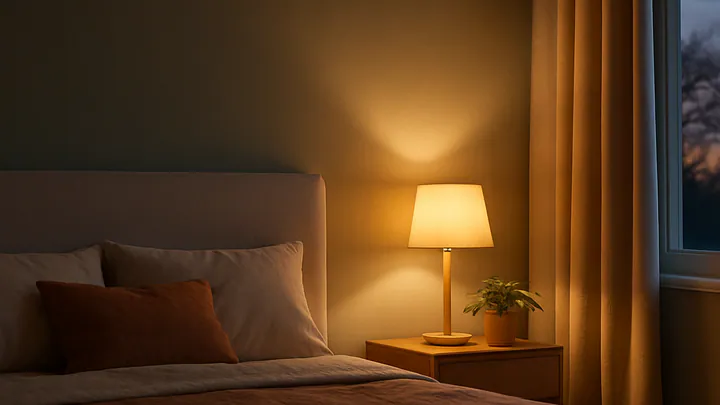
Also worth knowing: LEDs release far less waste heat, which trims air-conditioning load in summer — a small bonus that most bulb packaging never mentions. If you're rethinking lighting room by room, our guide to calm, cozy bedroom upgrades covers layering warm light without over-lighting a space.
Do smart thermostats save enough to justify the cost?
For most households, yes — but the savings come from behavior change, not magic. Manufacturers report heating savings in the low teens and cooling savings around 15%; independent field evaluations generally find real but smaller reductions. If you already drop the temperature every night and when you leave, a smart thermostat mostly buys you convenience.
Check compatibility before you buy. This is the costly mistake that catches thousands of people every winter:
- No C-wire. Many older homes lack the common wire that powers a smart thermostat continuously. Some models include an adapter; others need a new wire pulled.
- Line-voltage electric baseboard heat. Standard smart thermostats will not work. You need a line-voltage model rated for 120V/240V.
- Heat pumps with auxiliary strip heat. A poorly configured setback can trigger expensive resistance backup every morning, erasing the savings. Use the manufacturer's heat-pump mode and gentle recovery settings.
- Proprietary or communicating systems. Some high-efficiency furnaces only speak to their own controls.
A smart thermostat also assumes a stable home network. If your device drops offline in the back of the house, check your Wi-Fi coverage before blaming the thermostat.
This does not apply if heat is included in your rent. You'd be paying for a device whose savings land in someone else's account.
Where should I start with insulation and air sealing?
Start in the attic, at the ceiling plane. Warm air rises and escapes through recessed lights, plumbing chases, the attic hatch and the top plates of interior walls — sealing those penetrations with foam and fire-rated caulk is cheaper and more effective than adding insulation on top of unsealed gaps.
Order of operations that works:
- Seal attic penetrations and the attic hatch.
- Top up attic insulation to current recommended depth for your climate zone.
- Weatherstrip exterior doors; add a door sweep.
- Caulk window trim and install foam gaskets behind outlet and switch plates on exterior walls.
- Seal rim joists in the basement or crawlspace.
The honest caveat: a house can be sealed too tightly. In older homes with a natural-draft gas furnace or water heater vented through a chimney, reducing air leakage can cause backdrafting — combustion gases spilling into living space instead of up the flue. If you have atmospheric combustion appliances, have a qualified contractor run a combustion safety test after major sealing work, keep working carbon monoxide alarms on every level, and make sure kitchen and bathroom exhaust fans actually vent outdoors. This is a safety item, not an optional nicety.
Windows deserve one blunt note: full replacement is among the most expensive ways to buy energy savings. Replace them when they're failing, rotting or single-pane beyond repair — not as a first-line efficiency move.
Do low-flow fixtures actually cut the bill, or just the water?
Both, and the energy half is usually the bigger prize. Heating water is one of the largest end uses in a typical home, so a showerhead that moves from 2.5 gallons per minute to a WaterSense-labeled 1.75 gpm cuts the volume your water heater has to warm by around 30%.
Practical picks:
- Showerhead: look for the WaterSense label (2.0 gpm or less) with a pressure-compensating design so it still feels strong at low flow.
- Faucet aerators: a few dollars each, 1.0–1.5 gpm for bathrooms, and they thread on in under a minute.
- Toilets: dual-flush or 1.28 gpf models matter most if you're replacing a pre-1994 fixture using 3.5 gallons or more per flush.
Edge case: ultra-low-flow toilets can under-perform on long, older drain runs with minimal slope, leading to more frequent clogs. In a pre-war building, ask a plumber before swapping every toilet at once.
How do I find standby power draw without unplugging everything?
Target the clusters, not the chargers. Standby or "vampire" loads are real but small per device; the meaningful draw comes from set-top boxes, game consoles left in instant-on mode, older AV receivers, and desktop setups with always-on peripherals. Research generally suggests standby accounts for a modest but non-trivial slice of household electricity.
Three moves that beat unplugging things nightly:
- Put the TV cluster on a smart power strip that cuts peripheral outlets when the master device sleeps.
- Turn off instant-on or "quick start" in your console and TV settings; you trade a few seconds of boot time for continuous savings.
- Borrow a plug-in energy meter — many public libraries lend them — and measure before you guess. Phone chargers are usually not the culprit people assume.
Is rooftop solar worth it, and when is it not?
Solar economics in 2026 depend far more on your utility's rules than on panel prices. Federal residential clean energy incentives changed under 2025 legislation, and several states have reduced what utilities credit for exported power, so confirm current federal, state and utility programs in writing before you model any payback. Treat this as general information rather than financial advice.
Solar usually does not make sense if your roof needs replacement within a decade, if heavy shade covers the south-facing plane for much of the day, if you plan to move within a few years, or if your utility credits exports at a small fraction of the retail rate without a battery. Rent? A portable solar charger and solar path lights are the realistic version.
Because these are large, lumpy expenses, we like funding them the way we'd fund any planned purchase — set the money aside monthly rather than financing it under pressure.
What can renters change without permission?
Almost everything on the cheap end, as long as it's reversible. Keep the original hardware — showerhead, aerators, bulbs — in a labeled bag so move-out takes ten minutes.
- LED bulbs in every fixture and lamp
- Screw-on faucet aerators and a low-flow showerhead
- Removable foam weatherstripping and a door draft stopper
- Smart power strips and plug-in energy meters
- Thermal-lined curtains, which cut both winter heat loss and summer solar gain
- Window insulation film for a single cold season
Free habits count too: opening blinds on south-facing windows on sunny winter days and closing them on hot afternoons moves real energy. Daylight also happens to be good for your sleep rhythm.
What about houseplants, VOC-free paint and non-toxic cleaners?
These improve indoor air and comfort, but be honest about the mechanism. Low-VOC and zero-VOC paints genuinely reduce off-gassing during and after application, which is worth choosing in bedrooms and nurseries. Fragrance-free cleaners reduce the volatile compounds you add to your own air.
Houseplants are the overstated one. The chamber studies that produced the "air-purifying plant" claim used sealed conditions that don't scale to a real room with normal ventilation; you'd need an implausible density of plants to match a decent exhaust fan. Keep the pothos for how it makes the room feel, and rely on source control, ventilation and filtration for air quality. If anyone in the household has asthma or a respiratory condition, consult a qualified healthcare professional rather than relying on home remedies.
Key takeaways
- Order matters more than enthusiasm: air sealing and LEDs first, insulation next, equipment third, generation last.
- Check thermostat compatibility — C-wire, line-voltage baseboards and heat-pump backup heat are the three traps that turn savings into returns.
- Sealing has a safety limit. With natural-draft combustion appliances, get a professional combustion safety check and keep CO alarms working.
- Low-flow fixtures save energy, not just water, because the savings land in your water heater.
- Verify solar incentives and net-metering rules yourself before modeling payback; the rules shifted recently and vary by state and utility.
- Renters aren't stuck: roughly $150 of reversible upgrades covers most of the achievable savings.
Frequently asked questions
Which green home upgrade has the fastest payback?
Air sealing with weatherstripping and caulk, plus swapping remaining incandescent or halogen bulbs for LEDs, typically pays back fastest — often within a heating season or two, for under $150 in materials. Both are cheap, need no permits, and reduce load before you spend on bigger equipment.
Do smart thermostats really save money?
They can, but savings depend on your habits and heating system. Manufacturer studies report roughly 10–15% reductions in heating and cooling energy, and independent evaluations generally find smaller but real savings. If you already set back the temperature manually every night, expect modest gains; if your thermostat never moves, expect more.
Can renters make meaningful energy upgrades?
Yes. LED bulbs, faucet aerators, a low-flow showerhead, door draft stoppers, removable weatherstripping, smart power strips and thermal curtains are all reversible, landlord-neutral and pack into a moving box. Keep the original hardware in a labeled bag so you can restore it at move-out.
Is home solar still worth it in 2026?
It depends heavily on your state, utility and roof — far more than on the panels themselves. Federal residential clean energy credits changed under 2025 legislation, and several states have reduced what utilities pay for exported power, so verify current incentives and net-metering rules with your utility before running any payback math. This is general information, not financial advice.
Can sealing a house too tightly cause problems?
Yes. Aggressive air sealing in an older home can trap moisture and combustion byproducts, especially with a natural-draft gas furnace or water heater that vents through a chimney. If you have atmospheric combustion appliances, have a qualified contractor perform a combustion safety test after sealing, and install working carbon monoxide alarms.
Do houseplants actually purify indoor air?
Not meaningfully at household scale. Chamber studies showing pollutant removal used sealed conditions that don't translate to a real room with normal air exchange. Plants are good for mood and decor; for indoor air quality, prioritize source control, low-VOC paint, kitchen and bath exhaust fans, and filtration.
Do low-flow fixtures save energy or just water?
Both, because most of the water you notice is hot. A low-flow showerhead reduces the volume your water heater has to warm, which is where the dollar savings concentrate. If your water is included in rent but electricity isn't, the showerhead still pays for itself through the water heater.
Should I insulate the attic or replace windows first?
Attic air sealing and insulation almost always first. Window replacement is one of the most expensive upgrades per unit of energy saved, while attic work is cheap and addresses the single largest leakage path in most homes. Consider new windows when the existing ones are failing, not purely as an energy investment.