First Date Tips: How to Impress Without Trying Too Hard
A first date is a 90-minute audition for a second one — not for a relationship. Here's what to wear, where to go, how long to stay, and the small mistakes that quietly end things before dessert.
Rewritten with AI and republished automatically. Our editors set the standards and fix reported errors — how we work.

TL;DR: A first date is an audition for a second date, not for a relationship. Keep it to 60–90 minutes somewhere quiet, wear the best-fitting thing you already own and have already tested, ask questions that invite stories rather than facts, and say plainly whether you'd like to do it again. Effort shows. Straining shows more.
A first date is a short, low-stakes meeting between two people deciding whether they want a second one — and almost every classic piece of advice fails because it forgets that modest goal. You are not trying to be chosen. You are trying to find out, in about an hour and a half, whether you enjoy this person's company enough to give up another evening.
That reframe does most of the work. It lowers the stakes, kills the urge to perform, and quietly solves the outfit question, the venue question and the conversation question all at once.
What actually makes a good first impression on a date?
Attention, warmth and congruence — in that order. Being visibly interested in the person across from you beats being interesting at them, and people register within minutes whether you are genuinely listening or waiting for your turn to speak.
Congruence matters more than most guides admit. It means your clothes, your conversation and your energy all look like they belong to the same person. Someone dressed for a gallery opening who talks entirely about their fantasy football league isn't badly dressed — they're mismatched, and mismatch reads as effort rather than character.
The practical version: put your phone face down and out of sight, not face down on the table. Reaching for it, even to silence it, is a small withdrawal from the conversation and people feel it.
What should I wear on a first date in 2026?
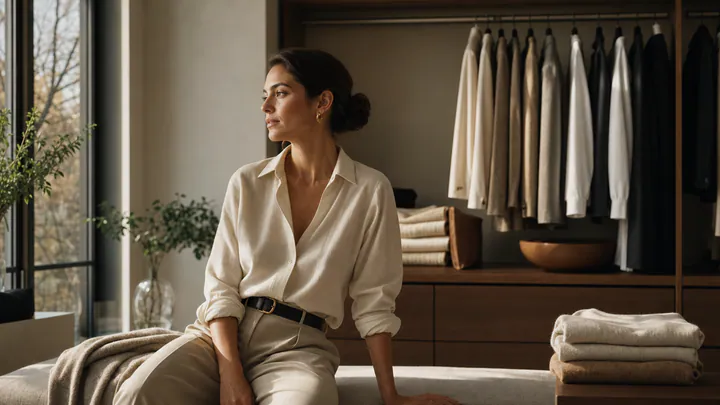
Wear the best-fitting version of something you already own, already like, and have already sat down in for an hour. The single most common outfit mistake is debuting a brand-new purchase on a first date — you discover the collar itches, the waistband digs in when seated, or the fabric creases the moment you get out of a car, and you spend the evening managing your clothes instead of the conversation.
Our working rule is one anchor plus quiet supporting cast. Pick one piece that carries a bit of texture or personality — a good knit, a jacket with structure, a genuinely well-cut trouser — and let everything else be plain and well-fitted. This is the same logic behind a 30-piece capsule wardrobe: fewer decisions, better hit rate.
Three things that quietly undermine otherwise good outfits:
- Shoes. They're noticed early and remembered. Scuffed, wrong-season or visibly uncomfortable footwear cancels out the effort above it.
- Outerwear. In cooler months, your coat is your first impression. It's the first and last thing seen and often the only thing seen outdoors.
- Fit at the shoulder and the hem. Fabric and brand matter far less than whether the shoulder seam sits where your shoulder ends.
If you tend to over-think, borrow the restraint of quiet luxury dressing — neutral, well-cut, undistracting — and add one thing that's unmistakably yours. For casual venues, a dark, clean, properly fitted jean is still the most reliable base there is; our guide to denim worth buying in 2026 covers which cuts hold their shape through an evening.
The two-outfit test
Lay out two options the night before. Put on the one you'd wear to meet an old friend you like and haven't seen in years. That's almost always the right answer — it's the outfit that makes you feel recognizable to yourself.
Which first date setting works best, and what does it cost?
Coffee, a single drink, or a walk. All three are inexpensive, quiet enough for conversation, and — critically — easy to leave. The exit is the underrated variable: a venue you can walk away from in ninety minutes without awkwardness lets both people relax, because neither is trapped.
| Setting | Typical cost (two people) | Natural length | Ease of leaving | Conversation quality |
|---|---|---|---|---|
| Coffee shop | Low | 45–75 min | Very easy | High — quiet, daylight, no alcohol pressure |
| Wine or cocktail bar | Low to moderate | 60–120 min | Easy | High, if you check the noise level first |
| Walk (park, market, riverside) | Minimal | 45–90 min | Very easy | High — side-by-side eases eye-contact pressure |
| Sit-down dinner | Moderate to high | 90–150 min | Difficult | Medium — courses dictate the pace, not you |
| Movie, concert or show | Moderate | 2–3 hrs | Difficult | Low — you learn almost nothing about each other |
| Activity (bouldering, pottery, mini golf) | Moderate | 60–120 min | Medium | Medium-high — great for nerves, weak for depth |
The one check almost nobody does: look at recent photos and reviews of the venue for the exact day and time you're going. A bar that's charming on a Tuesday can be a wall of noise on a Friday, and shouting over music for an hour makes two compatible people conclude they have no chemistry.
How long should a first date last?
Sixty to ninety minutes. That is long enough to know whether you enjoy someone and short enough that you leave with momentum rather than exhaustion. If it's going well, extending is easy — "there's a good bakery two streets over, want to walk?" — whereas shortening a three-hour commitment is not.
Build a soft exit into the plan before you arrive: something you're doing afterward. It isn't a lie if you actually do it, and it removes the panic of ending the evening gracefully.
What should we talk about, and what should I avoid?
Ask about experiences and choices, not credentials. "What's the best thing you've done this year?" produces a story; "what do you do?" produces a job title and a dead end. The aim is a conversation with texture, not a mutual résumé exchange.
Use the third-question rule: when someone answers, ask two more questions about the same thing before changing subject. Most bad first dates aren't bad because the people are incompatible — they're bad because the conversation skates across twelve topics and lands on none.
Things to hold back for a later date:
- Detailed post-mortems of your last relationship
- Heavy family history or ongoing grief, unless it comes up naturally and briefly
- Salary, rent and financial specifics
- Long monologues about work projects the other person can't picture
This isn't about hiding. It's about pacing — depth offered too fast usually reads as pressure rather than intimacy, because the other person hasn't yet earned the right to hold it and knows it.
How do I handle nerves without pretending I have none?
Name it once, early, then let it go. "I was a bit nervous about tonight" is disarming and almost always met with relief, because the other person is usually nervous too. What doesn't work is apologizing repeatedly, which hands them the job of reassuring you.
Physical management helps more than mental management. Arrive ten minutes early so you're not rushing in flustered. Eat something beforehand so you're not drinking on an empty stomach. And if your hands shake, hold a warm cup — one of the small, unglamorous reasons coffee dates work so well.
Sleep matters too, unromantically. If you're going into an evening already running on empty, everything feels higher stakes than it is.
What are the most common first date mistakes?
The costly ones are structural, not verbal. The same five errors account for most first dates that end politely and go nowhere.
- Interviewing. Rapid-fire questions with no reciprocal sharing feels like a screening call. Answer your own questions too.
- Over-programming the evening. Three planned stops signals effort but removes spontaneity and makes an early exit impossible.
- Treating the venue as the impression. An expensive restaurant doesn't make you more interesting; it makes the bill awkward and the exit harder.
- Performing indifference. Waiting three days to text, deliberately under-responding, playing cool. It reads as disinterest because it is indistinguishable from disinterest.
- Rudeness to staff. How you speak to a server is read as a preview of how you'll speak to a partner in six months. It's the fastest non-negotiable there is.
The bill, handled in one line
Whoever proposed the date offers first; the other offers to split; whoever's turn it isn't says "next one's on me." Keeping the venue cheap makes the whole exchange a five-second formality rather than a negotiation — which is exactly what you want it to be.
Should I text after, and when?
Yes, if you enjoyed it — the same night or the next morning, short and specific. One line referencing something you actually talked about, plus a concrete suggestion: "Still thinking about your terrible camping story. Are you free Thursday?" Specific beats effusive, and clear beats clever.
If you didn't enjoy it, a brief message is still the kinder option: warm, honest, no explanation required. Disappearing costs you nothing and costs the other person a week of uncertainty.
Afterward, resist the replay. The only useful question is did I enjoy their company? Everything else — whether you talked too much, whether that joke landed — is noise you can't verify and shouldn't try to.
When does this advice not apply?
Three honest exceptions. If you met through a shared community or mutual friends and already know each other socially, the short-and-low-stakes rule loosens; you're not strangers, and dinner is perfectly reasonable.
If either of you is traveling and this is a single available evening, a longer date makes sense — but agree the shape of it upfront so nobody's guessing.
And if you're meeting someone entirely new from an app, safety structure overrides every style consideration here: meet in a public place, arrange your own transport there and back, and tell someone you trust where you'll be and when you expect to be home. No outfit or conversation tactic is worth compromising that.
A short worked example
Say you've matched with someone and you're meeting Thursday. You suggest a specific coffee shop at 6:30 — named, easy to find, five minutes from a train stop. You wear dark jeans that fit properly, a knit you've owned for two years and know you like, and clean boots. You check the shop isn't hosting live music that night. You arrive at 6:25.
You ask what they've been enjoying lately and then ask two follow-ups instead of moving on. At around 8:00 you say you've had a really good time and you're heading off — and if you mean it, you say you'd like to do it again. That's the whole method. It is not impressive, and that's precisely why it works.
Key takeaways
- Aim for a second date, not a relationship — it lowers the stakes and improves everything you do.
- Keep it to 60–90 minutes somewhere quiet, cheap and easy to leave; check the venue's noise level for your exact day and time.
- Wear something you already own and have already tested for a full hour seated; shoes and outerwear carry more weight than you think.
- Ask about experiences rather than credentials, and ask two follow-ups before changing subject.
- Admit nerves once, then let them go — repeated apologizing makes reassuring you the other person's job.
- Say plainly whether you'd like to see them again. Strategic coolness is indistinguishable from disinterest.
Frequently asked questions
How long should a first date last?
About 60 to 90 minutes is the sweet spot. It is long enough to find out whether you enjoy someone's company and short enough that you leave wanting more rather than running out of things to say. If it's going brilliantly, you can always extend it by suggesting a walk or a second drink.
What should I wear on a first date?
Wear the best-fitting version of something you already own and already feel good in — not a new purchase you haven't tested. Match the formality to the venue, add one piece with a bit of texture or character, and make sure your shoes and outerwear are as considered as the rest, since those are what people see first and last.
Where is the best place for a first date?
A quiet coffee shop, a low-key wine bar, or a walk somewhere pleasant. All three are cheap, easy to leave, and quiet enough for real conversation. Avoid loud restaurants, movies, and anything that locks you into two or three hours with a stranger.
Who should pay on a first date?
Whoever suggested the date should offer first, and the other person should offer to split. Keep the venue cheap enough that the question stays trivial — this is one of the strongest arguments for coffee or a single drink over dinner. Don't turn it into a negotiation at the table.
Is it okay to admit I'm nervous?
Yes, and naming it once early usually helps both of you. A simple "I was a bit nervous about this" is disarming and honest. What doesn't help is apologizing for your nerves repeatedly, which shifts the job of reassuring you onto the other person.
Should I text after a first date?
If you enjoyed it, send a short, specific message the same evening or the next morning — one sentence about something you actually talked about, plus a clear suggestion for meeting again. If you didn't, a brief, kind message saying you don't think it's a match is far better than silence.
What are the most common first date mistakes?
Interviewing instead of conversing, oversharing heavy personal history too early, choosing a venue that's too loud or too long, and wearing something brand new that you haven't sat down in. Each one is easy to avoid and each one reliably kills the second date.