Trench, Mac or Parka: Picking a Raincoat for How You Live
The best raincoat depends on how you get to work, how hard it rains where you live and what you wear underneath. Compare trench, mac, parka and packable shell on length, hood, formality and layering.
Drafted with AI. This version has not been reviewed by an editor, so it carries no ads — how we work.
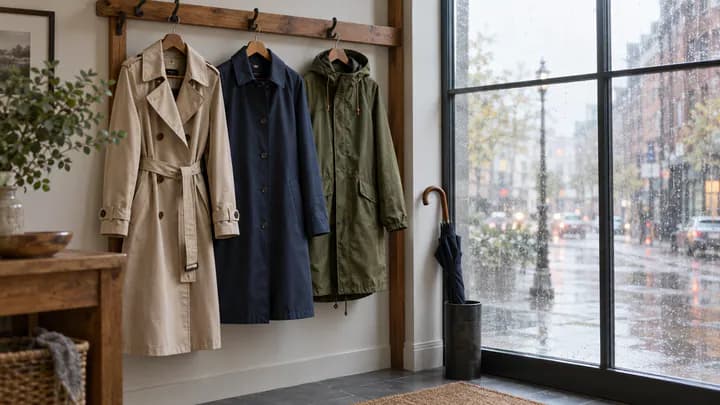
The raincoat that looks right on you every wet morning is the one that matches how you actually get around, what the weather does where you live and what you wear underneath it. A belted trench is perfect over a suit on a walk to the train and awkward over a hoodie on a bike; a hooded parka is the reverse. This guide compares the four main styles, the trench, the mac, the rain parka and the packable shell, on looks, coverage and layering, so you can pick one good coat that works over both work clothes and weekend outfits. It is written for city dressing, not trail use: if you hike or run in serious weather, a specialist outdoor gear guide will serve you better.
Start with the job: walking, waiting, driving or cycling
Before you think about color or cut, work out how long you spend exposed to rain on a typical day and what you are doing while it falls. That one question rules out half the options.
- You walk and wait. A 15-minute walk to a station, then a few minutes on an open platform, means your legs and the hem of whatever you wear get wet. Length matters most here: a knee-length coat protects trousers, skirts and the bottom of a suit jacket.
- You drive. Your exposure is the dash from door to car and car to office. A long coat bunches and creases when you sit behind the wheel, so a shorter coat that ends at the hip or upper thigh is more comfortable and still covers you for those few yards.
- You take the bus. Bus stops are where you stand still in rain, often in wind, often with your hands full. A hood earns its place.
- You cycle or scooter. Long hems catch on saddles and flap in the wheel; belts dangle. A hip-length coat with a hood that fits under or over a helmet works far better than anything tailored.
Climate matters too. Steady drizzle and mild temperatures suit a lighter, unlined coat you can wear for most of the year. Cold, heavy rain calls for a coat roomy enough to wear over thick knits, or one with a zip-in liner.
Four raincoat styles side by side
| Style | Typical length | Hood | Formality | Best outfit pairing |
|---|---|---|---|---|
| Trench coat | Knee to mid-calf | Rarely; sometimes detachable | High | Suits, blazers, skirts, dresses, tailored trousers |
| Mac (mackintosh) | Knee, sometimes just above | Usually none; some have a detachable one | Medium to high | Work trousers with knitwear, smart-casual, dresses |
| Car coat | Hip to mid-thigh | Usually none | Medium | Chinos, dark jeans, sweaters, shorter jackets |
| Rain parka | Hip to mid-thigh | Yes, usually fixed | Low to medium | Jeans, hoodies, sweaters, sneakers and boots |
| Packable shell | Hip | Yes, often roll-away | Low | Casual travel clothes, layered over a fleece or light knit |
The table gives the general pattern. One rule of thumb runs through it: knee-length coats cover suit jackets and skirts; hip-length coats suit jeans and shorter tops. A short coat over a longer blazer leaves a strip of jacket hanging below the hem, which looks untidy and gets wet.
The trench coat: classic cover for tailored clothes
The trench is the most formal raincoat and the easiest to wear over a suit, a tailored dress or a skirt, because it is long, structured and usually double-breasted. It traditionally comes in cotton gabardine, a tightly woven fabric that sheds light rain but is water-resistant rather than fully waterproof. In a long downpour it will eventually soak through, which is why many people pair one with an umbrella.
Its details look decorative but each affects fit and function.
Storm flap and back yoke
The storm flap is the extra panel of fabric buttoned over one shoulder at the front; a matching panel across the upper back is often called the back yoke or storm shield. Both add a second layer where rain hits first. They also add bulk across the chest and shoulders, so on a narrow frame a trench with oversized flaps can look heavy. If you are slight, look for a slimmer version with smaller flaps, or a single-breasted trench.
The belt
The belt lets one coat fit two ways: cinched over a thin dress, or left loose over a thick sweater. It is also what makes a trench read as dressy. Tied at the back or simply knotted in front, it softens the look for weekends. If you dislike belts, check that the coat still hangs well without one; some are cut so roomy that they balloon when unbelted.
Raglan or set-in sleeves
Raglan sleeves run in a diagonal seam from the collar to the underarm, with no seam at the point of the shoulder. They give more room through the shoulders and arms, which makes layering over a blazer or chunky knit easier, and they suit sloping or broad shoulders. Set-in sleeves join the body at the shoulder point, like a suit jacket, for a sharper, more structured outline, but leave less room underneath. If you plan to wear the coat over a tailored jacket, raglan sleeves are the safer choice; if you mostly wear it over shirts and fine knits, set-in sleeves look neater.
The mac or car coat: clean lines and a shorter option
The mac, short for mackintosh after the rubberized fabric Charles Macintosh developed in the 19th century, is the trench without the trimmings: usually single-breasted, often with a hidden button placket, no epaulettes, no storm flaps and frequently no belt. Modern versions come in bonded cotton, coated cotton or synthetic fabrics, and the coated ones tend to keep out more rain than plain gabardine.
The appeal is versatility. A navy or stone mac looks polished over work trousers and a sweater and still looks right over jeans on a Saturday, because nothing about it signals "office" as strongly as a belted trench does. It also has a cleaner silhouette over bulky knits, since there are fewer layers of fabric at the chest.
The car coat is the mac's shorter relative, cut to end around the hip or upper thigh so you can sit and drive without the coat bunching. It is the best choice if you drive most days, or if your wardrobe runs to chinos and dark denim rather than suits. Remember the length rule, though: over a knee-length skirt or a long blazer, a car coat leaves too much exposed.
The rain parka: a hood and casual coverage
A rain parka is the most protective of the city options, with a fixed hood, usually a zip plus a snap or button storm placket over it, and often a drawcord at the waist to keep wind out. Many are made from coated or laminated synthetic fabric with taped seams, so they handle heavier rain than gabardine.
The trade-off is formality. A parka looks natural over jeans, a hoodie or a sweater with boots or sneakers, and somewhat out of place over a suit. If your workplace is casual, that may not matter, and a sleek parka in a dark solid color with minimal hardware can pass over smart-casual clothes. Look for a hood with a stiffened brim that stays out of your eyes, and check that you can turn your head while it is up; a hood that turns with your face is safer at crossings.
Packable shells for travel
A packable shell is a thin, lightweight jacket that folds into its own pocket or a small pouch. It is the obvious choice for travel, for a bag you carry every day just in case, or as a second raincoat. It is also usually the cheapest option, roughly $50 to $150 for a decent one, against a few hundred dollars for a mid-market trench or mac.
Its limits are real. Thin fabric crinkles, it offers little warmth, it can feel clammy on a long walk, and at hip length it does nothing for your legs. Over a blazer it looks out of place and can crush the jacket's shoulders. Treat it as a backup rather than the one coat you rely on all season.
A hood or an umbrella?
Your commute decides this more than taste does. An umbrella keeps rain off your face, hair and glasses without flattening anything, and it pairs naturally with a hoodless trench or mac. It fails in strong wind, leaves you with one hand occupied and is impractical on a bike or when carrying bags.
A built-in hood is always there and works hands-free, which suits bus stops, cyclists, parents with strollers and anyone in a windy city. It can look sporty and it spoils a careful hairstyle. A detachable hood, which zips or buttons onto the collar, is a sensible middle ground: leave it off for a cleaner look on dry-ish days and clip it on when the forecast turns. If you walk and wait with a free hand, a hoodless coat and a sturdy compact umbrella work well. If you cycle or often have your hands full, choose a hood.
Length, sizing and fit over a blazer or knitwear
Size a raincoat for the bulkiest thing you will wear under it, not for the T-shirt you have on in the shop. A coat that closes neatly over a shirt can strain at the buttons, pull across the back and ride up at the sleeves once a blazer or chunky knit goes underneath. Try it on wearing your bulkiest layer, or bring that layer with you.
- Button or zip it fully. The front should close without pulling into creases that fan out from the buttons. On a double-breasted trench, check both rows.
- Reach forward with both arms, as if gripping a steering wheel or handlebar. The back should not feel tight across the shoulder blades, and the sleeves should not ride far up your forearms.
- Check sleeve length. With arms relaxed, the coat sleeve should cover the cuff of your blazer or sweater completely and end around the base of your thumb. Rain runs down the arm and into an exposed cuff.
- Look at the hem. It should fall below the hem of your longest jacket and, for a coat worn with skirts, at or below the skirt hem. Sit down if you drive, to see how much the coat bunches.
- Check the collar. Turn it up. It should stand around your neck rather than flop, because that is how you will wear it in a downpour.
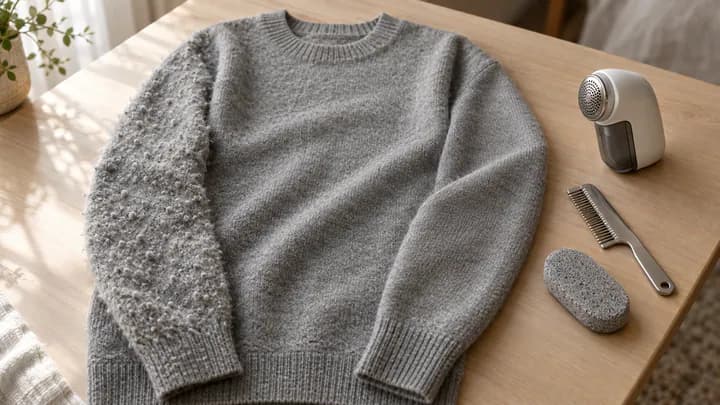
If you are between sizes and wear thick layers in winter, size up and use the belt or a drawcord to take in the slack on warmer days. If you mostly wear thin layers, take your usual size; an oversized trench over a T-shirt can swamp a smaller frame. Rough or stiff linings and the rub of a bag strap over a coat both add friction to the sweater underneath, one reason knits pill and develop bobbles, so a smooth lining is worth having if you wear the coat over wool most of the winter.
Colors and details that keep a raincoat versatile
Neutral colors give one coat the most outfit combinations. Each of the four classics has a slightly different personality:
- Stone or beige is the traditional trench color and works with navy, gray, black and denim. It brightens a gray day but shows dirt and splashes at the hem sooner.
- Navy is the most adaptable for workwear, looks smart over suits and relaxed over jeans, and hides marks well.
- Olive suits casual wardrobes and pairs well with denim, cream, brown and rust. It leans less formal, which makes it a strong choice for a parka or car coat.
- Black is sleek and forgiving of dirt, though in a structured trench it can look severe over casual clothes.
Bright yellow or red raincoats are cheerful and easy to spot in traffic, but they limit what you can wear underneath and date faster. They make a better second coat than an only coat.
A few details make the difference between a coat that suits every day and one that suits only some days. A hidden button placket looks cleaner and more modern than rows of large buttons. Minimal hardware, such as plain buttons and few metal rings, keeps a coat from looking either too military or too sporty. A zip-in or button-in liner stretches one coat from mild spring drizzle into a cold, wet winter. Deep pockets placed where your hands naturally fall, with flaps to keep water out, matter more on a daily commute than most decorative features.
Fabric care affects how long the coat keeps working. Cotton gabardine and most synthetic coats rely on a water-repellent finish that wears off over time; when water stops beading and starts soaking in, a spray-on reproofing treatment, applied according to the coat's care label, can restore it. Waxed cotton needs periodic rewaxing and should not go in a washing machine.
If you can only own one raincoat
For most people in a rainy city who wear tailored clothes a few days a week and casual clothes the rest, we'd start with a knee-length mac in navy or stone, with raglan sleeves and a detachable hood. It covers a suit jacket and a skirt, looks relaxed over jeans and a sweater, fits over a chunky knit, and can be worn hood-on or with an umbrella depending on the day.
Choose a trench instead if your work wardrobe is formal and you enjoy the belted, structured look. Choose a car coat if you drive almost everywhere. Choose a rain parka if you cycle, wait at bus stops or dress casually most of the week; if you are building a relaxed everyday look around it, our guide to putting together street style outfits covers the proportions and layering that make casual outerwear look deliberate. Keep a packable shell as the backup in your bag, not as the main event.