Quiet Luxury Outfits: How to Look Expensive Without Logos
Quiet luxury is less about spending more and more about fabric, fit and color discipline. Here is what actually makes clothing read as expensive, what it costs to build, the mistakes that give a look away, and a 12-piece starter wardrobe.

TL;DR: Quiet luxury outfits look expensive because of four measurable things — fiber content, fit at the shoulder and hem, a disciplined neutral palette, and shoe condition. Brand names are irrelevant. Fix those four and mid-priced clothing outperforms untailored designer pieces almost every time.
What exactly is a quiet luxury outfit?
Quiet luxury is a dressing approach that communicates quality through material, construction and proportion rather than logos, hardware or trend markers. Sometimes called stealth wealth or understated dressing, it favors a small wardrobe of neutral, natural-fiber pieces worn on heavy rotation.
The distinction that matters: minimalism is about having fewer visual elements, while quiet luxury is about the quality of the elements you keep. A camel coat with a fully canvassed front, horn buttons and a silk-lined body is quiet luxury. A thin beige coat with a plastic-shiny lining is just beige.
If you want the broader seasonal context, our guide to building a timeless wardrobe in 2026 covers how the aesthetic has shifted since it first spread through film and television.
Why does some clothing read as expensive to the human eye?
People do not consciously price your outfit. They register four signals in under a second: how the fabric hangs, whether the shoulder line sits on your actual shoulder, whether the colors belong together, and whether your shoes look cared for. Everything else is noise.
Drape is the first signal. Wool, silk, linen and good cotton fall vertically and move with you; cheap polyester holds a stiff, slightly bell-shaped silhouette and reflects light in a flat, plasticky way. That reflectivity is what the eye reads as "cheap," long before anyone identifies the fiber.
The second is structure. A jacket whose shoulder seam extends past your shoulder bone creates a collapsed line no amount of price can rescue. The third is color coherence — two off-whites that almost match look worse than one white and one navy. The fourth is maintenance, which is the one most people neglect.
Which fabrics are worth paying for, and which are not?
Pay for wool, cashmere at two-ply or better, mulberry silk and dense cotton. Do not pay a premium for viscose, rayon blends or brushed polyester, no matter how luxurious they feel in the store — they pill, sag and lose shape within a season.
| Fabric | Quality marker | Typical lifespan with care | Watch out for |
|---|---|---|---|
| Cashmere knit | Two-ply or greater; springs back when stretched | 5–10 years | Single-ply, semi-transparent panels, instant pilling |
| Merino wool | Fine gauge, stated micron or Super number | 5+ years | Wool blended below roughly 50% with acrylic |
| Silk blouse | Momme weight stated (heavier drapes better) | 3–7 years | Thin, papery silk that wrinkles into permanent creases |
| Cotton shirting | Poplin or twill, opaque, crisp hand | 3–5 years | Stretch blends that go baggy at the elbows |
| Tailored jacket cloth | Half or full canvas front, not fused | 10+ years | Bubbling at the lapel after cleaning — a fusing failure |
A quick in-store test for knitwear: hold a section of the body up to a light source. If you can clearly see through the knit, the yarn is thin and it will pill at the underarms within a month of real wear.
How much does it cost to build a quiet luxury wardrobe?
Far less than the aesthetic implies, if you buy across tiers instead of within one. Our team's working rule is to spend on the layer people see longest — coat, blazer, shoes, bag — and stay mid-market on the layers closest to your skin, which wear out fastest anyway.
| Category | Spend level | Why |
|---|---|---|
| Outerwear (wool coat, trench) | High | Worn over everything, seen the most, lasts a decade |
| Leather shoes and bag | High | Condition is the strongest quality signal; resoleable shoes amortize well |
| Tailored trousers, blazer | Mid to high, plus alterations | Fit matters more than fabric price here |
| Knitwear | Mid | Good merino at mid price outperforms bad cashmere at high price |
| T-shirts, basics, socks | Low to mid | High-friction items with short lifespans |
| Alterations | Always | The highest return per dollar in the entire wardrobe |
Because these are lumpy, irregular purchases, they respond well to being saved for deliberately rather than charged impulsively. If your coat replacement always arrives as a financial surprise, our explainer on sinking funds and calmer budgeting shows how to spread the cost across the year. This is general guidance, not financial advice.
Which 12 pieces should you buy first?
Start with a spine of twelve items that combine into roughly thirty outfits: a camel or charcoal wool coat, a navy blazer, two fine-gauge knits, two shirts (one white poplin, one silk), two pairs of tailored trousers, one pair of dark straight-leg jeans, leather loafers, ankle boots and a structured leather bag.
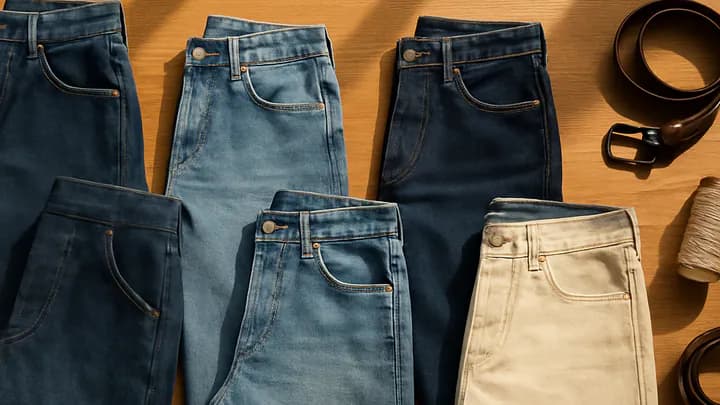
The jeans are the piece people get wrong. Rigid or lightly stretched dark denim in a straight or slightly tapered leg reads as deliberate; heavily distressed, whiskered or high-shine denim does not. Our rundown of the jeans worth buying in 2026 covers cuts that sit comfortably inside this aesthetic.
Expand in the same spirit rather than by category. A full framework for this is in our 30-piece capsule wardrobe guide, which maps out how many tops each bottom needs to justify itself.
How do you make mid-priced clothes look expensive?
Take everything structured to a tailor and change the buttons. Those two moves close most of the visible gap between a mid-market garment and a luxury one, at a fraction of the price difference.
- Sleeve length. A jacket sleeve should end where your wrist meets your hand, leaving roughly a quarter to half an inch of shirt cuff showing.
- Trouser break. One small fold at the front of the shoe, or none. Fabric pooling on the shoe instantly ages a look.
- Shoulders. The seam should meet the edge of your shoulder bone. This alteration is expensive and sometimes impossible — treat the shoulder as the one measurement you buy for, and adjust everything else.
- Buttons. Swapping shiny plastic for horn, corozo or matte mother-of-pearl costs very little and removes the most common giveaway on blazers and coats.
- Waist suppression. Taking in the back seam of a blazer by even a small amount converts a boxy silhouette into a deliberate one.
Alteration prices vary widely by city and shop, so call two tailors before committing. As a rule, if the alteration costs more than a third of what you paid for the garment and the garment is not natural-fiber, skip it.
What mistakes give a quiet luxury outfit away?
The expensive failures are almost never about being too plain. They are about mismatched whites, worn-down shoes, over-layering, and buying the silhouette of luxury in the wrong material.
- Three near-identical neutrals in one outfit. Cream, ivory and off-white together look accidental. Either match them exactly or separate them clearly.
- Neglected shoes. Scuffed toes and collapsed heel counters undo a whole outfit. A weekly wipe and a shoe tree extend shoe life more than any purchase.
- Over-layering. Quiet luxury is one strong piece plus quiet support. A camel coat, silk blouse and statement bag in the same outfit compete with each other.
- Buying "luxury-shaped" polyester. The oversized blazer trend produced many cheaply fused jackets that hold a stiff, hollow shape. The cut is right and the material is wrong.
- Dry cleaning cashmere constantly. Most knitwear is better hand-washed cool and dried flat; frequent solvent cleaning strips fiber softness. Always check the care label, and spot-treat rather than cleaning the whole garment.
How do you shop secondhand without getting burned?
Consignment and thrift shops are the cheapest reliable route to natural-fiber coats, wool blazers and leather goods — but you have to inspect rather than browse. Read the composition label first and the brand label second.
Check five points every time: underarms and inner thighs for thinning, the lining at the armhole for splits, lapels for bubbling (a sign of failed fusing that cannot be repaired), the collar for permanent staining, and shoes for whether the sole is stitched and therefore resoleable. Moth damage hides in shoulder seams and cuffs, so hold wool up to the light.
One honest limit: secondhand sizing from older decades runs differently, and a vintage jacket with correct shoulders but a short body is often not worth altering. Shoulders and chest have to be right off the rack.
A worked example: one outfit, three ways to buy it
Take a standard weekday look — wool coat, fine knit, tailored trousers, loafers. Built entirely from new luxury retail, it is a significant outlay. Built from a mid-market coat with altered sleeves, a mid-priced merino knit, secondhand wool trousers taken in at the waist and resoled leather loafers, it costs a fraction of that and photographs almost identically.
The difference a knowledgeable observer would notice is the coat's canvas and the loafer leather, in that order. That tells you where the remaining budget should go next year: the coat first, then the shoes, and never the knit.
When does quiet luxury not apply to you?
If your work is physical, outdoors, or in a creative field where personal style is part of your professional signal, the tailored version of this aesthetic will fight you. Silk blouses and unlined wool do not survive childcare, workshops, hospitals or commutes on foot in wet weather.
The transferable part is the principle, not the uniform: buy fewer items, in materials that survive your actual life, in a color range that self-coordinates. For some people that means heavy cotton drill, waxed outerwear and boots. That is still quiet luxury — it is just calibrated to a different day.
It is also worth naming that this aesthetic carries class associations, and dressing into it does not obligate anyone. If you enjoy color, pattern or visible branding, a well-made bright coat is not a lesser garment. Our guide to building a closet you actually love takes the broader view.
How do you keep these pieces alive for a decade?
Maintenance is the quietest part of quiet luxury and the one that separates a wardrobe that ages well from one that looks tired by March. Rest wool between wears, brush coats rather than cleaning them, store knitwear folded and never on hangers, and use cedar or sealed storage in warm months to deter moths.
Repair early. A loose button, a small underarm hole or a heel tap worn to the nail are all inexpensive fixes that become expensive once ignored. Budget a small annual amount for resoling, reweaving and re-lining — it is the cheapest wardrobe spending you will ever do.
Key takeaways
- Fiber content, shoulder fit, hem length and shoe condition account for most of what people read as "expensive." Brand names account for almost none of it.
- Spend high on outerwear, shoes and bags; stay mid-market on knitwear and basics; always pay for alterations.
- Check knitwear for ply and recovery, and tailored jackets for canvassing rather than fusing — bubbled lapels cannot be repaired.
- Restrict yourself to two neutral families plus one accent so every top works with every bottom.
- Skip near-identical whites, over-layering and luxury-shaped polyester; these are the tells that undo an otherwise good outfit.
- If your daily life is physical or outdoors, apply the fabric and fit principles to durable materials instead of tailoring.
Frequently asked questions
What is quiet luxury in fashion?
Quiet luxury is a style approach that signals quality through fabric, tailoring and restrained color instead of visible logos or seasonal trends. The wardrobe is small, neutral and heavily repeated, with each piece chosen for construction and fit rather than brand recognition.
Can you do quiet luxury on a small budget?
Yes, because most of the effect comes from fit and fiber, not price. A mid-priced wool blazer that has been altered at the shoulder and sleeve will read more expensive than an untailored designer one, and secondhand shops are the cheapest reliable source of natural-fiber coats and knitwear.
What colors work best for quiet luxury outfits?
Camel, cream, oatmeal, charcoal, navy, black, olive and chocolate brown do most of the work. Restricting your closet to two neutral families plus one accent keeps every top compatible with every bottom, which is what creates the effortless, coordinated look people associate with the style.
How can you tell if cashmere is good quality?
Check the ply and the recovery. Two-ply cashmere feels substantial and springs back when you stretch and release a section of the knit; single-ply, low-grade cashmere feels thin, looks slightly transparent against light and starts pilling within a few wears.
Is quiet luxury just beige minimalism?
No. Minimalism is about reducing visual elements; quiet luxury is about the quality of the elements that remain. A quiet luxury outfit can include pattern, texture and color, as long as the construction is good and nothing is shouting a brand name.
What are the fastest upgrades to make an outfit look more expensive?
Tailor the shoulders and hems, swap plastic buttons for horn or corozo, and replace worn shoes with well-kept leather ones. Those three changes cost far less than new clothing and fix the details people actually register.
Does quiet luxury work outside an office setting?
Partly. The fabric and fit principles transfer to any wardrobe, but the tailored-blazer version of the look assumes a fairly formal environment. In casual or physical work settings, apply the same ideas to sturdy cotton, good denim and well-made outerwear instead.
How many pieces do you need to start?
Around twelve well-chosen items will cover most weeks: a coat, two knits, two shirts, two pairs of trousers, dark jeans, a blazer, two pairs of shoes and one good bag. Build it over a year rather than in one shopping trip.