Elevated Athleisure: How to Wear Luxe Sportswear Well
Elevated athleisure only works when the fabric stops looking like gym kit. Here is the fabric test, the price tiers, the styling rules, and the five pieces worth buying first.
Rewritten with AI and republished automatically. Our editors set the standards and fix reported errors — how we work.
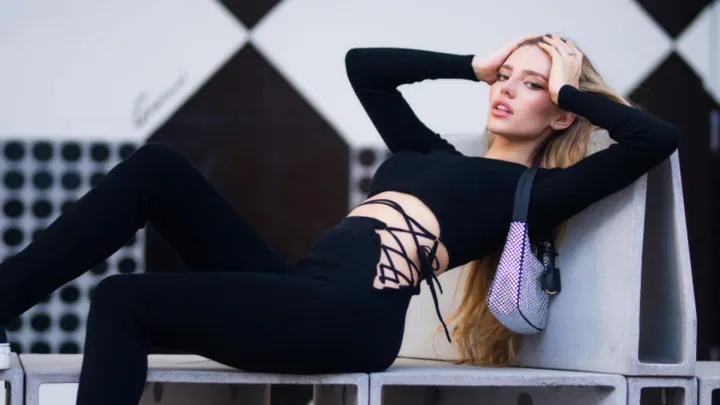
TL;DR: Elevated athleisure is sportswear shapes made in garment-quality fabric. It works when the fabric is matte and opaque, the shoes are not running shoes, and one piece in the outfit has real structure. It fails when you buy shiny performance fabric for non-performance wear.
What exactly is elevated athleisure, and how is it different from regular activewear?
Elevated athleisure is a category of clothing that borrows athletic silhouettes — joggers, leggings, zip-throughs, track jackets, two-piece sets — but executes them in fabrics and finishes normally used for tailoring and knitwear. The shape says gym; the material says wardrobe.
Regular activewear is engineered for a workout: high stretch recovery, moisture-wicking synthetics, bonded logos, reflective trims. Elevated athleisure deliberately strips out most of those performance cues because they are exactly what makes an outfit read as gym kit in a restaurant.
The practical distinction is not price. A $180 pair of shiny nylon-elastane leggings is still activewear. A $95 pair of matte ponte trousers with a flat waistband and a proper seat seam is elevated athleisure. The fabric decides, not the receipt.
Which fabrics separate luxe sportswear from gym clothes?
The reliable ones are merino wool and merino blends, ponte and double-knit jersey, brushed cotton-modal, Tencel lyocell blends, and heavyweight French terry with a low synthetic content. All of them share two properties: a matte surface and enough weight to hang instead of cling.
A useful shorthand is the sheen test. Hold the garment under a bright overhead light and turn it. If it flashes, it will read athletic in every photograph and every restaurant. If it absorbs light, it will read as clothing.
The second check is weight. Merino knits around 200–260 gsm drape and hold shape; ultralight 150 gsm merino is superb for base layers and travel but will show every contour and pill at the inner thigh. For joggers and trousers, heavier is almost always the more flattering choice.
- Merino and merino blends — odor-resistant, temperature-regulating, matte. Best value in the whole category for travel.
- Ponte / double-knit — stable, structured, forgiving. The single most office-compatible knit trouser fabric.
- Cotton-modal and Tencel blends — soft hand, good drape, poor sweat management. Lounge and errands, not workouts.
- Nylon-elastane performance knit — excellent for actual training, worst offender for looking gym-ready. Buy it for the gym and stop there.
How much does elevated athleisure cost, and what does each tier actually get you?
Expect roughly $60–$120 for entry pieces that hold up, $120–$260 for the construction details that survive years of wear, and $300+ for luxury-house fabric and finishing. The steepest quality gain sits between the first two tiers; above that you are largely paying for brand, cut, and fabric provenance.
| Tier | Typical price | What you actually get | Where it falls short |
|---|---|---|---|
| Entry | $50–$110 | Decent cotton-modal or midweight knit, simple elastic waist, serged seams | Pilling at friction points, waistband rolls, color fades after ~20 washes |
| Core | $110–$260 | Merino blends, ponte, bonded waistbands, gusseted crotch, flatlock seams, tapered leg drafting | Still needs careful washing; elastane still degrades over 2–4 years |
| Luxury | $300–$1,200+ | Cashmere-blend knits, Japanese or Italian technical wovens, hand-finished details, superior color depth | Fragile, dry-clean reliant, poor cost-per-wear unless you truly wear it weekly |
Worked example. A $130 pair of merino-blend joggers worn twice a week for two years is about 200 wears, or roughly $0.65 per wear. A $45 pair of cotton-poly joggers that pills visibly after 25 wears costs about $1.80 per wear. The cheaper pair is the more expensive purchase. Run that math before you talk yourself out of the better fabric — and before you talk yourself into the $900 one.
How do you wear it without looking gym-ready?
Use one clear rule: every outfit needs at least one structured element and at most one piece of visible athletic branding — ideally zero. Structure means a collar, a shoulder seam, a belt, a stiff outer layer, or a leather shoe. Without it, the whole look flattens into loungewear.
Three styling moves do most of the work:
- Change the shoe first. Running shoes with a chunky foam midsole are the loudest gym signal in the outfit. A minimal leather sneaker, a loafer, or a clean boot changes the read instantly, with no other changes.
- Break the matching set. Two-piece sets photograph well and look like pajamas in person. Wear the top with denim, or the bottom with a knit and an overshirt. If you want help choosing the denim half, our guide to the jeans worth buying now covers which cuts pair with tapered knits.
- Hold the palette. Charcoal, ink, stone, bone, olive. Tonal dressing is what makes this category read expensive, and it is the same principle behind building a quiet-luxury wardrobe — fabric and fit do the talking instead of logos.
Proportion note: if the bottom is fitted, the top needs volume, and vice versa. Two fitted pieces reads as workout clothes; two oversized pieces reads as a nap.
Which brands are genuinely defining the category?
The category now spans three distinct groups, and mixing across them is how most people actually build a wardrobe. Performance-native labels bring fit; fashion houses bring fabric; mid-market specialists bring the best cost-per-wear.
- Performance-native: Lululemon, Alo Yoga, Vuori, On. Best drafting and fit consistency. Watch for sheen and logo placement.
- Fashion-house interpretations: Off-White, Adidas by Stella McCartney, Brunello Cucinelli's knit tailoring, Loro Piana's soft separates. Best fabric, worst value, most fragile.
- Merino and travel specialists: labels built around wool base layers and knit trousers. Quiet, matte, and the most versatile for airports.
We would rather you buy one excellent knit trouser from any of these than three mediocre sets from all of them. Brand loyalty in this category is mostly a fit story — once you know which label drafts a rise and inseam that suits you, repeat-buying the same style is a legitimate strategy.
What are the failure points nobody mentions?
Three failures account for most disappointment: fabric care, dress-code mismatch, and buying performance fabric for non-performance use. All three are avoidable.
The costly mistake: using fabric softener and a hot dryer on technical knits. Softener leaves a residue that traps body oils inside synthetic fibers, which is why expensive leggings start smelling permanently after a few months. Heat separately breaks down elastane, so the waistband goes slack. Wash cold, skip the softener, hang dry — this one change roughly doubles the usable life of a garment.
The edge case: this does not apply to conservative workplaces. If your office expects suiting, client-facing formality, or a uniform, elevated athleisure is a commute-and-weekend category, not an office one. Reading a trend as permission to ignore a stated dress code is a career problem, not a styling one.
The honest limitation: knit trousers show everything. Ponte and merino skim the body in a way woven trousers do not, and no amount of price fixes that. If you dislike how fitted knits sit on you, choose a woven technical trouser with a soft waistband instead — same comfort, different silhouette.
Is sustainable athleisure real, or is it marketing?
It is partly real, with a specific catch. Recycled polyester genuinely reduces virgin plastic input, but once it is blended with elastane for stretch, that fabric is effectively unrecyclable at end of life, and it sheds microfibers in every wash. "Made with recycled materials" on a hang tag tells you very little on its own.
What is more informative: third-party certifications such as the Global Recycled Standard, bluesign, and OEKO-TEX STANDARD 100, plus natural-fiber options like responsibly sourced merino and lyocell. A repair program or a take-back scheme is a stronger signal than any adjective on the label.
The most reliable sustainability lever remains buying fewer, better pieces and wearing them longer — which is the same logic behind a 30-piece capsule wardrobe. Ten well-chosen items you wear weekly beat thirty you rotate occasionally, environmentally and financially.
What should you buy first?
Buy in this order: knit trousers, fine-gauge zip or crew, structured outer layer, then leggings, then sneakers. That sequence front-loads the pieces that work in the most situations and delays the ones that are hardest to dress up.
- 1. Matte tapered knit trousers in charcoal or black, ponte or wool-blend, with a flat waistband.
- 2. Fine-gauge merino zip-through or crew — replaces a hoodie in every context where a hoodie would be too casual.
- 3. A structured third layer — overshirt, unlined blazer, or clean-lined coat. This is the piece that makes everything else read intentional.
- 4. Opaque leggings with a gusset and bonded waistband. Check opacity in a squat under bright light in the fitting room.
- 5. A minimal leather sneaker in a single color, no contrast sole branding.
If you are assembling this alongside the rest of your closet rather than as a standalone capsule, our walkthrough on building a closet you actually love covers how to keep the categories from duplicating each other.
Key takeaways
- Elevated athleisure is defined by fabric, not price — matte and opaque reads as clothing, shiny reads as gym kit.
- The biggest quality jump is between roughly $110 and $260, where bonded waistbands, gussets, and flatlock seams appear.
- One structured element per outfit — a collar, a coat, or a leather shoe — is what keeps the look out of loungewear territory.
- Skip fabric softener and the dryer; both destroy technical knits faster than wear does.
- It is a silhouette swap, not a dress-code exemption. Conservative and client-facing workplaces are still off-limits.
- Run cost-per-wear before you buy: cheap joggers that pill in a season are usually the more expensive option.
Frequently asked questions
What is elevated athleisure?
Elevated athleisure is sportswear-derived clothing made in matte, structured, garment-quality fabrics so it reads as tailoring rather than gym kit. Think merino or wool-blend joggers, ponte or double-knit trousers, and opaque leggings styled with structured outerwear and real shoes.
How do I stop athleisure from looking like I just left the gym?
Remove the three gym signals: fabric sheen, visible logos, and running shoes. Swap in a matte knit, a collar or structured shoulder, and a leather or suede shoe, and at least one piece in the outfit should have a real waistband, cuff, or seam detail rather than elastic everywhere.
Are expensive leggings actually better?
Sometimes. Above roughly $70 you generally get bonded waistbands, gusseted crotches, flatlock seams, and higher-denier yarns that resist pilling, but past about $130 you are usually paying for brand and fit rather than construction. Test opacity in a squat under bright light before deciding.
Can I wear elevated athleisure to the office?
In business-casual and creative offices, yes, if the pieces are wool-blend or ponte and paired with a structured jacket and leather shoes. In conservative finance, law, client-facing, or uniform-based workplaces, no. Elevated athleisure is a silhouette swap, not a dress-code exemption.
Is recycled polyester activewear genuinely sustainable?
It is a modest improvement, not a solution. Recycled polyester reduces virgin plastic input but still sheds microfibers in the wash and is hard to recycle again once blended with elastane. Third-party certifications like GRS, bluesign, and OEKO-TEX are more meaningful than an unexplained "eco" label.
How do I stop technical fabrics from smelling after a few washes?
Stop using fabric softener and high heat. Softener coats synthetic fibers and traps oils that feed odor-causing bacteria, and dryer heat degrades elastane. Wash cold, use a small amount of detergent, and hang dry.
What should I buy first if I am building this from scratch?
Start with one pair of matte tapered knit trousers in charcoal or black, then a fine-gauge zip or crew, then a structured overshirt or coat. Those three cover most of the wear occasions before you add leggings, sets, or sneakers.