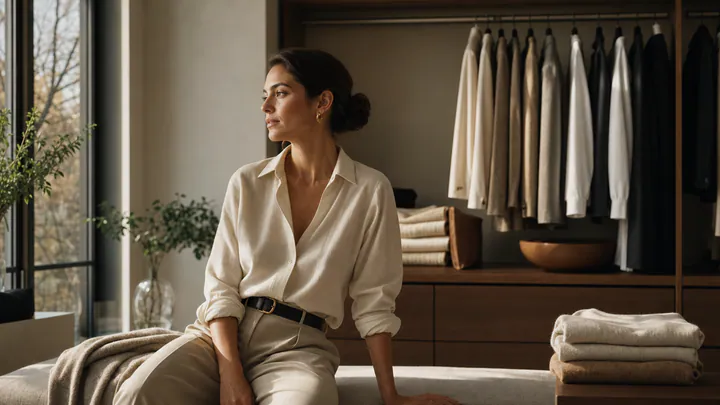
Soft Power Fashion in 2025: Strength in Soft Silhouettes
Soft power fashion is the 2025 answer to shoulder-pad power dressing: fluid fabric, romantic detail, and just enough structure to read as intentional. Here is what it is, how to build it, and where it goes wrong.
Rewritten with AI and republished automatically. Our editors set the standards and fix reported errors — how we work.
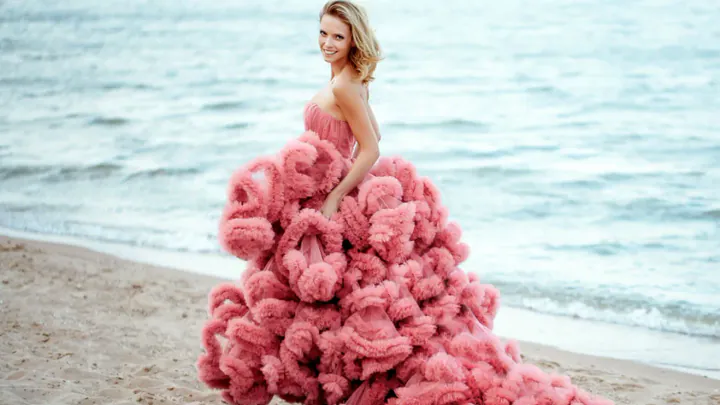
TL;DR: Soft power fashion pairs fluid, traditionally feminine materials with enough structure to read as deliberate. In 2025 it replaced shoulder-pad power dressing as the default way to look authoritative without looking borrowed. The formula is simple: one soft element, one sharp element, excellent fabric. Everything below is how to execute it.
What exactly is soft power fashion?
Soft power fashion is a dressing approach that combines fluid fabrics and romantic detailing with structural precision so the result reads as authoritative rather than decorative. Silk against tailoring. Lace under a clean shoulder line. Pastel in a cut sharp enough to hold its own in a meeting.
The name borrows from the political science term — influence exercised through attraction rather than force. Applied to clothing, it describes an outfit that persuades instead of announcing. The older model of professional dressing asked women to adopt a masculine silhouette as a credibility tax. Soft power dressing removes the tax and keeps the credibility.
Think of it as a two-ingredient recipe. Ingredient one is softness: drape, ornament, a color that is not black or navy. Ingredient two is definition: a waist, a shoulder, a hem that stops on purpose, a shoe with a clear shape. Remove the second ingredient and the look drifts into loungewear. Remove the first and you are back in 1987.
How is it different from quiet luxury, coquette, and classic power dressing?
These four aesthetics get flattened together constantly, but they solve different problems. Quiet luxury signals status through material and restraint. Coquette signals youth through nostalgia. Classic power dressing signals authority through borrowed masculine structure. Soft power fashion signals confidence through deliberate softness.
| Aesthetic | Core signal | Typical silhouette | Where it fails |
|---|---|---|---|
| Soft power | Confidence without armor | Fluid piece + one structured piece | Goes shapeless when both pieces are soft |
| Quiet luxury | Status through material | Unadorned, neutral, precise | Reads as anonymous or cold |
| Coquette / balletcore | Youth and nostalgia | Tulle, ribbon, ballet flats | Reads as costume after 25 in a work setting |
| Classic power dressing | Authority through structure | Broad shoulder, dark suiting | Reads as dated or defensive |
The practical takeaway: you can pull one element from any of the other three, but only one. A tulle skirt with a sharp blazer is soft power. A tulle skirt with a ribbon choker and ballet flats is coquette. If you want the restrained, material-first end of the spectrum instead, our guide to building a timeless quiet luxury wardrobe covers that territory in detail.
Why did this become the dominant look in 2025?
Three forces converged. Workplace dress codes loosened permanently after the hybrid-work era and never fully snapped back. Leadership rhetoric shifted toward collaboration and emotional intelligence, which made armor-style dressing feel tonally off. And a generation that grew up documenting itself online treats an outfit as a statement of identity rather than compliance.
There is also a plain economic factor. Fluid pieces are more versatile per dollar than rigid suiting. A silk-blend slip dress works under a blazer on Tuesday and alone on Saturday. A structured wool suit does one job. When budgets tighten, clothes that cross contexts win, which is the same logic behind the 30-piece capsule wardrobe approach.
What should I buy first if I'm starting from zero?
Start with three pieces, not thirty: one structured outer layer, one fluid bottom, one detailed top. Those three rotate against everything already in your closet and tell you within two weeks whether the aesthetic suits your actual life.
- The structured layer. A blazer with a real shoulder, a trench, or a coat with a defined waist. This is the piece worth spending on and the piece worth tailoring.
- The fluid bottom. A bias-cut midi skirt or wide-leg trousers in a fabric with weight — silk crepe, heavy satin, Tencel twill.
- The detailed top. Lace trim, a pleated bib, a high neck, a subtle ruffle. One detail, not three.
Fabric weight matters more than fiber name. Thin polyester chiffon clings, wrinkles across the lap, and catches overhead light in a way that reads flimsy no matter how good the cut is. A mid-weight fabric that drapes but has body is the entire trick, and it is why the resale market is the smartest place to buy fluid pieces — silk and satin get abandoned constantly by people who never figured out how to style them.
How do I wear this to work without looking underdressed?
Apply one rule: at least one piece in the outfit must have a hard edge. A blazer, a structured bag, a loafer, a belt, a defined shoulder. If nothing in the look has a hard edge, add one before you leave.
Then calibrate ornament to industry. In law, finance, medicine, and government, keep the fluid fabric but put it in conventional cuts and neutral or muted colors — the softness registers as texture rather than decoration. In creative, education, nonprofit, and tech settings, ornament can move to the front: visible lace, a pastel suit, a pleated skirt with sneakers.
A useful diagnostic: photograph the outfit from six feet away before a big day. Soft power reads correctly at conversational distance. If the photo shows an undefined column of fabric, the structure is missing. If it shows five competing details, cut two.
What mistakes flatten the look?
The failure modes are consistent and fixable.
- Soft on soft on soft. A satin blouse, a chiffon skirt, and a knit cardigan is not soft power — it is a robe. One structured element, minimum.
- Buying the color before the cut. Blush and lavender are unforgiving. A poorly cut pastel garment looks cheap in a way that a poorly cut black one does not, because light hits the seams. Judge the cut first, in a mirror, before the color persuades you.
- Ignoring the shoe. This is the most common and most costly mistake. A perfect blazer-and-slip-dress combination collapses under a vague, flimsy sandal. The shoe is often the only structural element in the outfit, so it has to have a defined shape — a loafer, a sharp ballet flat with a firm sole, a block heel, a clean sneaker.
- Treating delicate as low-maintenance. Silk stains from deodorant and sweat, satin water-spots, and lace snags on watch clasps. Budget for dry cleaning or buy washable silk alternatives such as cupro and Tencel, which handle a gentle cycle.
- Skipping denim. Soft power does not have to mean dressed up. A crisp straight-leg jean with a lace-trim blouse and a structured coat is one of the most wearable versions of the whole idea — see our rundown of the denim cuts worth buying now for what pairs cleanly with fluid tops.
A worked example: one outfit, three contexts
Take a navy silk-blend midi slip dress. Alone, it is a dinner dress. Here is how the same garment moves.
- Conservative office: add a fitted charcoal blazer, a fine-knit crew underneath, and leather loafers. The dress becomes a skirt-and-top illusion; nothing reads as eveningwear.
- Creative office: add an oversized cotton poplin shirt worn open, a leather belt at the waist, and white sneakers. The belt supplies the structure.
- Weekend: add a chunky cardigan, a structured cross-body bag, and flat boots. The bag is the hard edge.
Three contexts, one garment, three structural anchors. That is the mechanic underneath the whole aesthetic, and it is why soft power pieces slot neatly into a well-built capsule closet rather than fighting it.
Which designers actually define this look?
A handful of houses have spent years on the vocabulary. Simone Rocha is the clearest reference point, working with tulle, pearl detailing, and volume in ways that are romantic but never weightless. Cecilie Bahnsen built an entire practice around voluminous, textured dresses with architectural construction. Stella McCartney has long combined fluid tailoring with a materials-first, animal-free approach.
You do not need any of them to wear the idea. Their runway work sets the proportions that filter down to the high street within a season or two, which means the useful move is to study their silhouettes and then shop your own budget against those shapes.
Is soft power fashion actually sustainable?
Not inherently — and this is where a lot of writing on the subject overpromises. Softness is an aesthetic, not an ethic. Much of what sells under this banner is polyester satin produced at speed, which is neither durable nor gentle on the environment.
Where the overlap is real: fluid, unfussy pieces genuinely last longer in a rotation than trend-heavy garments, because they are less tied to a specific season. If sustainability matters to you, the honest levers are fiber content, repairability, and buying secondhand — not the marketing language on the tag. Silk, wool, linen, and Tencel age; cheap satin pills and goes.
When does this not apply to you?
If you work in a role with safety requirements, a uniform, a clinical setting, or significant physical labor, most of this advice is irrelevant at work and you should ignore it there without guilt. If your climate runs cold for eight months, fluid summer fabrics are a two-season investment at best — the winter equivalent is fine merino, wool crepe, and soft-shouldered coats.
And if the aesthetic simply is not you, that is a legitimate answer. The genuinely useful idea underneath soft power fashion is not "wear lace." It is that you are allowed to choose the register you present in, rather than inheriting one. Structure without softness works. Softness without ornament works. The choice is the point.
Key takeaways
- Soft power fashion is fluid fabric plus deliberate structure — remove either ingredient and the look fails.
- Enforce the one-hard-edge rule: every outfit needs a blazer, belt, structured bag, or defined shoe.
- Fabric weight beats fiber name. Mid-weight drape with body reads expensive; thin polyester never does.
- Calibrate ornament to your industry — fluid cuts in neutral tones for conservative fields, visible detail elsewhere.
- The aesthetic is not automatically sustainable; judge fiber content and durability, not marketing copy.
- Start with three pieces — structured layer, fluid bottom, detailed top — before committing further.
Frequently asked questions
What is soft power fashion?
Soft power fashion is a dressing approach that pairs fluid, traditionally feminine materials and details — silk, chiffon, lace, pleats, pastels — with enough structure or precision that the overall look reads as deliberate and authoritative rather than merely pretty. The softness is the message; the structure is what keeps it from being dismissed.
How is soft power fashion different from quiet luxury?
Quiet luxury signals status through material quality and the absence of decoration, while soft power fashion signals confidence through decoration that is usually coded as delicate. A quiet luxury outfit could be an unbranded cashmere crewneck and flat-front trousers; a soft power outfit might be a lace-trimmed blouse under a sharply cut blazer. They overlap in fabric quality but differ in intent.
Can you wear soft power fashion in a conservative office?
Yes, if you keep the structure and dial down the ornament. In law, finance, and similar environments, the workable version is a fluid fabric in a conventional cut — silk-blend trousers, a bias skirt in a neutral, a high-neck blouse — worn under real tailoring. Save the ruffles, sheer panels, and pastel head-to-toe looks for less formal settings.
What fabrics work best for soft power dressing?
Silk crepe, heavy satin, wool crepe, Tencel, cupro, and cotton poplin all hold a shape while still moving. Avoid thin polyester chiffon and cheap satin, which cling, wrinkle, and catch light in ways that read flimsy. Weight matters more than fiber name: a drapey fabric with body is the whole trick.
Is soft power fashion just a rebrand of coquette or balletcore?
No. Coquette and balletcore are youth-coded aesthetics built around ribbons, tulle, and nostalgia. Soft power fashion borrows some of the same vocabulary but aims it at adult professional and social contexts, which is why structure, proportion, and fabric quality do more work in it than novelty.
How much does it cost to start?
You can start with three pieces — a well-cut blazer or structured coat, one fluid bottom, and one detailed blouse — and rotate them against what you already own. The blazer is the piece worth spending on and tailoring; the fluid pieces can come from resale, where silk and satin turn up constantly because they are hard to style and get abandoned.
Does soft power dressing work for every body and every age?
The aesthetic is adaptable, but the standard styling advice is not. Volume placement, hem length, and fabric weight need adjusting for height, bust, and shape, and anyone in a manual, clinical, or uniformed job simply cannot wear silk to work. The underlying principle — softness plus structure — travels further than any specific outfit formula.