Tailoring in 2026: What to Alter, Skip, and Pay For
A practical guide to clothing alterations in 2026: which fixes transform a garment, which ones a tailor can't do, typical US price ranges, and how to decide whether a piece is worth the trip.

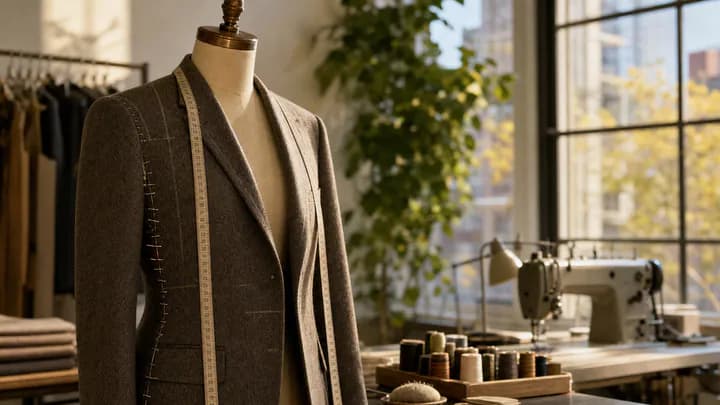
TL;DR: Alterations are the cheapest upgrade in fashion. Pay for hems, waist take-ins, sleeve length, and tapering — the four fixes that change how a garment reads. Skip shoulder reshaping, major let-outs, and anything costing more than roughly a third of what you paid. Budget $15–$45 for common jobs, and always bring your real shoes.
Clothing alterations are the modifications a tailor makes to a finished, ready-to-wear garment so it matches one specific body rather than a sizing average. It is the one step most people skip, and it is also the single reason some closets look expensive while others — full of the same brands — look borrowed.
Our team has spent enough time at alteration counters to notice a pattern: people either over-alter cheap clothes or under-alter good ones. This guide is about getting that judgment right.
Which alterations actually change how an outfit looks?
Four fixes deliver most of the visible payoff: hem length, waist take-in, sleeve length, and leg or body tapering. Each one adjusts where a garment breaks against your body, and those break points are exactly what the eye reads as "fits" or "doesn't."
- Hem length. On trousers, a half-inch changes the silhouette more than a full size does. Too long reads sloppy; a clean break reads deliberate.
- Waist take-in. Most trousers and skirts are cut for a straighter waist-to-hip ratio than many people have. A center-back take-in removes the gap without touching the fit through the seat.
- Sleeve length. A jacket sleeve should let about a quarter to half inch of shirt cuff show. This is the tell that separates a tailored blazer from a rented one.
- Tapering. Narrowing a trouser leg or a shirt body converts a boxy garment into a modern one without redesigning it.
Notice what is not on that list: shoulders, rise, and anything structural. Those are where alteration stops being an upgrade and starts being a rebuild.
What about a shirt that balloons at the waist?
Ask for darts or a side-seam take-in, not both at once. Side seams preserve the shirt's original lines and are easily reversed; darts pull in more fabric but create visible vertical lines down the back. For a crisp poplin, side seams look cleaner. For a heavier oxford that needs serious shaping, darts do more work.
How much do clothing alterations cost in 2026?
Expect roughly $15 to $45 for routine work and $60 to $200 for structural jobs at an independent tailor in a US metro area. Prices vary widely by city, shop, and fabric — a dry cleaner's alteration counter in a small town will sit well under these figures, and a bespoke atelier well above.
| Job | Typical range | Worth it? |
|---|---|---|
| Hem plain trousers | $15–$30 | Almost always |
| Hem jeans, original hem preserved | $25–$45 | Yes for quality denim |
| Taper trouser legs | $25–$50 | High impact, low risk |
| Take in waistband (center back) | $20–$40 | Almost always |
| Shorten shirt sleeves | $20–$35 | Yes if placket is simple |
| Shorten blazer sleeves (from cuff) | $30–$60 | Yes |
| Shorten blazer sleeves (from shoulder) | $70–$120 | Only on a valuable jacket |
| Take in blazer side seams | $40–$75 | Yes |
| Hem a lined dress or skirt | $30–$60 | Usually |
| Replace a coat or dress zipper | $35–$80 | Yes — cheaper than replacing the coat |
| Reline a jacket or coat | $120–$250 | Only for outerwear you love |
| Reshape shoulders | $100–$250+ | Rarely |
One honest caveat: these are the ranges we see quoted most often, not a survey. Call two shops before committing to anything above $75. The spread between a neighborhood tailor and a boutique can be double for identical work.
What can a tailor not fix?
A tailor can remove fabric far more easily than add it. That single constraint explains almost every limitation you will run into.
- Letting out beyond the seam allowance. Most mass-market garments leave roughly half an inch of allowance per seam, sometimes less, and serged edges eat into even that. Realistically you can gain an inch total on a good garment and nothing on a fast-fashion one.
- Shoulder width on a structured jacket. Possible, expensive, and often disappointing. Buy for shoulders and chest; alter the rest.
- Rise on trousers. Raising or lowering the rise means rebuilding the crotch seam, pockets, and fly. It is rarely worth the price.
- Lengthening hems that were cut off. If the excess fabric was trimmed rather than folded, it is gone. Ask the tailor to retain the cut fabric if you think you may want length later.
- Stretch knits and technical fabrics. Many jerseys, ribbed knits, and bonded athletic fabrics don't take a conventional seam well. Some shops decline them entirely.
- Pleated, printed, or engineered panels. Taking in a garment with a placed print or a pleat pattern distorts the design, even when the seam itself is clean.
How do I decide whether a piece is worth altering?
Use a simple threshold: if the alteration costs more than about a third of what you paid, and the garment isn't sentimental or exceptional, let it go. Then apply three quick checks.
- Count the problems. One or two off measurements is a tailoring job. Three or more means the garment was cut for a different body — buy something else.
- Check the fabric. Hold it to the light. If you see the weave clearly on a supposedly opaque piece, or the seams already pucker, the fabric won't hold a new seam well.
- Check the shoulders and chest first. If those land correctly, everything else is negotiable. If they don't, nothing else matters.
This is also why alterations pair so naturally with a small, deliberate closet. If you're building a 30-piece capsule wardrobe with high outfit turnover, each garment earns dozens of wears a year — which makes a $30 hem one of the best cost-per-wear investments available.
The second-hand exception
Thrifted and resale garments flip the math. A $40 wool blazer from a serious label with $60 of alterations outperforms a $250 new jacket in fabric quality nearly every time, because older ready-to-wear was frequently cut with deeper seam allowances. When you shop secondhand, buy one size up on purpose and plan to take it in — the reverse never works.
How should I brief a tailor so the result is right?
Show up wearing the exact shoes, undergarments, and belt you'll wear with the piece, and describe the outcome you want rather than the technique. Tailors are better at choosing methods than customers are; they are not mind readers about intent.
- Say "I want the hem to just touch the top of the shoe with a slight break," not "take off an inch and a half."
- Bring a photo of the fit you're after if you can. Vocabulary varies between shops; images don't.
- Stand naturally. Sucking in your stomach at a fitting guarantees a waistband you can't sit down in.
- Ask what is reversible. A good tailor will tell you plainly whether they're cutting or folding.
- Get the price and pickup date written on the ticket. Verbal quotes drift.
Jeans: original hem or standard hem?
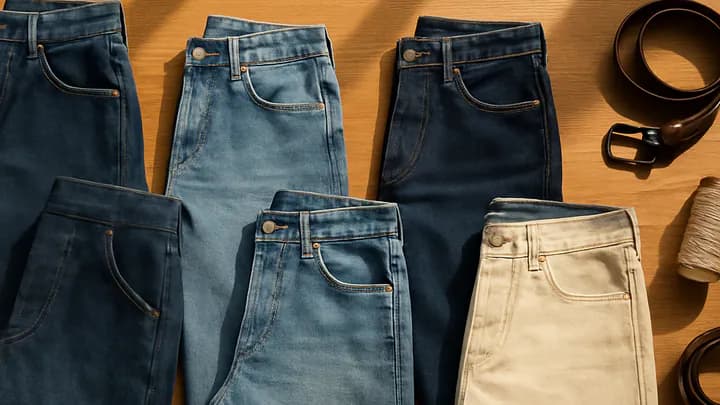
Choose the original hem when the denim has visible fading or a contrast stitch you want to keep, and a standard hem when you're removing more than about two inches. The original-hem method cuts fabric from above the hem and reattaches the authentic edge, so it preserves the look — but on a long shortening it bunches the leg's taper unnaturally. On raw or dark denim with no fading, a standard hem is cleaner and cheaper.
What are the most common and costly tailoring mistakes?
The expensive errors are almost all sequencing errors — doing things in the wrong order, or at the wrong time.
- Altering before washing. Have the garment cleaned first. Cotton, linen, and denim shrink, and a perfect hem becomes an ankle-grazer after one hot cycle.
- Booking formalwear late. Alteration shops jam up from spring through early fall. Bring wedding, graduation, and gala pieces in a month ahead, not a week.
- Altering a piece you don't love. Money spent on fit does not create affection. If you've owned it a year and reached for it twice, the problem isn't the fit.
- Taking in everything at once. Do the hem, wear it a few times, then decide on tapering. Fit preferences shift once a garment is actually in rotation.
- Assuming a dry cleaner's counter equals a tailor. Many are excellent; some subcontract to a machine operator who only does hems. Ask who does the work and what they handle in-house.
When is tailoring smarter than buying new?
Tailoring wins whenever the fabric and construction are better than what your budget buys new — which is most of the time above the fast-fashion tier. It's the mechanism behind the understated look people chase in quiet luxury dressing: not logos, not price tags, just garments that sit correctly on the body.
Buying new wins when a garment is structurally wrong, when the fabric is already failing, or when you'd need three separate fixes. And there's a third path worth naming: buying less, better. A closet of twelve well-fitted pieces beats forty ill-fitting ones, which is the core argument behind building a closet you actually wear.
Key takeaways
- Four alterations do most of the work: hem, waist take-in, sleeve length, and taper. Prioritize them.
- Budget $15–$45 for routine jobs and confirm quotes above $75 with a second shop.
- Taking in is easy; letting out is limited by seam allowance, usually under an inch total.
- Buy for shoulders and chest — those are the measurements a tailor can't economically fix.
- Wash before altering, bring the real shoes, and book formalwear a month ahead.
- Skip any alteration costing more than roughly a third of the garment's price unless you genuinely love the piece.
Editorial note: the prices in this article are general estimates drawn from typical US alteration pricing and will vary by city, shop, fabric, and garment complexity. Always request a written quote before authorizing work.
Frequently asked questions
How much does it cost to hem a pair of pants in 2026?
A plain hem on trousers typically runs about $15 to $30 in most US markets, while jeans hemmed with the original stitched edge preserved usually cost $25 to $45 because the work is fiddlier. Lined or cuffed hems and designer trousers sit at the higher end.
Can a tailor make a jacket smaller in the shoulders?
Technically yes, but almost no one should pay for it. Reshaping a shoulder means detaching the sleeve, the lining, and often the canvas, so the labor commonly exceeds the value of the jacket — buy the size that fits your shoulders and alter everything else.
Is it cheaper to alter clothes or just buy the right size?
Altering is cheaper when the garment is good quality and only one or two measurements are off; buying new is cheaper when the fabric is thin, the piece was inexpensive, or three or more areas need work. A useful rule is to skip alterations costing more than about a third of what you paid.
How much can a garment be let out?
Only as far as the seam allowance permits, which on most mass-market clothing is roughly half an inch per seam — often less. Taking a garment in is nearly always possible; letting it out beyond an inch total usually is not.
What should I bring to a fitting appointment?
Bring the shoes you will actually wear with the garment, the undergarments you plan to wear, and a belt if the piece takes one. Hem length and waist fit both change measurably without them, and a rushed barefoot fitting is the most common cause of a bad result.
How long do alterations usually take?
Standard hems and simple take-ins are often ready in three to seven days, while suits, formalwear, and relining can take two to three weeks. Book formal pieces at least a month out, since alteration shops get heavily backed up around wedding and graduation season.