Affordable Makeup Under $25 That Actually Works in 2026
Budget makeup stopped being a compromise years ago. Here is what to buy under $25, where cheap formulas still fall short, how to shade-match without a tester, and what a complete starter kit should actually cost.
Rewritten with AI and republished automatically. Our editors set the standards and fix reported errors — how we work.
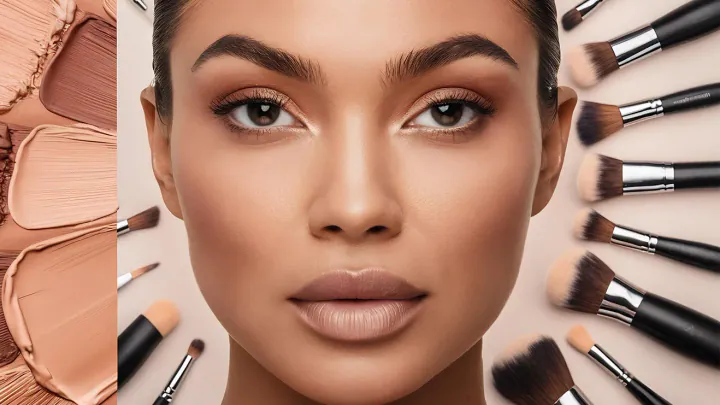
TL;DR: Under $25 buys real performance in 2026 — especially in blush, brow, mascara and lip, where formulation is cheap to do well. The gap with prestige survives in complexion shade ranges and sensitive-skin formulas. A complete starter kit costs roughly $85, and tools matter more than price.
Affordable makeup is cosmetics priced under about $25 per item, sold mainly through drugstore chains and direct-to-consumer indie brands, that delivers pigment, wear time and finish comparable to prestige products costing three to five times more. That definition used to need an asterisk. It doesn't anymore — but it does need nuance, because "cheap makeup is just as good" is only true in some categories, and knowing which ones is how you stop wasting money.
Can makeup under $25 really perform like prestige makeup?
In color categories, yes. In complexion categories, mostly. Pigment, binders and the manufacturing to suspend them evenly are not expensive at scale, which is why a $9 cream blush can genuinely sit alongside a $38 one. What money still buys is shade breadth, long-wear polymer technology, refined texture, fragrance-free formulation and packaging that doesn't crack.
The useful mental model is this: save on anything that is mostly pigment, spend up on anything that has to survive eight hours on skin or near the eye. A budget eyeshadow that isn't perfect costs you five extra seconds of blending. A budget foundation that isn't right costs you your entire face by 2 p.m.
Which affordable base products actually hold up all day?
Two do the heavy lifting. L'Oréal Infallible 24HR Fresh Wear Foundation (usually around $15) is the drugstore's most credible long-wear base: medium-to-full coverage, a natural-satin finish, and one of the wider shade offerings at this price. It resists humidity and sweat better than most, which matters more than coverage claims.
For concealer, e.l.f. Hydrating Camo Concealer (around $7) is the outlier of the category. It's creamy enough for dry or textured under-eyes but still covers in one thin layer, so a tube lasts a long time. Use a rice-grain amount; over-applying is what makes budget concealer crease, not the formula.
One honest caveat: if your skin is very dry, reactive, or you're mid-flare with a compromised barrier, no foundation will fix what's underneath. Sort the skin first — our guide to skin barrier repair covers what actually calms things down, and skin cycling is a sane way to use actives without over-stripping.
What are the best budget picks for cheeks, eyes, brows and lips?
These are the categories where the price gap has effectively closed.
- Cream blush — Milani Cheek Kiss (around $9). Blendable, buildable, and it works on the lips too, which makes it a two-product item in a small kit.
- Eyeshadow — ColourPop 9-pan palettes (around $14). Pressed pigment quality that genuinely competes above its price; the small format also means you finish a palette instead of hoarding twelve.
- Mascara — Maybelline Lash Sensational Sky High (around $13). A flexible brush and lengthening formula that lifts without the clumping that used to define drugstore mascara.
- Brows — NYX Micro Brow Pencil (around $11). The ultra-fine tip lets you draw hair-like strokes instead of blocks; the spoolie end softens everything.
- Brow gel — e.l.f. Brow Lift (around $6). A clear fluffy-brow gel that does most of what a salon lamination promises, for one afternoon at a time.
- Lips — Revlon Super Lustrous Lipstick (around $10) for comfortable, non-feathering classic color; NYX Butter Gloss (around $6) for shine that isn't sticky.
Prices drift with retailer and region, so treat these as ballpark figures rather than fixed tags.
Where should I save and where should I spend more?
Use this as a decision rule rather than a brand preference. The question isn't "is the expensive one better?" — it's "does the difference show up on my face after six hours?"
| Category | Budget verdict | What extra money buys | Our call |
|---|---|---|---|
| Eyeshadow | Excellent | Slightly finer talc-free milling, fancier packaging | Save |
| Lipstick & gloss | Excellent | Scent, bullet weight, refillable cases | Save |
| Cream blush | Excellent | Marginally longer wear on oily skin | Save |
| Mascara | Very good | Almost nothing — a classic case of price not correlating | Save |
| Concealer | Very good | Shade range for deep and neutral undertones | Save, unless your shade is missing |
| Foundation | Good | Shade breadth, oxidation control, skin-like texture | Mid-range if you can |
| Brushes & sponges | Mixed | Density, shedding, lifespan measured in years | Spend once |
What's the most expensive mistake people make with cheap makeup?
Buying foundation in the wrong shade, then buying a second product to correct it. That's the loop: a slightly-too-warm base gets covered with powder, then bronzer to "balance" it, then a brightening concealer to undo the mud. The $12 mistake becomes a $40 mistake.
Three rules stop it:
- Swatch on the jawline, in daylight. Your wrist is a different color from your face, and store lighting is engineered to flatter.
- Wait 15 minutes. Many inexpensive foundations oxidize as they dry down and shift a half-step warmer. Judge the set color, not the wet one.
- If you're between shades, go lighter. Lighter can be warmed with blush and bronzer. Too dark can only be removed.
The second-most expensive mistake is the hoard. Twelve palettes at $14 is $168 of product that will expire before it's used. Budget pricing removes the friction that used to stop over-buying — which is exactly why a simple category-by-category spending plan works surprisingly well for beauty.
How do I make a $12 foundation look like a $50 one?
Tools and skin prep, in that order. A damp makeup sponge and a dense synthetic buffing brush change the finish of inexpensive base products more than any formula upgrade at the same cost. Tools are reusable for years, so the cost per use falls toward zero.
Then the technique details that actually matter:
- Apply base in two sheer layers rather than one thick one. Thin layers flex with the face; thick ones crack.
- Give moisturizer three to five minutes to absorb before foundation. Applying over wet skincare is the single most common cause of pilling.
- Powder only where you shine — usually the T-zone and under-eye — not the whole face.
- Wash sponges after every few uses. A dirty sponge makes good makeup look bad and can cause breakouts.
If your base looks patchy no matter what, the issue is usually flaking rather than foundation. An overnight occlusive step — the approach we cover in our guide to slugging — often fixes it in a couple of nights.
How long does budget makeup last before it should be thrown out?
The same as expensive makeup — price has nothing to do with it, formulation and exposure do. Check the small open-jar symbol printed on the packaging; the number inside is the manufacturer's period-after-opening in months.
| Product | Replace after | Why |
|---|---|---|
| Mascara, liquid liner | ~3 months | Pumping air into a wet tube near the eye |
| Liquid foundation, concealer | 6–12 months | Water-based formulas support microbial growth |
| Cream blush, lipstick | ~12 months | Oils and waxes eventually turn |
| Powder shadow, blush, bronzer | 1–2 years | Anhydrous, but brushes deposit skin oils |
| Pencils | 1–2 years | Sharpening exposes a fresh, clean surface |
Eye products deserve genuine caution. If you experience persistent irritation, redness or any eye infection, stop using the product and consult a qualified professional — an optometrist or dermatologist — rather than trying a different mascara.
What does a complete kit under $25 per item actually cost?
Around $85 to $95 for everything: foundation ($15), concealer ($7), cream blush ($9), brow pencil ($11), brow gel ($6), mascara ($13), lipstick ($10), gloss ($6), plus a sponge and one good brush (roughly $15 together). Spread over the six to twelve months most of it lasts, the running cost is a few dollars a month.
If $85 at once is too much, buy in this order: concealer, mascara, cream blush, brow pencil. That's about $40 and covers a complete five-minute face. Foundation is the least urgent purchase and the easiest to get wrong, so it belongs last, not first.
When does "just buy the cheap one" stop being good advice?
Three honest exceptions. First, deep and neutral-undertone complexion shades — budget ranges still thin out at the ends, and a compromised shade match is worse than a more expensive correct one. Second, fragrance-sensitive or reactive skin: mid-range and clinical lines are more consistently fragrance-free and patch-test friendly. Third, anything that has to survive a full working day in heat, where long-wear polymers genuinely cost money to license.
Outside those three cases, paying more mostly buys you a nicer cap. And makeup is the last step anyway — a comfortable base starts with skin and hair that aren't fighting you, which is why we'd point anyone frustrated with their foundation toward scalp and hair care basics and a consistent skincare routine before another shopping trip.
Key takeaways
- Save on pigment-led products — eyeshadow, blush, lipstick, gloss, mascara. The price gap there has effectively closed.
- Spend up only if your complexion shade is missing from budget ranges, your skin is fragrance-reactive, or you need all-day wear in heat.
- Shade-match on the jawline in daylight and wait 15 minutes for oxidation before judging.
- A $15 sponge-and-brush upgrade improves a cheap foundation more than $40 of extra foundation would.
- Replace mascara around three months and liquid base within a year, whatever it cost.
- A full, genuinely wearable kit lands near $85 — and the first four items you need total about $40.
Frequently asked questions
Is drugstore makeup as good as high-end makeup?
In color categories — eyeshadow, blush, lipstick, gloss — drugstore makeup is now genuinely competitive, because pigment and binders are cheap to do well. The gap survives mostly in shade range, long-wear complexion technology, texture refinement and fragrance-free formulation for sensitive skin. A $9 cream blush can match a $38 one; a $12 foundation in six shades cannot match a $50 one in fifty.
What should I buy first if I'm building a makeup kit from scratch?
Buy in this order: concealer, mascara, a cream blush, and a brow pencil. Those four cover the face in under five minutes and cost roughly $35 combined. Foundation should come later, once you know your undertone, because it is the single easiest product to buy wrong.
How do I match foundation shade without a tester?
Swatch on your jawline in daylight, not on your wrist or hand, and wait 15 minutes before judging. Many budget foundations oxidize and pull warmer as they set, so a shade that looks perfect immediately can look orange by lunch. If you're buying online, order the shade you think is right plus one lighter.
When should I throw out makeup?
Mascara and liquid liner go after about three months once opened, liquid foundation and concealer at six to twelve months, and powders and pencils at one to two years. Check the small open-jar symbol on the packaging for the manufacturer's number. If anything smells sour, separates permanently or stings, discard it regardless of date.
Are expensive brushes worth it if my makeup is cheap?
Yes, and this is the highest-return upgrade in a budget kit. A dense synthetic buffing brush and a damp makeup sponge do more for how a $12 foundation looks than spending $40 more on the foundation itself. Tools are reusable for years, so the cost per use approaches nothing.
Does cheap makeup break you out?
Price is not what causes breakouts — specific ingredients are, most often heavy occlusive waxes, certain silicone-oil blends, fragrance and old, contaminated product. Budget lines are actually more likely to disclose full ingredient lists in a searchable format. If you have persistent reactions, patch-test on your inner arm and consult a dermatologist rather than swapping brands blindly.
How much should a full makeup kit cost?
A complete, genuinely wearable kit — base, concealer, blush, brow, mascara, lip, plus tools — lands around $80 to $95 if you buy the picks in this article. Spread across the six to twelve months these products last, that is a few dollars a month.