Small Space Solutions: Make Any Home Feel Twice as Big
Small homes don't need renovation — they need better decisions. Here are the furniture, storage, lighting, and layout moves that make a compact space feel open, plus the common mistakes that quietly shrink a room.
Rewritten with AI and republished automatically. Our editors set the standards and fix reported errors — how we work.
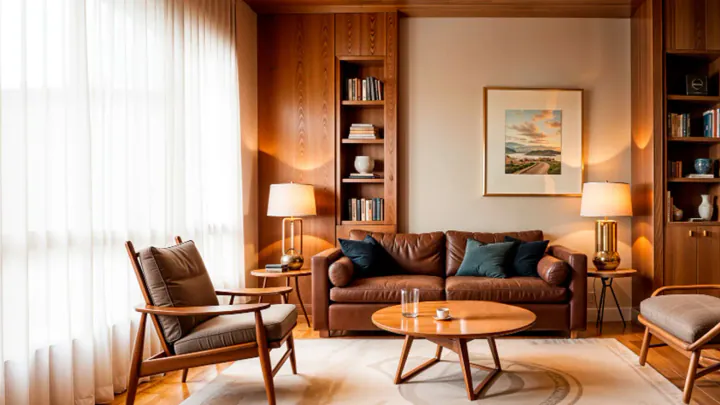
TL;DR: Small spaces feel bigger when you protect floor area, make each piece of furniture do two jobs, and move storage up the walls. Edit your belongings before you buy bins, keep walkways at 30 to 36 inches, and use one continuous color. Layout beats square footage almost every time.
What exactly counts as a "small space solution"?
A small space solution is any design, storage, or layout decision that increases the usable function of a room without increasing its square footage. That definition matters, because it rules out a lot of what gets sold as small-space shopping. A stack of matching bins is not a solution if it sits on the floor of a room that was already short on floor.
Think of it as a trade: every item in a compact home occupies footprint, sightline, or both. The best solutions reduce one without increasing the other — a bed with drawers underneath replaces a dresser's entire footprint, while a floating shelf adds storage that costs no floor at all.
Which furniture actually earns its footprint in a small home?
Pieces that serve two functions, or that give back the floor they borrow. Storage ottomans, lift-top coffee tables, sofa beds, drop-leaf or wall-mounted desks, nesting tables, and platform beds with drawers all qualify. A daybed with a trundle handles seating and guests in the space of one sofa.
Before you buy anything, measure three numbers: the piece's footprint, the clearance it needs to open, and the walkway it leaves behind. A sofa bed that needs 40 inches of pull-out space in a room with 34 inches is a piece you will stop unfolding within a month.
Two visual rules that cost nothing:
- Legs beat skirts. Furniture raised on visible legs lets the eye follow the floor underneath, which reads as more room. Solid-to-the-floor sofas and beds block that sightline.
- Fewer, larger pieces win. One generous armchair looks calmer than two small ones. Multiple undersized items create more edges, and edges are what the eye reads as clutter.
The honest exception: if you move frequently or share a lease, expensive built-in-style furniture is a poor fit. Modular, flat-packable pieces travel; custom banquettes do not.
How do I use vertical space without making the room feel smaller?
Go tall and narrow rather than wide and deep, and keep the busiest storage above eye level or below knee level. A 12-inch-deep shelf running high along a wall stores books and baskets while leaving the room's mid-zone — the band your eye scans first — visually clear.
Practical placements that consistently work: a shelf above a doorframe, a narrow bookcase in the dead corner beside a window, wall-mounted rails in the kitchen, a pegboard above a desk, and hooks on the inside of closet doors.
Two cautions. First, anchor anything tall to a stud with an anti-tip bracket — this is a safety issue, not a nicety. Second, open shelving displays everything you own, so it only feels spacious if what sits on it is tidy. If your kitchen runs busy, closed doors will calm the room more than open shelves ever will.
Which storage upgrades give the most space for the least money?
Vertical and door-mounted storage deliver the best return per dollar because they use surfaces you are already paying rent on. Here is how the common options compare.
| Option | Typical cost | Effort | Renter-friendly? | Best for |
|---|---|---|---|---|
| Over-the-door organizer | Low | Minutes | Yes, with padded hooks | Shoes, cleaning supplies, toiletries |
| Under-bed rolling boxes | Low | Minutes | Yes | Off-season clothing, linens, luggage |
| Floating shelves | Low to medium | An hour, tools needed | Yes, patchable holes | Books, plants, kitchen jars |
| Rolling cart | Low to medium | Assembly only | Yes | Bathroom overflow, craft supplies, bar |
| Tall open bookcase | Medium | Assembly plus anchoring | Yes, must be anchored | Storage that also divides a room |
| Built-in bench or window seat | High | Days or a contractor | No | Owners staying put long term |
One edge case worth checking before you order: over-the-door organizers need clearance between the door and the frame. Many interior doors have less than an inch, and a bulky rack will stop the door latching entirely. Measure at the top of the door, not the middle.
What should I get rid of, and how do I decide fast?
Use a one-question rule and move quickly: if this item vanished tonight, would I replace it this week? If the answer is no, it is taking up space it has not earned. This works faster than the twelve-month test because it forces a decision instead of a maybe.
Then hold the line with one-in, one-out on the categories that expand fastest — clothing, mugs, tote bags, cables, and books. A capsule approach is especially effective in homes with a single closet; a smaller, well-chosen rotation can actually widen your outfit options rather than narrowing them.
Where compression storage helps and where it hurts: vacuum bags are excellent for cotton bedding and synthetic puffers over one season. They are poor for down, wool, and cashmere, whose loft does not fully recover after months under pressure, and risky in damp basements where trapped moisture sits against fabric.
How do I split one room into two zones without building a wall?
Use partial dividers that stop short of the ceiling so light and air keep moving. An open-backed bookcase, a ceiling-track curtain, a folding screen, or simply a rug that defines the sleeping area will all read as separation without boxing in the room.
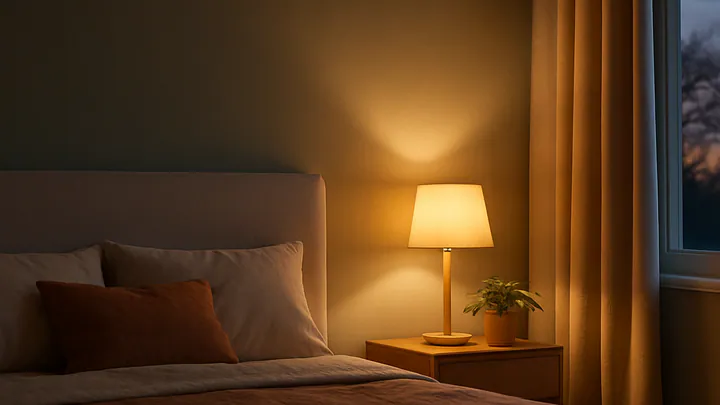
Lighting divides space as effectively as objects. A warm floor lamp beside the bed and brighter task lighting over the desk tell your brain these are two rooms, even though the floor never changes. Keep bulbs in the 2700K to 3000K range for living zones and go cooler only for task areas.
The mistake to avoid: a solid, full-height divider in a studio with one window. You gain privacy and lose the light that made the space livable. If you need true separation for sleep, a curtain you can draw at night and open by day is the better compromise.
What color and lighting choices make a small room feel larger?
Continuity beats brightness. One color carried across walls, trim, and doors removes the visual breaks that chop a room into pieces, which is why a single soft white, warm greige, or even a deep saturated shade can all make a room feel larger — while three competing colors will not.
Then work the light:
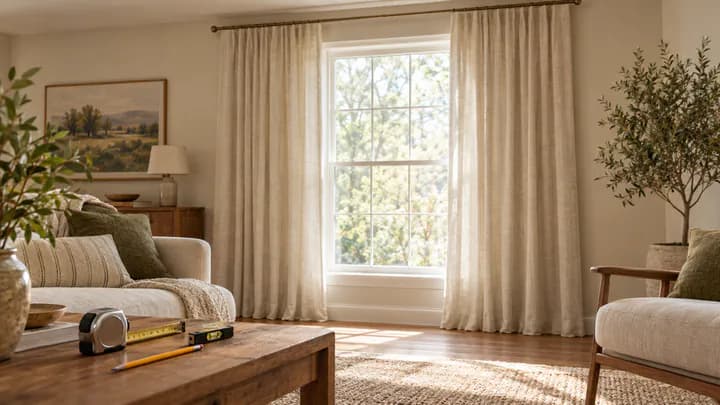
- Hang curtain rods close to the ceiling and wide of the window frame so the glass is never blocked.
- Place a large mirror where it reflects a window or a lamp, not a blank wall or a cluttered counter.
- Choose wall sconces, clip lights, or slim floor lamps over wide-based table lamps that consume surface area.
- Add LED strips under kitchen cabinets — lighting the back of a counter makes the room read deeper.
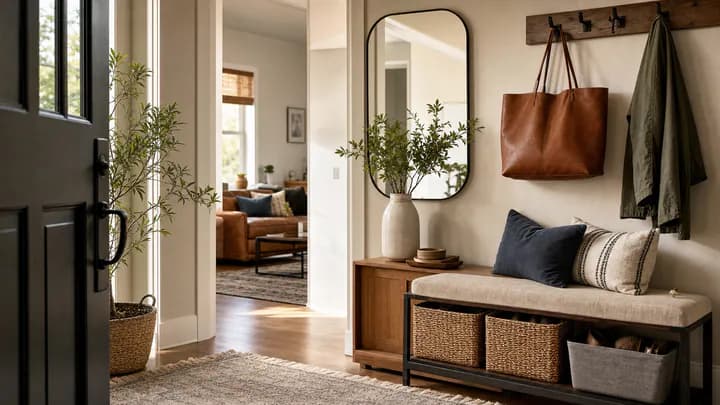
Entry zones deserve special attention because they set the tone for everything behind them. Our breakdown of making the first three feet of your home work covers hooks, landing surfaces, and shoe storage in corridors too narrow for furniture, and there are more layout options in our guide to small entryways that work hard.
What are the most common and costly small-space mistakes?
Three errors undo more square footage than any of the fixes above can recover.
- Buying containers before editing. Bins bought first get filled, and then you own both the clutter and the bins. Edit, measure the survivors, then buy to fit the shelf.
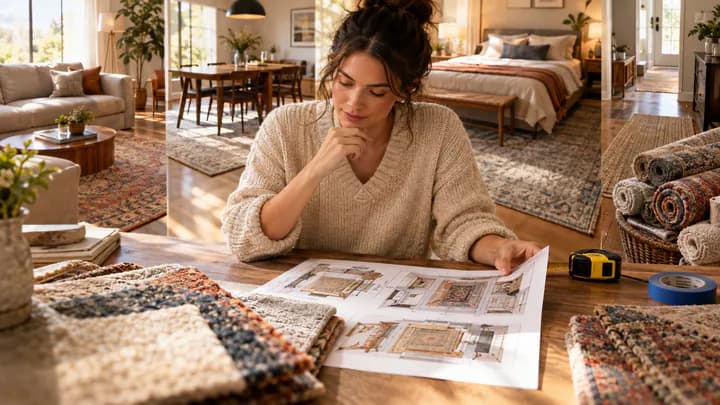
- Choosing furniture from a photo instead of a tape measure. Online listings flatter proportions. Tape the footprint onto your floor and live with it for two days before ordering.
- Pushing everything against the walls. It feels logical but creates a ring of furniture around an awkward empty middle. Floating a sofa a few inches off the wall, or angling a chair, often makes a room feel more deliberate and larger.
A fourth, quieter one: spending on storage furniture without a plan. If a small home needs several purchases, spreading them over months with a dedicated savings pot is far less stressful than one large bill. That is general budgeting guidance, not financial advice.
What does this look like in a real studio?
Take a roughly 380-square-foot studio with one window and a single closet. A workable sequence: platform bed with drawers along the wall farthest from the door, replacing the dresser entirely. An open-backed bookcase perpendicular to the bed, anchored to the wall, creating a sleeping nook. A drop-leaf table by the window that seats one for work and two for dinner. A rolling cart in the kitchen gap beside the fridge. Hooks and a narrow shelf inside the entry door.
Net result: one large furniture item removed, roughly 6 square feet of floor reclaimed, and two defined zones — with no construction and nothing that cannot be undone at move-out. The bedroom half in particular benefits from the calm-first approach in our bedroom refresh guide, since a sleeping area inside a shared room has to look restful even when the rest of the space is working.
When do these small space solutions not apply?
They apply less cleanly in three situations. In homes with ceilings under about eight feet, tall shelving can feel oppressive rather than efficient — keep storage low and wide instead. In strict rentals that prohibit drilling, adhesive hooks cap out at modest weights and will fail with a shelf of books, so lean toward freestanding pieces. And in shared households, any system that requires one person's discipline to function will collapse; choose storage with obvious, labeled homes that anyone can use correctly.
Key takeaways
- Protect the floor first — walkways of 30 to 36 inches matter more than any storage product.
- Every piece of furniture in a small home should do two jobs or give back the space it takes.
- Edit before you buy containers; bins bought first simply preserve the clutter you already have.
- Move storage up the walls and behind doors, anchor anything tall, and check door clearance before ordering.
- One continuous wall color and well-placed light do more for perceived size than a specific paint shade.
- Divide studios with partial, light-permeable dividers so a gain in privacy is not a loss of daylight.
Frequently asked questions
What makes a small room look bigger without renovating?
Clear sightlines do most of the work: keep floor and walkway space open, choose furniture with visible legs, hang curtains near the ceiling, and place a mirror where it reflects a window rather than a wall. Light paint helps, but an uncluttered floor helps more.
How much walkway space do I need in a small apartment?
Leave about 30 to 36 inches for main walking paths and roughly 36 inches behind dining chairs so they can pull out. If a piece of furniture forces you below 30 inches in a main path, it is too big for the room regardless of how much storage it offers.
Are over-the-door organizers safe for rental doors?
They are usually fine on standard hollow-core interior doors, but check clearance first — many doors sit within about an inch of the frame, and a bulky organizer will stop the door from latching. Padded hooks and periodic tightening prevent the paint scuffs that cost renters part of a deposit.
Should I declutter before buying storage bins?
Yes, always. Buying containers first locks in the volume of stuff you already own and usually adds bulky plastic to a room that is short on space. Edit first, measure the remaining items, then buy containers sized to the shelf or drawer they will live in.
Do vacuum-sealed bags damage clothing?
They can. Long-term compression crushes the loft of down, wool, and cashmere, and a bag stored in a humid space can trap moisture against fabric. Use them for cotton and synthetics over a single season, and store natural fibers loosely in breathable cotton bags instead.
How do I divide a studio apartment into zones?
Use an open-backed shelf, a ceiling-track curtain, or a rug plus a change in lighting. A partial divider that stops short of the ceiling keeps light and airflow moving, which matters more in a studio than full visual separation.
Is dark paint always wrong in a small room?
No. A deep, saturated color can blur the corners of a small room and make the walls feel like they recede, especially in a windowless space you only use at night. The rule that matters is consistency — one color wrapping walls and trim reads as larger than three competing colors.
Do I need to anchor tall shelving in a rental?
Yes. Tall bookcases and wall cabinets should be secured to studs with an anti-tip strap or bracket, which is especially important in homes with children or pets. The small screw holes are a normal, patchable wall repair and far less costly than a tipped unit.