Bubble Skirts: How to Wear the Puffed-Hem Skirt Trend
The bubble skirt is back, but the difference between a great one and a costume is all in the construction. Here is how the puffed hem is built, which fabrics hold their shape, what length suits your proportions, and the mistakes that flatten it.
Rewritten with AI and republished automatically. Our editors set the standards and fix reported errors — how we work.
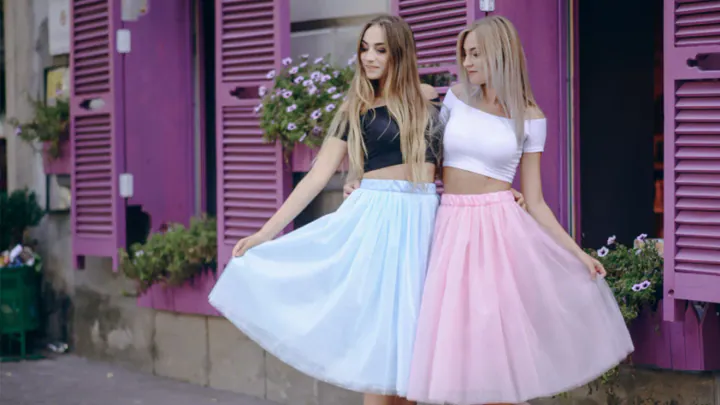
TL;DR: A bubble skirt gets its puff from an outer layer gathered onto a shorter lining at the hem. Choose a length that ends at a narrow point on your leg, pair it with a fitted or tucked top, and buy for understructure — a limp lining collapses the shape within one wear.
What exactly is a bubble skirt, and how is it constructed?
A bubble skirt is a skirt in which the outer fabric is gathered and stitched to a shorter inner lining at the hem, forcing the hem to curl under and the fabric to balloon outward in between. That single construction detail is the whole trend. Everything else — fabric, length, color — is variation on it.
Three parts do the work. The outer shell supplies the volume and needs enough body to hold air. The inner lining or hem facing is deliberately cut shorter, usually by several inches, and is what pulls the hem inward. The waist treatment — gathers, pleats, or a smooth yoke — controls whether the puff starts at the hip or right at the waistline.
Names overlap and it helps to know the differences: a balloon or puffball skirt is essentially the same thing in vintage vocabulary; a pouf usually means the dramatic 1980s couture version; a tulip skirt wraps and tapers without a turned-under hem; and a peplum adds a flare at the waist, not the hem. If a skirt is full but the hem hangs open, it is an A-line or a circle skirt, not a bubble.
Where did the puffed hem come from?
The silhouette traces to Cristóbal Balenciaga's balloon skirt of the early 1950s, a piece of engineering that let fabric stand away from the body without a cage underneath. Christian Lacroix revived it as the "pouf" in the mid-1980s, which is the version most people picture — bright, short, unapologetically loud.
It returned as a mini in the mid-2000s, and it has resurfaced again through recent runway seasons alongside the broader appetite for volume, shine, and drop-waist shapes. Knowing the lineage is practical, not academic: a taffeta mini in a jewel tone reads 1980s, a mid-calf matte version reads contemporary, and a black knit bubble hem reads almost neutral. You are choosing an era as much as a shape.
Which length actually works on your proportions?
Pick the length where the hem lands on a narrow part of your leg — mid-thigh, just above the knee, or mid-calf near the ankle taper. The puffed hem is the widest horizontal line in the outfit, and the eye stops there, so placing it over the fullest part of the thigh or the calf muscle is what makes a bubble skirt look bulky rather than buoyant.
Our decision rule: stand in front of a mirror and run a hand down the side of your leg. Wherever your hand naturally travels inward, that is a landing zone. If a skirt you love hems at a wide point, move it two inches shorter or three inches longer — the correction is small and a tailor can usually do it if the lining is accessible.
Two more proportion notes. Shorter frames generally do better with the puff starting higher and the skirt ending above the knee, because a long bubble can eat the whole lower half. Taller frames can carry a mid-calf bubble that would overwhelm someone else. And the volume has to be answered somewhere: fitted on top, or fitted below, never both loose.
Which fabric should you choose?
Fabric decides how much puff you get and how the skirt behaves after an hour of real life. Stiff fabrics hold enormous volume and crease; soft fabrics drape into a gentle curve and forgive.
| Fabric | Volume held | Creases when seated? | Best for |
|---|---|---|---|
| Taffeta | Very high | Yes, and visibly | Events where you mostly stand |
| Organza | High | Moderate; static-prone | Layered formalwear |
| Tulle (multi-layer) | High | No, springs back | Long dinners, dancing |
| Duchess satin | High | Yes | Evening, photographed looks |
| Cotton poplin / denim | Medium | Softens with wear | Daytime and casual |
| Crepe or ponte knit | Low to medium | No | Office and travel |
| Leather / coated fabric | Medium-high | Permanently marks | Short wears only |
A note the product pages rarely make: shine multiplies perceived volume. The same pattern in matte crepe and in duchess satin will look like two different degrees of drama. If you want the shape without the spectacle, buy it matte.
How do you style a bubble skirt for day, work, and evening?
The formula is constant — fitted top, defined waist, footwear that lengthens the leg — and only the materials change. Volume on the bottom needs a clean line on top or the outfit loses its waist entirely.
- Daytime: a denim or cotton bubble mini with a plain tee tucked in, a cardigan tied or cropped, and low sneakers or flat mules. This is the version that works with the rest of a real closet — see our guide to denim shapes worth buying now for the jacket and top pairings that keep it from looking costumey.
- Work (if your dress code allows it): a mid-calf crepe or ponte bubble in black, navy, or stone, with a fine knit tucked in and a pointed flat or low block heel. Keep jewelry small; the skirt is the statement.
- Evening: tulle or satin, a bodysuit or corset top, a heel with some height, and one piece of bold jewelry. Skip the belt if the waistband is already gathered — a belt over gathers creates a lumpy line.
Outerwear is the trap. A long coat flattens the puff and a boxy jacket doubles the width. A cropped jacket, a short trench, or a blazer worn open with a fitted top underneath is the safer pairing.
What does a bubble skirt cost, and where does the money go?
Expect roughly $30–$60 at fast-fashion prices, $100–$300 from contemporary brands, and $600 and up at designer level. The premium is not fabric alone — it is the understructure that keeps the hem turned under and the puff inflated after you have sat, walked, and been squeezed into an elevator.
| Tier | Typical price | What you usually get | Main weakness |
|---|---|---|---|
| Fast fashion | $30–$60 | Elastic-cased hem, thin polyester, unlined or half-lined | Puff collapses; hem elastic twists in the wash |
| Contemporary | $100–$300 | Stitched hem facing, full lining, side zip, finished seams | Sizing runs narrow at the waist; often dry-clean only |
| Designer | $600+ | Engineered understructure, boned or horsehair support, hand-finished hem | Bulky to store and travel with; specialist cleaning |
The 60-second in-store test: hold the skirt by the waistband and let it hang. If the hem falls open and the puff disappears, the lining is not doing its job and it will look deflated by mid-afternoon. Then push a hand gently into the hem — a proper skirt springs back. Nothing about this is financial advice, but a statement piece that fails this test is rarely worth the closet space.
What goes wrong with bubble skirts?
Four mistakes account for almost every disappointing bubble skirt outfit, and three of them are avoidable before you buy.
- Wearing an untucked top. The skirt supplies volume; an oversized sweater over it erases the waist and the whole silhouette reads as a shapeless column. Tuck, crop, or half-tuck.
- Ignoring the lining length. If the inner layer is only slightly shorter than the outer, you get a limp ripple instead of a puff. Check the difference by turning the skirt inside out before you commit.
- Sitting through a long event in taffeta. Stiff woven fabrics crease exactly where you fold, and those creases photograph. For a three-hour dinner, tulle or crepe is the better call.
- Folding it for storage. A structured bubble skirt should hang from the waistband with the hem free, ideally loosely stuffed with tissue. Folded into a drawer, it develops a permanent flat spot that steaming will not fully fix.
An honest caveat: this shape does not suit every life. If you cycle to work, commute standing on a packed train, sit at a desk for eight hours in a stiff fabric, or work somewhere with a conservative dress code, a bubble skirt will fight you. A soft knit bubble hem in a mid length is the compromise; full taffeta is not.
Can you make or alter one yourself?
Yes, and the most reliable home version is a conversion rather than a scratch build. Take an existing full circle or gathered skirt, cut a lining or facing about four to six inches shorter than the outer fabric, then stitch the two hems together right sides facing and turn. The outer layer has nowhere to go but outward, and you have a bubble.
Worked example: a thrifted knee-length cotton circle skirt, a half-yard of cotton lawn for the facing, and an evening of sewing produces a skirt that would cost well over $100 new. The one measurement that matters is the difference between the two hem circumferences — too small a gap gives you a droop, too large and the skirt bunches at the knees and restricts your stride.
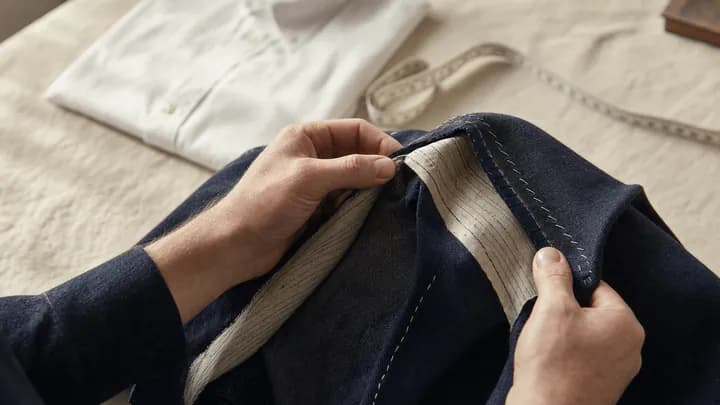
If you sew nothing, a tailor can add a hem facing to a skirt you already own, usually as a straightforward alteration. That is also how to shorten a bubble skirt correctly: the work happens at the waist or through the body, not at the hem, because cutting the hem destroys the mechanism that creates the puff.
Is a bubble skirt worth adding to a small wardrobe?
Only as a deliberate statement piece — one per closet is plenty, and it should be a color and fabric that pair with things you already own. A bubble skirt is a high-recognition item, which means people remember it, which means it does not carry a heavy weekly rotation the way a straight skirt or good trousers do.
If you are building around a tight edit, the guidance in our 30-piece capsule wardrobe guide applies here: earn the slot. And if your taste runs toward restraint, a matte black knit bubble hem is the version that sits comfortably alongside the pieces in our quiet luxury wardrobe guide without shouting.
For a designer-level purchase, treat it the way you would any planned splurge and set money aside ahead of time rather than absorbing it in one month.
Key takeaways
- A bubble skirt's puff comes from an outer layer stitched to a shorter lining at the hem — check that construction before you buy anything else about it.
- Hem placement beats size: land the puff at a narrow point on your leg, and adjust by two to three inches if it does not.
- Fabric sets behavior — taffeta and satin hold maximum volume but crease when seated; tulle, crepe, and cotton survive real days.
- Fitted or tucked top, cropped outerwear, and minimal waist hardware keep the silhouette readable.
- Hang it from the waistband with the hem free; folding creates flat spots that steaming will not remove.
- Buy one, in a color you can repeat, and let it be the statement rather than the foundation.
Frequently asked questions
What is a bubble skirt?
A bubble skirt is a skirt whose outer fabric is gathered and stitched to a shorter inner lining at the hem, so the hem curls under and the fabric balloons outward between the waist and the hem. It is also called a puffball, balloon, or pouf skirt. The volume comes from that hem attachment, not from a petticoat underneath.
What body types can wear a bubble skirt?
Any body type can wear one, but the length matters far more than the size. Because the puffed hem is the visual widest point, it is most flattering when it lands at a narrow part of the leg — mid-thigh, just above the knee, or mid-calf — rather than at the fullest part of the thigh or calf.
What should you wear on top with a bubble skirt?
Wear something fitted and short or tucked in: a bodysuit, a fine-knit tank, a cropped cardigan, or a tucked shirt. The bubble skirt already supplies the volume, so an untucked, oversized top removes the waist definition and makes the whole outfit read as one shapeless block.
How much does a good bubble skirt cost?
Fast-fashion versions typically run in the $30–$60 range, contemporary brands roughly $100–$300, and designer pieces from about $600 upward. The price mostly buys understructure — a proper hem facing, a lining that holds the puff, and fabric with enough body to stay inflated after sitting.
Can you sit down in a bubble skirt?
Yes, but stiff fabrics like taffeta and duchess satin crease at the point where you fold and can stay creased all evening. For long dinners, weddings, or a commute with a seat, choose tulle, a cotton blend, or a crepe with a full lining instead.
How do you store a bubble skirt so it keeps its shape?
Hang it from the waistband with clip hangers and let the hem hang free — never fold a structured bubble skirt or stack anything on top of it. Stuffing the inside loosely with acid-free tissue helps taffeta and organza hold their volume between wears.
Is the bubble skirt a passing trend?
The silhouette resurfaces in waves — Balenciaga's 1950s balloon skirt, Lacroix's 1980s pouf, the mid-2000s mini revival — so treat it as a statement piece rather than a wardrobe foundation. A plain black or denim version in a mid length will outlast a novelty color by several cycles.