Statement Accessories 2026: How to Wear Bold Pieces Well
Bold accessories still carry an outfit in 2026 — but only when the scale, materials and focal point are right. This guide breaks down what to buy first, what turns your skin green, what each price tier actually gets you, and when to leave the big pieces at home.
Rewritten with AI and republished automatically. Our editors set the standards and fix reported errors — how we work.
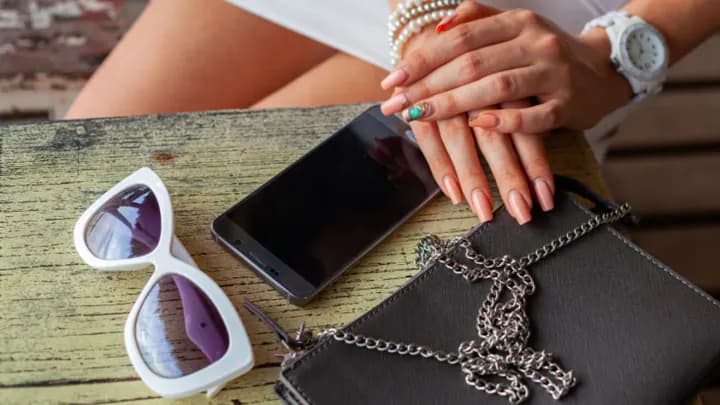
TL;DR: Statement accessories still carry an outfit in 2026, but only with discipline. Pick one loud zone, keep the rest quiet, and buy for material rather than shape — vermeil, gold-filled, titanium and quality steel survive; flash-plated brass does not. Three well-chosen pieces beat a drawer of novelty ones.
A statement accessory is any worn object — earring, necklace, bag, shoe or ring — deliberately scaled, colored or shaped so that it becomes the visual focus of an outfit rather than its finishing touch. That definition matters, because it sets the rule that governs everything below: an outfit can only have one focus.
Why did bold accessories become the main event instead of the finish?
Because clothing got quieter and something had to carry the personality. The move toward clean tailoring, neutral palettes and durable basics left outfits well-made but interchangeable, and accessories became the cheapest, fastest way to make a repeated wardrobe look intentional.
There is a practical driver too. Restyling ten garments with four accessories is far less expensive than buying ten new garments, and it survives weight changes, seasons and travel. That is why bold pieces pair so naturally with a 30-piece capsule wardrobe — the capsule supplies the calm background, the accessories supply the variation.
Short-form video sharpened the effect further. Close-up formats favor objects that read at arm's length: a cuff that catches light, a hinged bag, a resin earring with visible depth. Anything subtle simply disappears on a phone screen.
Which statement accessories are actually worth buying first?
Start with earrings, then a bag with structure, then one ring you wear constantly. Earrings sit closest to the face and change a look with the least commitment; bags do the most work per dollar; a signature ring becomes part of how people recognize you.
- Sculptural earrings — asymmetric drops, hollow metal hoops, fluid organic forms. Look for hollow construction, which gives volume without weight.
- Maxi necklaces — a single heavy chain or one oversized pendant. Stacked layers only work when the lengths differ by at least two inches.
- Architectural handbags — geometric or molded shapes in leather, treated canvas or resin. Structure is the statement; it does not need hardware shouting on top of it.
- Chunky rings — signet forms, wide bands, cast texture. Cheapest entry point to the trend and the easiest to wear at work.
- Exaggerated shoes — platform soles, sculpted heels, metallic finishes. High impact, but they dictate the whole silhouette, so buy them last.
Belts deserve a mention as the most underrated option: a wide, boldly buckled belt reshapes a dress or a coat and pairs especially well with the straight and barrel cuts covered in our guide to denim trends worth buying in 2026.
How do you wear bold pieces without looking overdone?
Use the one-zone rule: choose a single area of the body — ears, neckline, wrists, hands or feet — to be loud, and keep every other zone deliberately plain. If two big pieces must coexist, separate them on the body. Earrings plus platform boots works. Earrings plus a maxi necklace does not, because both compete within six inches of the face.
A second rule handles color. Bold accessories read as intentional against neutrals — black, white, ivory, navy, camel, gray — and as chaotic against print. If the garment has a pattern, the accessory should be metal or a single solid color pulled from that pattern.
Neckline mapping is the detail most people skip:
- Crew neck: collar-length chains or a short pendant that sits on the fabric, or skip the neck entirely and go big on ears.
- V-neck: a pendant that echoes the V's depth; avoid chokers, which fight the line.
- Turtleneck: long chains or a heavy cuff; the neck is already busy.
- Open collar shirt: the natural home for a single sculptural pendant.
If your default style leans restrained, our piece on building a timeless quiet-luxury wardrobe pairs well with this approach: quiet clothes, one loud object.
What materials matter, and what turns your skin green?
Green skin comes from copper in brass or thin plating reacting with sweat, lotion and sunscreen. It is harmless, but it tells you the plating is thin and will wear through at the exact contact points — earring posts, ring shanks, clasp hinges. Material, not shape, decides whether a piece survives its second season.
| Material | What it actually is | Sensitive skin | Realistic lifespan | Price feel |
|---|---|---|---|---|
| Solid gold (9K–18K) | Gold alloy throughout | Excellent | Decades | Investment |
| Gold vermeil | Sterling silver base with a thick gold layer (US standards: 10K+ and roughly 2.5 microns minimum) | Very good | Several years with care | Mid to upper |
| Gold-filled | Bonded gold layer over a base metal core, thicker than plating | Good | Several years | Mid |
| Plated brass | Flash layer of gold over brass | Poor if nickel is present | Weeks to a season at friction points | Budget |
| Stainless steel / titanium | Solid, corrosion-resistant metal | Excellent, usually nickel-safe | Years | Budget to mid |
| Resin, acrylic, wood | Molded or carved non-metal | Excellent | Years if kept from heat | Budget to mid |
Nickel is the practical hazard. It is one of the most common contact allergens, and reactions show up as itching, redness or a rash where the metal sits. If that happens repeatedly, switch to titanium, surgical-grade steel or solid gold and consult a qualified medical professional about persistent skin reactions rather than self-treating.
On sustainability: recycled sterling and recycled brass are now common, and modular designs — a pendant that detaches, hoops that take interchangeable charms — genuinely reduce how much you buy. Treat vague "eco" labels with skepticism unless the brand names the material and the workshop.
How much do statement accessories cost across price tiers?
Expect three broad tiers. Fast-fashion pieces (Zara, Mango, ASOS) cost the least and are plated brass or resin, best for one-season color experiments. Contemporary labels (Cult Gaia, Jenny Bird, Monica Vinader, Charles & Keith) sit in the middle with vermeil, gold-filled or well-finished steel. Designer houses (Schiaparelli, Loewe, Bottega Veneta, Balenciaga) sell craftsmanship and silhouette at investment prices.
Our decision rule: spend on contact and save on trend. Anything that touches skin all day or bears weight — everyday earrings, a signature ring, a bag's strap hardware — justifies the mid or upper tier. Anything driven by a color that may feel dated in eighteen months belongs at the bottom tier.
Vintage and secondhand deserve a line of their own. Older costume jewelry is frequently heavier, better cast and more distinctive than new fast-fashion equivalents at the same price, and buying it removes the sustainability question entirely.
What are the most common and costly mistakes?
Three common ones all cost real money.
- Buying a sculptural bag that fails the phone-keys-card test. Molded and geometric bags often have a rigid interior shape that will not take a modern large phone. Check the actual opening dimensions against your phone before buying; a bag you cannot use is not an accessory, it is an ornament.
- Wearing plated jewelry through skincare and workouts. Sunscreen, perfume, retinoid creams and sweat strip thin plating fast. Jewelry goes on last, after everything else has dried, and comes off before the gym, the shower and the pool.
- Matching bold to bold. Pairing a statement bag with statement shoes and a statement necklace produces an outfit where nothing registers. Subtract until one thing wins.
One more edge case on fit: a heavy earring worn daily can gradually stretch a piercing, and that elongation does not reliably reverse. Reserve the heaviest pairs for events, use large flat or plastic disc backs to spread the load, and stop if the lobe becomes sore.
When should you skip statement accessories entirely?
This advice does not apply universally. Skip the big pieces when safety or policy overrides style: near machinery, lab equipment or anything rotating, where dangling jewelry and long chains are a genuine snag hazard; in clinical and food-handling roles, where hand jewelry conflicts with hygiene rules; and in courtrooms, exams or some interviews, where the goal is for the clothing to say nothing at all.
There is also a caregiving reality — infants grab earrings, and sharp geometric edges are not a good match for a toddler on your hip. Choosing lightweight huggies on those days is not a failure of nerve, it is judgment.
How do you build an accessory capsule that actually rotates?
Buy one strong piece per category, not five variations of the same idea. A workable starter set is: one sculptural earring pair, one everyday hoop, one maxi chain or pendant, one chunky ring, one structured bag and one bold belt. Six objects will restyle an entire season.
Commit to one dominant metal — gold or silver — for the pieces you wear daily, and treat the second metal as an occasional accent. Mixed metals can work, but only when the mix is deliberate and repeated, not accidental.
Then align the accent color with the neutrals you already own. If your closet is built on black and camel, a single hot-pink resin cuff will work with almost everything. If you are still deciding on that base, our guide to building a closet you actually love is the place to start.
How do you care for bold pieces so they last?
Store them separately, dry them immediately, and clean them gently. Large pieces scratch each other in a shared dish, so use a divided tray, individual pouches or the original boxes. Silver goes in a sealed bag with an anti-tarnish strip.
- Wipe metal with a soft dry cloth after wearing to remove sweat and product residue.
- Keep plated and vermeil pieces out of ultrasonic cleaners and polishing compounds — both remove the gold layer.
- Keep resin and acrylic out of hot cars and direct sun; heat warps them permanently.
- Have loose clasps, bent posts and shifting stones repaired early; a jeweler's small fix is cheaper than a replacement.
- Stuff structured bags lightly when stored so the shape holds.
Key takeaways
- One loud zone per outfit. Everything else stays quiet, and bold pieces read best against neutrals.
- Material decides longevity: vermeil, gold-filled, titanium and stainless steel last; flash-plated brass wears through at the contact points.
- Spend on what touches skin and bears weight; save on trend-driven color and novelty shapes.
- Test bags against your actual phone, keys and card before buying — rigid shapes often fail.
- Skip the big pieces around machinery, clinical work and anywhere the clothing should say nothing.
- Six well-chosen pieces will restyle a whole season; a drawer of impulse buys will not.
Frequently asked questions
What counts as a statement accessory?
A statement accessory is any worn object deliberately scaled, colored or shaped to become the visual focus of an outfit — oversized earrings, a maxi chain, a sculptural bag, platform shoes or stacked chunky rings. The test is simple: if someone describes your outfit by naming the accessory first, it qualifies. Ordinary studs, thin chains and neutral totes do not.
How many statement pieces can I wear at once?
One loud zone, two at most. Choose a single focal area — ears, neckline, wrists or feet — and keep everything else quiet. Two large pieces work only when they sit far apart on the body, such as big earrings with platform boots. Big earrings plus a maxi necklace crowd the same space and cancel each other out.
Why does my gold jewelry turn my skin green?
Green skin comes from copper in a brass or plated base reacting with sweat, sunscreen and lotion. It is harmless but it signals thin plating that will wear through. Gold-filled, gold vermeil over sterling silver, solid gold, titanium and quality stainless steel avoid it. Applying jewelry after skincare and removing it before workouts also slows the reaction.
What is gold vermeil, and is it better than gold plating?
Vermeil is sterling silver coated with a meaningfully thick layer of gold — US labeling standards require at least 10K gold at a minimum thickness of about 2.5 microns. Standard flash plating over brass can be a fraction of that, which is why it wears off at earring posts and ring shanks within weeks. Vermeil costs more and lasts far longer.
Are heavy statement earrings bad for your earlobes?
Very heavy earrings worn daily can stretch a piercing over time, and the elongation does not always reverse on its own. Keep the heaviest sculptural pairs for occasions, use large flat backs or plastic disc supports to spread the load, and switch to lightweight hollow metal or resin for everyday wear. If a piercing becomes sore, red or tears, consult a qualified medical professional rather than waiting it out.
Do statement accessories work with a capsule wardrobe?
They work better with a capsule than with a crowded closet. A small set of plain, well-cut basics gives bold pieces a clean background, so three or four accessories can restyle the same ten garments all season. Match your accessory metals and colors to the neutrals your capsule already runs on.
Where should I spend and where should I save?
Spend on the pieces that touch skin all day and get handled constantly — everyday earrings, a signature ring, a bag with real hardware and stitching. Save on trend-driven color, resin and novelty shapes you may not want in eighteen months. The failure point on cheap accessories is almost always the clasp, the plating or the bag strap attachment.