Colored Mascara: Why Brown, Plum and Green Lashes Work
Colored mascara is the lowest-risk way to wear color on the eyes — if you choose a shade that contrasts with your iris and a formula opaque enough to show on dark lashes. Here is the shade chart, the technique, and the mistakes that make it look muddy.
Rewritten with AI and republished automatically. Our editors set the standards and fix reported errors — how we work.
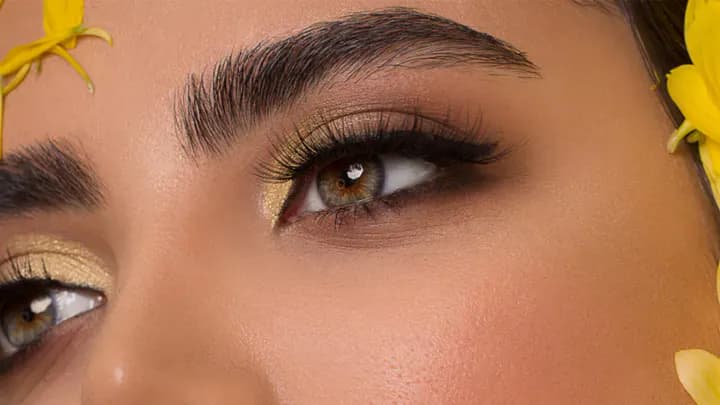
TL;DR: Colored mascara works when the shade contrasts with your iris and the formula is opaque enough to show on dark lashes. Brown and burgundy are the everyday entry points; navy, plum and emerald are the statement shades. Keep the rest of the eye neutral, and match the remover to the formula.
Colored mascara is a lash-coating cosmetic pigmented in a shade other than black or dark brown — anything from a barely-there warm brown to cobalt, plum, forest green or copper. It is the lowest-commitment way to wear color on the eyes: it takes ten seconds, it washes off, and it does not require the blending skill that colorful eyeshadow does.
That is why it has outlasted the usual trend cycle. The version that stuck is not festival rainbow lashes. It is the quiet one — a brown or burgundy coat that softens the eye — plus one bolder shade in the bag for evenings.
Why is colored mascara trending again instead of fading out?
Because the trend split into two usable halves, and both are easy. The soft half — brown, taupe, burgundy — fits the pared-back beauty look that has run alongside the quiet luxury approach to dressing: visible effort, no announcement. The bold half gives people who like color a way to wear it without a full eye look.
Jet black is also unforgiving. It creates a hard line at the lash root that can look heavy in daylight and on video calls. Brown and burgundy give definition with a softer edge, which is why so many people who tried "brown mascara for a change" never went back.
There is a practical reason too. A colored mascara is one product, it needs no brush skill, and it fails visibly rather than catastrophically — if you dislike it, you know within a minute and it comes off.
Which colored mascara shade suits my eye color?
Pick a shade that contrasts with your iris if you want your eyes to look brighter, or one that echoes it if you want a softer, tone-on-tone effect. Contrast is what creates the "my eyes look awake" result people are chasing; harmony creates a more expensive, low-key look.
| Eye color | High-contrast pick (brightening) | Tone-on-tone pick (soft) | Why it works |
|---|---|---|---|
| Dark brown | Emerald, cobalt, true plum | Warm chocolate, bronze | Dark irises absorb color, so you need saturation to read as anything but black |
| Light brown / amber | Navy, deep teal | Copper, terracotta | Cool shades make warm golden flecks look brighter by comparison |
| Blue / gray | Copper, rust, warm brown | Navy, slate | Warm tones sit opposite blue on the color wheel and intensify it |
| Green | Burgundy, violet, plum | Olive, forest green | Red-family shades are green's direct contrast — the strongest pop available |
| Hazel | Deep plum, aubergine | Olive, chocolate brown | Plum pulls forward the green in hazel; olive pulls forward the gold |
The decision rule: if you can only own one colored mascara, buy the contrast shade in its darkest version. Deep plum over bright violet, navy over cobalt, forest over lime. Dark versions of a color are wearable at 9 a.m.; bright versions are not.
Will colored mascara actually show up on my dark lashes?
Deep shades will. Light and bright shades usually will not without a base. This is the single biggest reason people buy a colored mascara, use it twice and abandon it — the tube looked lilac and the lashes looked black.
Pigment sitting on a dark lash is competing with a dark background. Navy, burgundy, forest green and rich plum have enough depth to read against it. Pastel pink, baby blue, lime, mint and most teals do not; they need either a white or light-tinted lash primer underneath, or a formula built specifically for high opacity.
A quick test in store or at home: swipe the wand across the back of your hand over a line drawn in black eyeliner. If the color still reads over the black, it will read on your lashes. If it disappears, you are buying a primer too.
How do I apply colored mascara so it looks deliberate, not messy?
Curl, prime if the shade is light, apply thin coats, and leave everything else on the eye neutral. Colored lashes read as a mistake when they are the second or third colored element competing for attention.
- Curl first. Color shows on the visible surface of the lash. A curled lash turns that surface toward the viewer, which is free payoff.
- Prime only if needed. White or light primer under pastels and brights; skip it entirely under brown, burgundy and navy, where it just adds bulk.
- Two thin coats, not one thick one. Let coat one dry for about 30 seconds. Colored formulas often have more pigment and less film-former, so they clump faster than black.
- Keep shadow neutral. Taupe, cream, soft beige, or nothing. If you want liner, use black or the same color family as the mascara — not a third shade.
- Try lower lashes only. Colored lower lashes with black on top is the most editorial-looking, least risky version of this trend, and it takes about fifteen seconds.
The black-base technique
Apply black mascara first, let it set, then drag the colored wand through the outer two-thirds and the tips only. You get black density at the root, color where light hits it, and a result that survives office lighting. This is the version we recommend to anyone nervous about the trend.
What should colored mascara cost, and which formula is right?
Expect roughly $8–$15 at the drugstore, $20–$30 for mid-range beauty brands, and $30 and up for luxury houses. Price buys brush design and wear time; it does not reliably buy pigment. Some of the most opaque colored mascaras sold are drugstore products, and some expensive ones are disappointingly sheer.
| Formula | Best for | Wear time | Removal | Watch out for |
|---|---|---|---|---|
| Washable / classic | Everyday brown, burgundy, navy | 6–8 hours | Cream cleanser or micellar water | Transfer onto the lid on humid days or oily skin |
| Waterproof | Events, heat, emotional occasions | All day | Bi-phase or oil-based remover, held not rubbed | Drying on the lash; hardest on lash health if you tug |
| Tubing | Contact lens wearers, watery eyes, sensitive skin | All day, flake-free | Warm water and gentle pressure | Less volume build; colors can look flatter |
| Colored top coat | Adding color over your usual black | Depends on base | Same as the base mascara | Sheer by design — not a standalone product |
If you are buying one product to test the trend, a washable brown or burgundy is the efficient choice. If you already know you want color for events, buy waterproof and buy the remover at the same time.
Where can you actually wear colored lashes?
Almost anywhere, with the shade doing the calibration. The rule is simple: the more formal or camera-heavy the setting, the deeper the shade.
- Office and video calls: brown, burgundy, aubergine. On a webcam, warm brown softens the under-eye area in a way black does not.
- Errands and weekends: anything you like — this is where terracotta and olive earn their place, especially with the relaxed silhouettes running through this year's denim shapes.
- Evening: navy, emerald, deep plum with a bare lid and glossy lips.
- Festivals and events: brights, glitter-topped tips, mismatched upper and lower lashes.
One styling note worth borrowing from wardrobe thinking: if you already dress from a tight palette, as in a 30-piece capsule wardrobe, choose the mascara color that sits beside that palette rather than fighting it. Rust lashes look considered with camel and cream; they look accidental with cool gray.
What are the most common colored mascara mistakes?
Three mistakes account for almost every bad result.
1. Buying the color you like in the tube instead of the color that suits your iris. Teal is the classic trap: it photographs beautifully and, on most people, disappears into their lash line in real life. Buy for contrast, not for the packaging.
2. Wearing colored mascara with colored everything else. Green lashes plus bronze shadow plus a berry lip is three ideas. Pick one, neutralize the others.
3. Keeping it forever. Because colored mascara is worn occasionally, it is the tube most likely to still be in the bag two years later. General guidance is to replace mascara around three months after opening. A drying, flaking colored formula is the difference between "intentional" and "smudged."
The honest exception: this trend does not translate well to lash extensions. Waterproof and oil-based products can compromise the adhesive, and colored mascara needs more removal friction than extensions tolerate. Ask your technician about colored fibers instead. Likewise, if your lashes are very sparse, a colored coat will emphasize the gaps rather than hide them — black remains the better density illusion.
How do you remove colored mascara without wrecking your lashes?
Match the remover to the formula and give it time to work before you touch the lashes. Pressure and patience remove mascara; rubbing removes lashes.
- Tubing: warm water, cupped hands, gentle squeezing pressure along the lash. The tubes slide off whole.
- Washable: a cream cleanser or micellar water on a pad, held for a few seconds, then swept downward in the direction of growth.
- Waterproof: a bi-phase or oil-based remover on a pad, pressed against closed lashes for 20 to 30 seconds, then wiped once. Repeat rather than scrub.
A pigment note: some colored formulas leave a faint stain at the lash line, especially blues and reds on fair skin. A second pass with cleanser handles it. If irritation, redness or persistent watering follows any eye product, stop using it and consult a qualified eye care professional rather than switching to a stronger remover.
Key takeaways
- Choose a shade that contrasts with your iris for brightness, or echoes it for a softer tone-on-tone effect — the shade chart above is the fastest route.
- Deep colors (navy, burgundy, forest, plum) show on dark lashes; pastels and brights need a white primer or a black-base-plus-colored-tips technique.
- Budget roughly $8–$15 drugstore to $30-plus luxury; price buys the brush and wear time, not necessarily the pigment payoff.
- Keep the rest of the eye neutral — colored lashes fail when they compete with colored shadow and liner.
- Match the remover to the formula, press rather than rub, and replace the tube about three months after opening.
- Skip it if you wear lash extensions, and see an eye care professional if any eye product causes ongoing irritation.
Frequently asked questions
Does colored mascara show up on black lashes?
Only if the pigment is opaque, and even then lighter shades need help. Deep tones — navy, burgundy, forest green, plum — read clearly straight over dark lashes. Pastels, lime, teal and true blue usually need a coat of white or light-tinted primer underneath, or they sink into the lash and look almost black in dim light.
What is the most wearable colored mascara shade for beginners?
Warm brown or burgundy. Both are close enough to natural lash color to pass in an office or on camera, but they soften the eye and make the whites look brighter than jet black does. If brown feels too subtle, navy is the next safest step — it reads almost black indoors and reveals its color in daylight.
Which mascara color makes eyes look brighter?
Shades that contrast with your iris. Navy and copper brighten blue and gray eyes, plum and burgundy do it for green and hazel, and emerald or cobalt lift dark brown eyes. The contrast is what creates the brightening effect, not the intensity of the pigment.
How long does colored mascara last before you should replace it?
Most guidance suggests replacing any mascara about three months after opening. Colored formulas are no different, and because many people use them occasionally rather than daily, they are the tubes most likely to be kept too long. Dried-out, flaking product is also where colored mascara stops looking deliberate.
Can you wear colored mascara with lash extensions?
Usually not a good idea. Oil-based and waterproof formulas can weaken extension adhesive, and the removal process — which needs more rubbing than bare lashes — is exactly what loosens extensions. If you want color with extensions, ask your technician about colored extension fibers instead.
Is colored mascara safe for sensitive eyes or contact lens wearers?
A properly formulated eye-area mascara is generally fine, but the pigment rules matter. Cosmetic color additives are regulated, and some colorants permitted in lipstick are not approved for use near the eyes — so use products clearly sold as mascara rather than craft glitter or body pigment. If you wear contacts or have recurring irritation, look for flake-resistant tubing formulas and consult a qualified eye care professional about persistent symptoms.
How do you remove colored mascara without losing lashes?
Match the remover to the formula. Tubing mascara slides off with warm water and gentle pressure, washable formulas come off with a cream cleanser, and waterproof pigment needs a bi-phase or oil-based remover held against closed lashes for 20 to 30 seconds before any wiping. Tugging is what costs you lashes, not the color.